Paul Smith capsule celebrates British makers, heritage mills, local craft
Paul Smith’s new capsule put Abraham Moon melton wool, Corgi socks and Dundee waxed cotton front and center, turning provenance into the selling point.

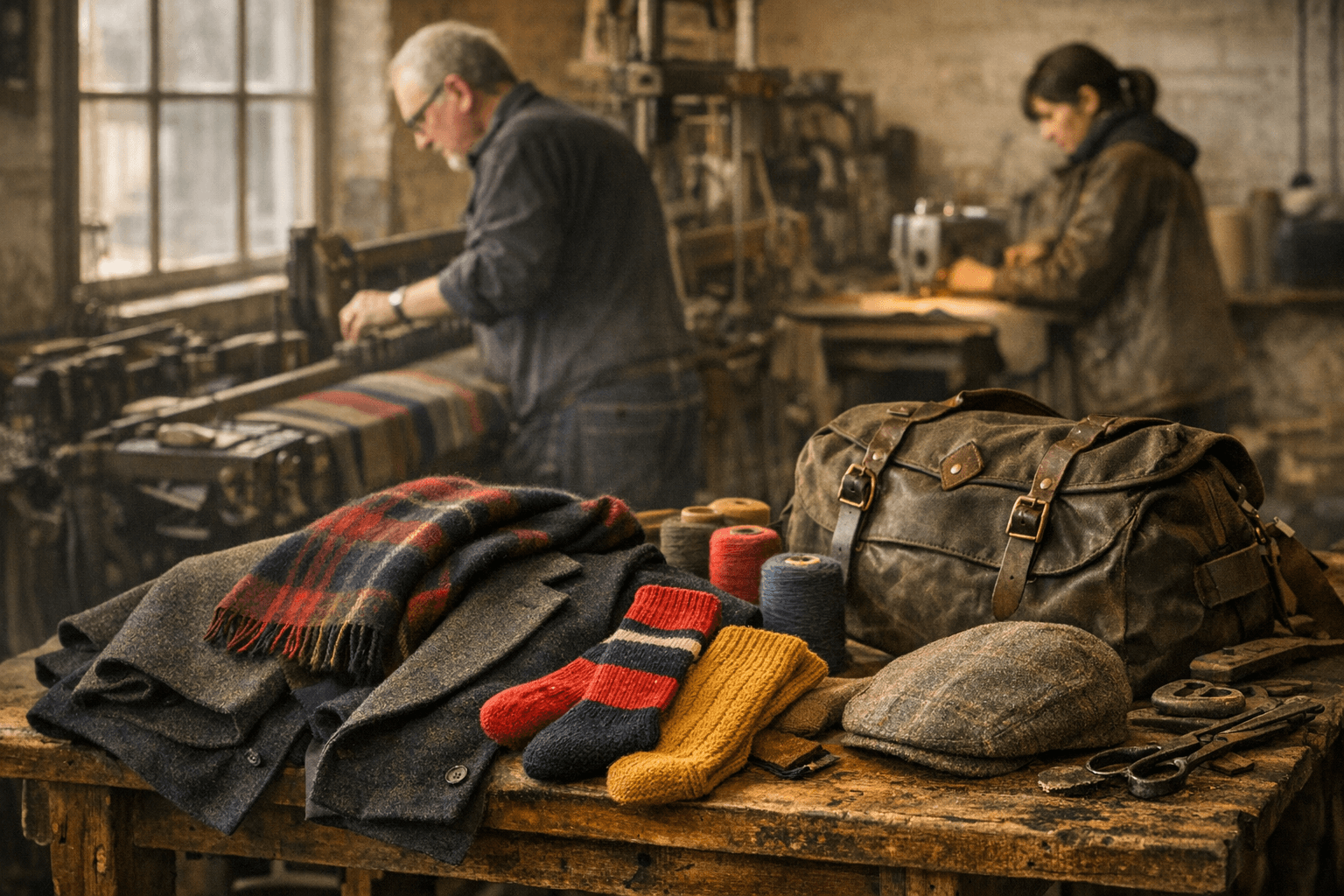
Paul Smith’s latest capsule made provenance the point, not the footnote. The first drop of the Made in British Isles collection launched on April 24 with outerwear, knitwear, shirting, jersey and socks, built from materials of known provenance and assembled locally with specialist manufacturers across England, Scotland and Wales.
The designer’s eye was in the details. Paul Smith’s broader description for the collection included ties, hats, scarves and trainers, but the strongest pieces leaned into weather and texture: waxed cottons, tweeds and heavy-gauge knits, the sort of fabrics that carry both tactility and intent. A classic car coat cut from melton wool by Abraham Moon in West Yorkshire underscored the idea, with the mill said to have been honing its craft for more than 185 years. Some of the knitwear was made in Nottinghamshire, not far from where Paul Smith was born, which gave the capsule a neat kind of geographical symmetry.
The cast of makers reads like a map of British clothmaking. White Label London in Leyton produced outerwear, Halley Stevensons’ Baltic Works in Dundee supplied the waxed-cotton fabrics, Corah Textiles in Nottinghamshire made the knitwear, and Corgi Hosiery in South Wales produced the socks. Corgi, a Royal Warrant holder, has made its products in-house since 1892, a detail that does more than decorate the label. It places the collection in a lineage of workshops and mills whose value lies in continuity, not novelty.
That sense of continuity mattered because Paul Smith entered the launch with a complicated commercial backdrop. The company said gross profits fell 7 percent to £97 million for the year ending June 30, 2025, and that wholesale demand softened in a challenging retail environment, even as the business remained positive about future growth. The capsule answered that moment with a sharper story: product whose appeal comes not just from how it looks, but from where it was made and who made it.
The campaign leaned into that idea with an illustrated map showing the factories involved, turning production into part of the visual language. Coming only about a month after Paul Smith’s second SS26 collaboration with Barbour, the capsule reinforced a broader seasonal focus on British heritage, but with a more exacting pitch. In this collection, British origin was not packaging. It was the style proposition itself.
This article was produced by Prism’s automated news system from verified source data, official records, and press releases, then run through automated quality and moderation checks before publishing. The system is built and supervised by the people who set the standards it runs under. Read our full AI policy.
Did this article answer your question?