Bangladesh Garment Workers Protest for Wages and Eid Bonuses at MU EN Textile
More than 200 of Bangladesh's 3,500 garment factories missed their Eid bonus deadline as nearly 100 workers at MU EN Textile walked off the job.

A protest at one textile factory in Dhamrai upazila has become a sharp focal point for a crisis spreading across Bangladesh's garment industry, where hundreds of thousands of workers are pressing factory owners for wages and Eid bonuses with less than two weeks before the holiday.
Nearly 100 workers at MU EN Textile in the Belishwar area of Sutipara staged demonstrations on March 15, demanding half of their March wages and payment of Eid bonuses ahead of the festival. Workers halted production at the facility, a pressure tactic that reflects the urgency workers across the sector are bringing to what should be a routine pre-holiday obligation.
The unrest at MU EN Textile is not an isolated grievance. As of Tuesday, more than 200 of Bangladesh's 3,500 garment factories had yet to pay out bonuses ahead of Eid-ul-Fitr, which is expected to fall on March 29 or 30, even though factories were instructed to dispense bonuses by the 20th and pay half of March's salaries before the weekend. The Bangladesh Garment Manufacturers and Exporters Association has flagged 11 of its member factories as facing a high risk of unrest specifically because of non-payment of wages and Eid bonuses.
The pressure has reached BGMEA's own doorstep. Nearly 250 garment workers descended on the association's headquarters in Dhaka on Sunday to demand wages they say they are still owed following layoffs three months ago. Their sit-in continued through Monday evening, according to local media, interfering with activities at the factory owners' trade group. In Chittagong, one protester who had been calling for the payment of arrears died that same Sunday after suffering a stroke.
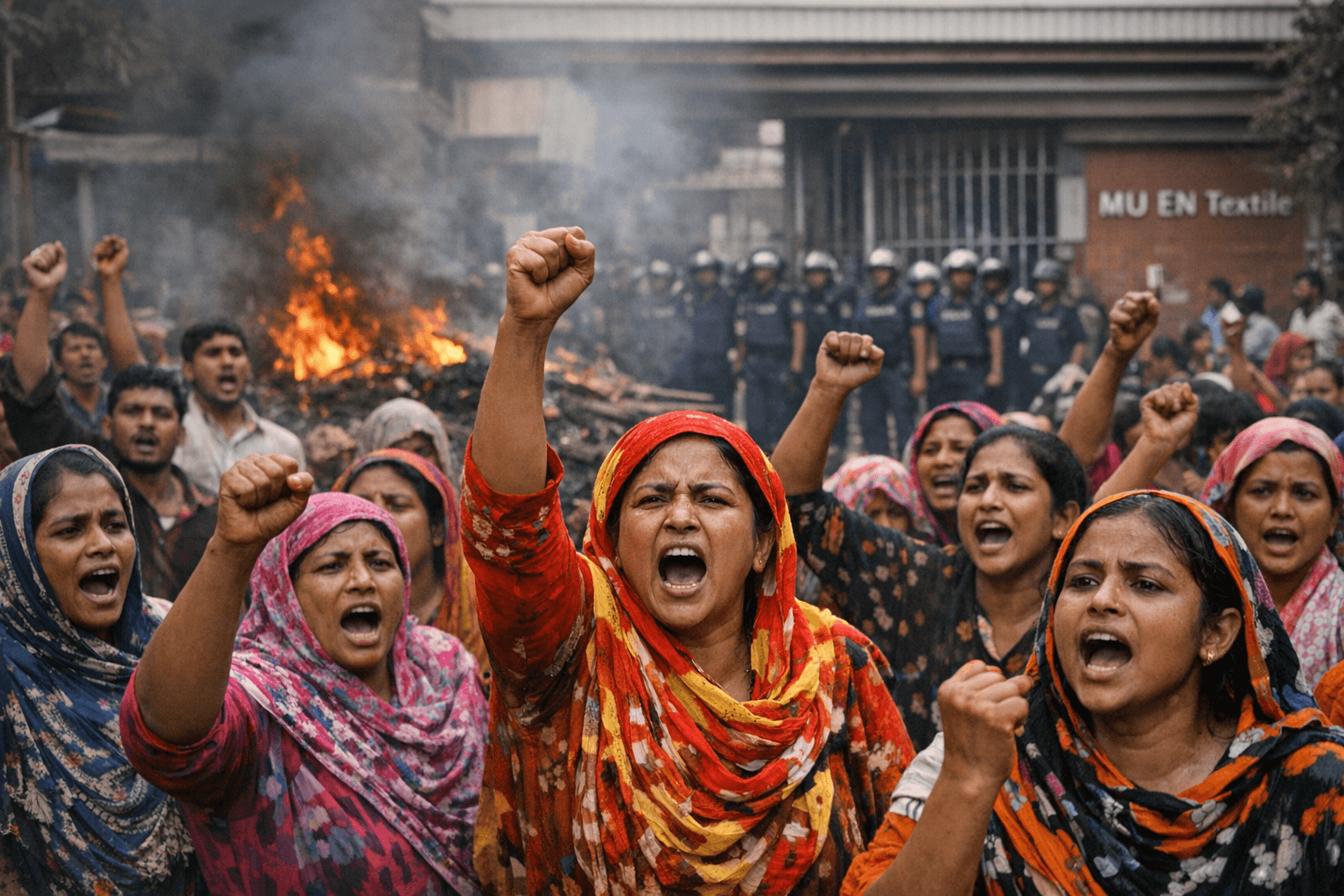
Workers are also demanding a 10-day Eid holiday, compared to the official three-day respite that individual factories can choose to extend, citing parity with what government officials receive. The gap between what workers are asking and what the industry has offered on holidays, wages, and bonuses is no longer a quiet negotiation.
The disruption comes as Bangladesh's garment supply chains face pressure from multiple directions. Attacks on vessels, including the ONE Majesty, are straining shipping routes as South Asian garment shipments stall and air freight rates escalate. Conflict near the Strait of Hormuz has further complicated global apparel logistics at precisely the moment when factory-floor unrest is already threatening production timelines.
"We are united around shared goals for a more competitive, socially responsible and sustainable industry in Bangladesh," Nate Herman, senior vice president of policy at the American Apparel and Footwear Association, said in January, before the Trump administration's aggressive cost-cutting measures kneecapped civil society organizations working to accomplish just that. With Eid days away and bonuses still unpaid at more than 200 factories, the distance between that stated unity and conditions on the ground in Belishwar is difficult to reconcile.
Know something we missed? Have a correction or additional information?
Submit a Tip