Cambodia Garment Workers Strike Over Allowances, Win $3 Monthly Pay Rise
400 Cambodian garment workers blocked a highway over transport costs; the $3 raise they won exposes the math fast fashion uses to stay cheap.
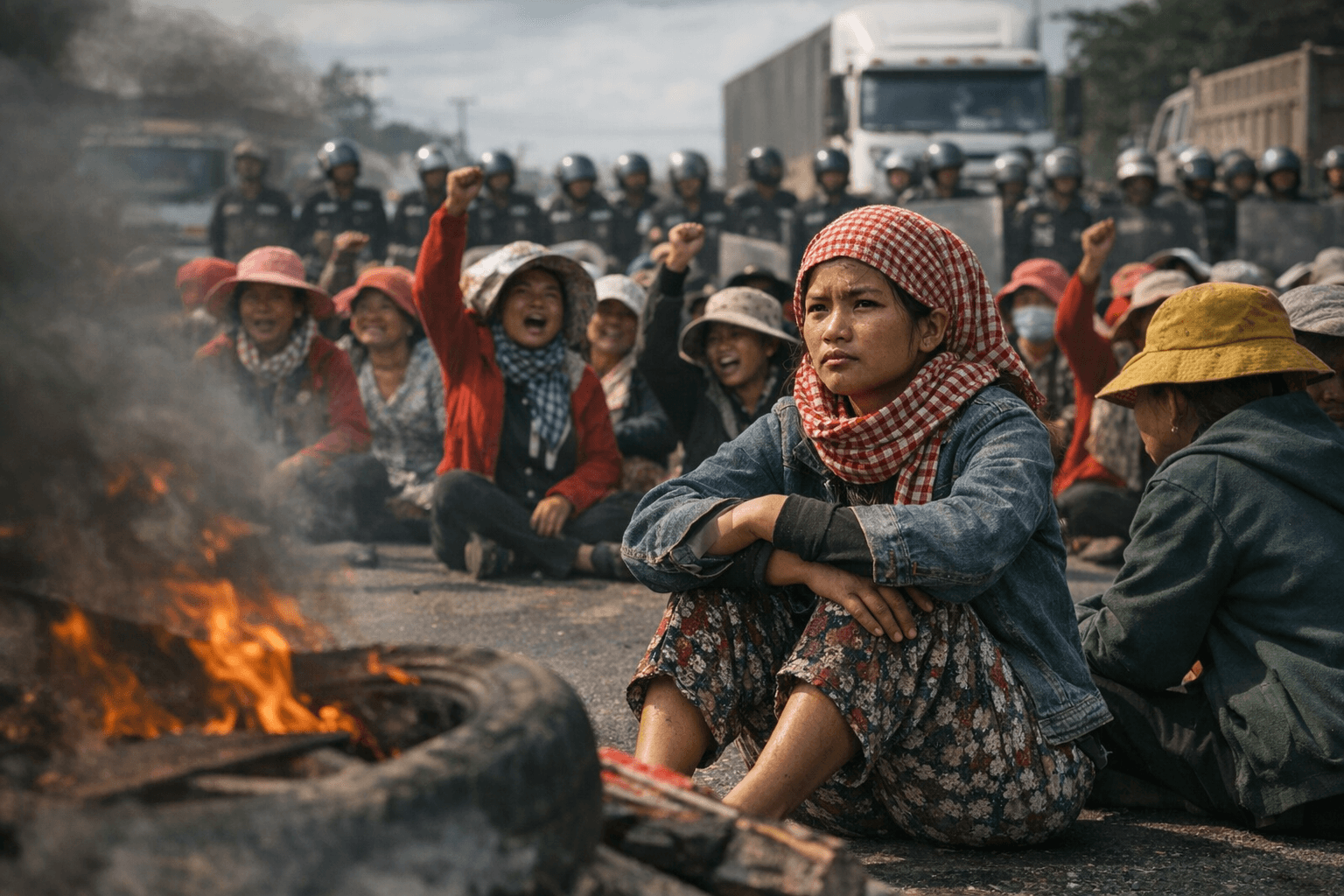
The $3 that settled a strike at J Star Garment in Kampong Speu province last month is, by any accounting, a rounding error. For the roughly 400 workers who walked off the factory floor in mid-March and blocked a major road to make their point, it was worth shutting down production to get it.
The workers were not demanding a revolution. Their grievances were strikingly specific: higher transport stipends to offset fuel prices that had made their daily commute increasingly unaffordable, better meal allowances, and an additional 2,000 riel (about 50 cents) per overtime hour. Heam Samon, a worker who joined the strike, explained the arithmetic plainly. The driver who ferries workers to the factory had raised his fee because of rising fuel costs, while J Star's transport stipend sat at $8 per month. That gap, quietly absorbed by workers themselves, had become untenable.
Kong Atith, president of the Coalition of Cambodian Apparel Workers Democratic Unions, confirmed that rising transport fees were directly affecting attendance records; because attendance is tied to bonus payments in Cambodia's garment sector, the knock-on effect compounded the shortfall. Labor Ministry officials, factory representatives, and local authorities convened with worker representatives to negotiate a settlement. J Star agreed to a $3 monthly pay increase, effective immediately. Labor Ministry spokesperson Sun Mesa confirmed the dispute was resolved, though Samon herself noted that the gap between stipends and real commuting costs remained only partially addressed.
Unions and rights groups had already been pushing for the sector's minimum wage to rise to $232 a month in 2026, up from $208, describing the existing rate as "far below the threshold of a dignified life." The Cambodian government ultimately raised the monthly floor by $2, effective January 1, 2026. Against that backdrop, a $3 transport dispute is less an anomaly than a symptom: the distance between a statutory wage and a livable one is being quietly negotiated factory road by factory road.
For anyone shopping brands that source in Southeast Asia, the J Star dispute is a practical signal about where to direct scrutiny. Of the 50 largest European clothing companies, half say they support living wages, but only four are doing anything concrete to make one happen, according to the Clean Clothes Campaign's Tailored Wages report. The gap between stated policy and factory-floor reality is precisely where incidents like this one occur. Around 1,555 firms operate in Cambodia, supplying some of the world's leading retailers. Brands are not peripheral to this pressure; they are structurally embedded in it.
The shopping signals worth paying attention to are not complicated. Does a brand publish its supplier list? Does it allow independent union access at its factories? Does it report wage data by country of production rather than offering a single global ethics statement? Transparency disclosures have already shown measurable results in Cambodia, with thousands of workers collecting proper seniority pay since factory-level reporting was introduced. That is what accountability looks like in practice, not in a corporate responsibility brochure.
When the next dispute breaks out somewhere in the supply chain, and in a sector running on margins this thin, it will, the question is which brands have built systems resilient enough to absorb it, and which ones simply pass the cost back down.
Know something we missed? Have a correction or additional information?
Submit a Tip