Cannes red carpet turns monochrome, with black and white defining style
Cannes has gone stripped-back: black and white are dominating the carpet, and the mood feels less like decoration than control.

Monochrome is the point now
Cannes is looking quieter, sharper, and a lot more deliberate. The red carpet that once thrived on full-volume glamour is sliding into black, white, and visual restraint, and that shift feels less accidental than cultural. The most interesting thing happening on the Croisette right now is not excess, but the refusal of it: uneven hems, pared-back palettes, and silhouettes that seem to be choosing control over spectacle.
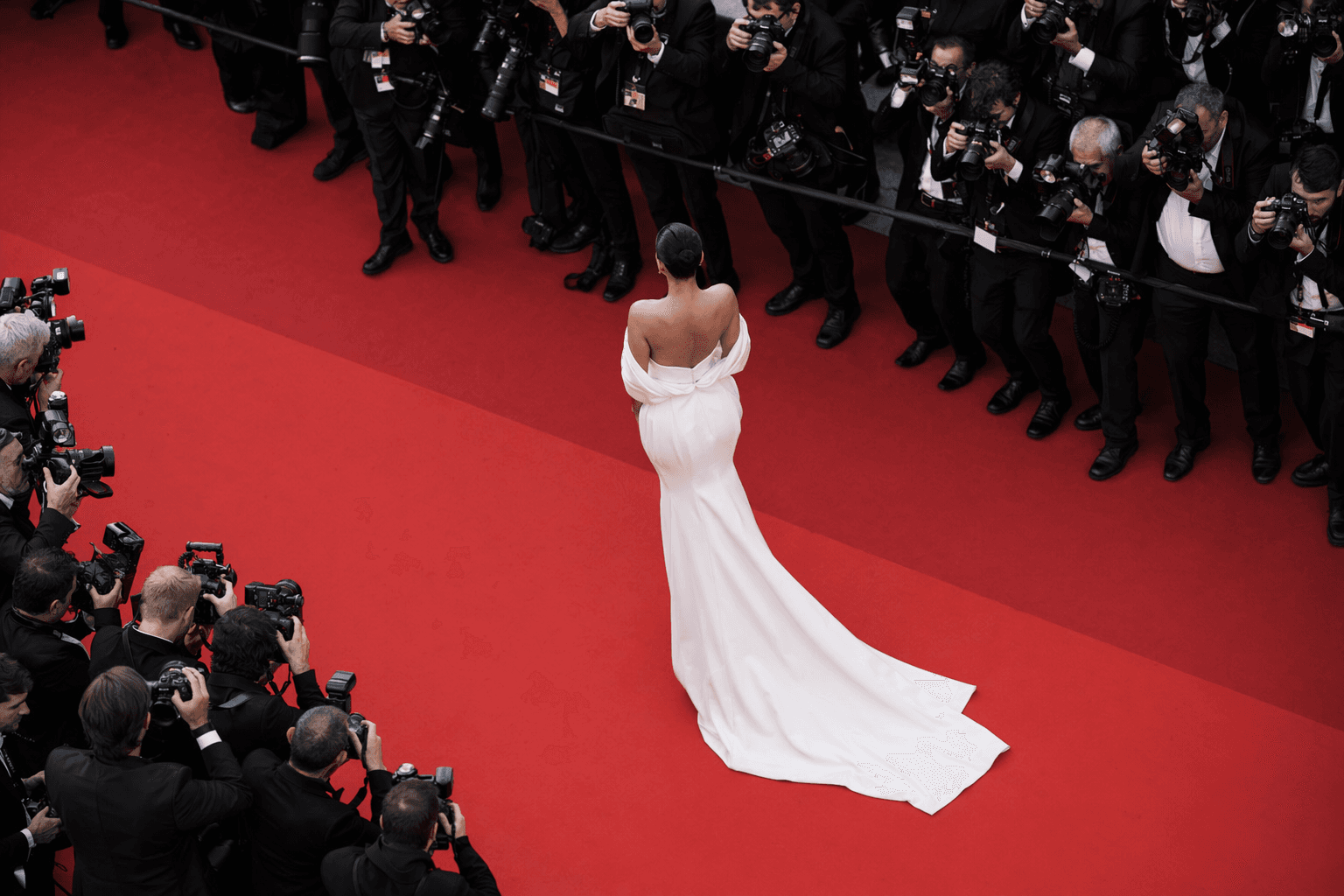
Bazaar’s Cannes analysis caught the tension well, reading the colorless drift as a fashion moment caught between extremes. That is exactly why it lands. Black and white at Cannes does not read as safe when it is cut into dramatic shapes, and it does not read as boring when the styling is this precise. It reads like a mood shift, one that asks whether stars are leaning into elegance, image management, trend fatigue, or simply backing away from risk.
Cannes still knows how to make restraint look expensive
This festival has always turned clothes into myth. Cannes was founded in 1946, and its red carpet has spent decades turning a staircase into a stage for fashion memory. The Cut has pointed to the festival’s long record of iconic appearances from Princess Diana, Jane Birkin, Kate Moss, and Monica Bellucci, names that still shape how people picture Cannes dressing before anyone gets to the new season.
WWD’s Cannes coverage made the point even more clearly by pulling from the archive: Grace Kelly in 1955, Princess Diana in 1987, and Madonna in 1991 all sit inside the festival’s fashion legend. Those moments matter because Cannes has never been just about pretty clothes. It is where image gets minted into history, and right now that history is being rewritten in monochrome.
The 2026 festival, which ran from May 12 through May 24, only sharpened the effect. WWD noted that the 79th edition had become a major fashion event, with jurors including Demi Moore, Ruth Negga, and Chloé Zhao, and with standout looks from Bella Hadid, Cate Blanchett, Ruth Negga, and Chloé Zhao. When that kind of lineup starts gravitating toward black and white, the effect is bigger than a styling preference. It becomes a signal.
This black-and-white mood has been building for years
The clean palette did not arrive out of nowhere. WWD had already seen the black-and-white red-carpet wave at the 2024 Golden Globes, where the palette echoed French wardrobe staples, Karl Lagerfeld’s personal style, Yves Saint Laurent’s Le Smoking, and couture collections from spring 2022 at Valentino, Jean Paul Gaultier, and Viktor & Rolf. That matters because it places the look in a lineage of fashion houses that know how to make minimalism feel commanding.
Then the cycle came back around. WWD described black-and-white dressing reemerging on the 2025 Golden Globes red carpet after monochrome hues had already been a major runway moment for spring 2024 at Gucci, Chloé, and Carven. That runway-to-red-carpet movement is the real story here. Cannes is not inventing monochrome, it is borrowing from a fashion system that keeps returning to purity when the market gets noisy.
By the 2026 Golden Globes, the palette had become the headline itself. WWD described black and white as the evening’s defining colors, with Pantone’s 2026 Color of the Year, Cloud Dancer, helping explain why white suddenly feels so current. Pantone describes Cloud Dancer as a soft white meant to evoke simplicity and clarity, and its broader framing is telling: it is positioned as an escape from digital demands and modern life. That is not just a color story. It is a craving story.
Why the dresses look tighter, stranger, and more edited
What keeps Cannes from turning monochrome into a cliché is the cut. Bazaar’s Cannes analysis highlighted unevenly cut skirts and dresses, and that detail matters more than the palette itself. Straight black or white is easy. Black and white with irregular hems, sliced construction, or asymmetry is where the look starts to feel current.
That tension is all over the carpet right now. The clothes are not trying to dazzle with color, they are trying to hold the frame. Think sharp shoulder lines, sheer panels, controlled drape, and hemlines that feel intentionally off-kilter rather than perfectly resolved. In a season where so many celebrities are dressing like they want the image to outlive the moment, monochrome gives them a clean surface to project onto.
It also explains why the look can feel at once elegant and defensive. Black and white is classic, yes, but at Cannes it can also look like a strategic retreat from the chaos of overstyling. The message is not “look at me” so much as “look at the construction.” That is a very fashion-industry way to signal confidence without shouting.
Even the rule-breaks are being filtered through monochrome
If you want proof that Cannes is still obsessed with editing the image, look at Kristen Stewart. She wore vintage black-and-white Nike saddle shoes with sheer Chanel couture at a 2026 photocall, a pairing that should have felt rebellious and slightly absurd. Instead, it fit the moment perfectly: monochrome, contrast, and a little refusal baked into the styling.
The footwear twist matters because Cannes still enforces its rituals. Sneakers are barred from the evening red-carpet entrances at the Grand Théâtre Lumière, so even the festival’s most subversive gestures have a boundary. That is what makes the monochrome mood so interesting. The rebellion is not loud; it is calibrated. A sneaker at a photocall, a sheer couture dress, a black-and-white palette, and suddenly the whole look feels like a conversation between discipline and disobedience.
That balance is exactly why Cannes still matters as a fashion barometer. The festival has enough history to make restraint feel cinematic, enough authority to make minimalism look expensive, and enough star power to turn a black dress or white gown into a thesis statement. Right now, the thesis is simple: when everyone is exhausted by noise, the sharpest move may be to strip the image down and let the cut do the talking.
Know something we missed? Have a correction or additional information?
Submit a Tip