Condé Nast vs. Dogue: When Fashion Parody Crosses Into Trademark Infringement
Condé Nast's lawsuit against a one-woman dog magazine that sells 100 copies per issue is a masterclass in trademark overreach — or is it? The legal answer is more complicated than it looks.
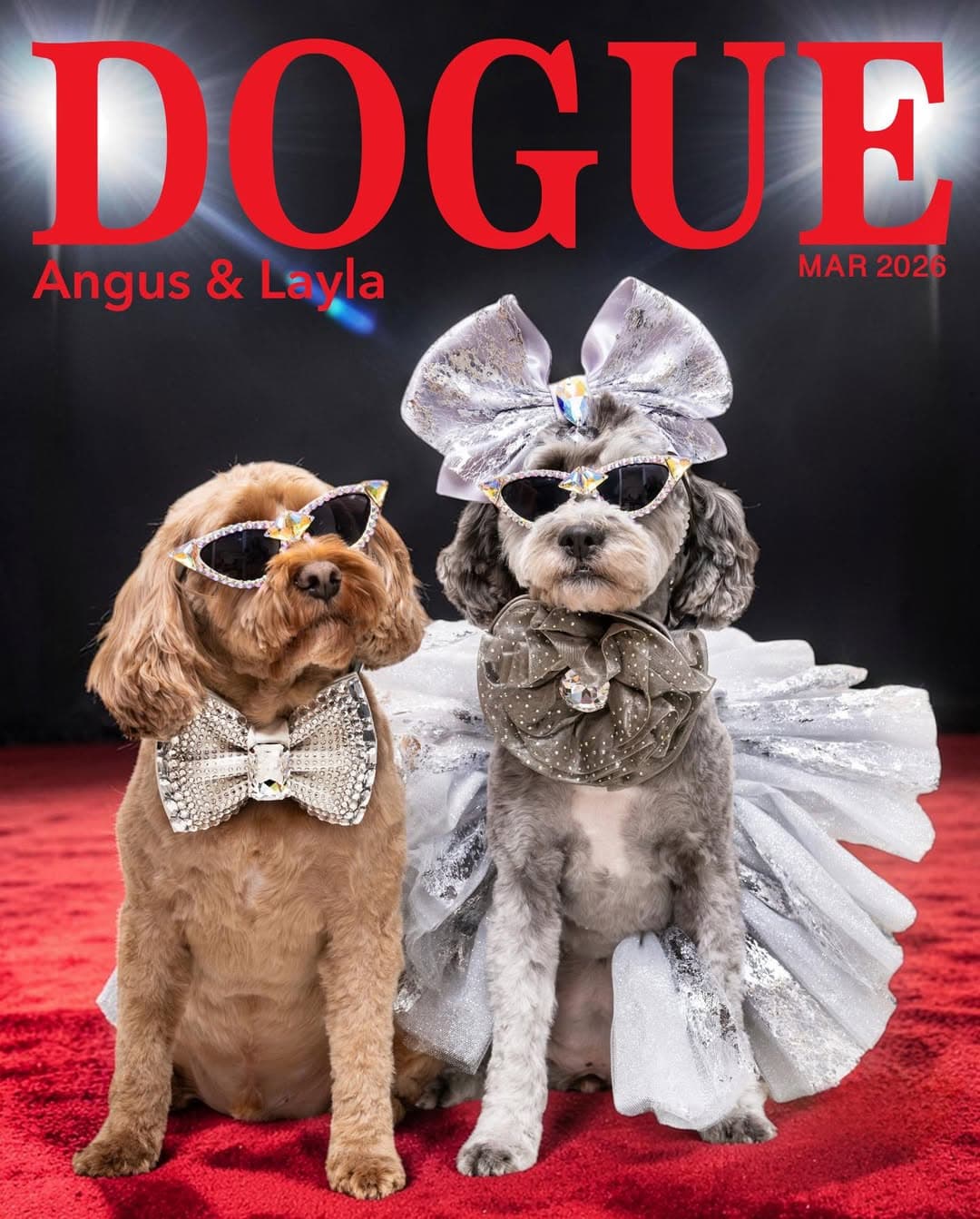
The conversation around fashion's intellectual property wars has reached a new, unexpectedly charming battleground: a Beverly Hills Pomeranian on a magazine cover. Condé Nast, the publisher behind Vogue, GQ, Vanity Fair, and The New Yorker, filed a federal lawsuit in December 2025 against Dogue, a canine fashion magazine run single-handedly by Los Angeles-based graphic designer and photographer Olga Portnaya. The suit, filed in the U.S. District Court for the Central District of California, alleges trademark infringement, trademark dilution, false designation of origin, and unfair competition. The defendant sells roughly 100 copies per issue from a single newsstand in Beverly Hills. Welcome to the front lines of fashion IP law.
How Dogue Was Born
Portnaya launched the project in 2019 as an Instagram account called Coverdogs, featuring parody magazine covers dressed in the visual language of high fashion. By 2021, she had turned it into a print publication, with her own Pomeranian, Porchy, gracing the debut cover. The name "Dogue" was not an accident: it is a direct, affectionate riff on Vogue, with the wordmark rendered in a matching serif typeface, the cover architecture clearly evoking its source material. That is the whole point. Portnaya filed for the "Dogue" trademark in 2022, and the United States Patent and Trademark Office granted approval in 2025. That approval, legal observers note, almost certainly triggered what came next.
The Lawsuit and What Condé Nast Is Claiming
Condé Nast brings its claims under the Lanham Act, asserting trademark infringement, trademark dilution, and unfair competition. Condé Nast contends that the "defendant's deliberate choice of a confusingly similar mark is obviously intended to, and likely to, result in consumer confusion that Condé Nast has endorsed or is affiliated with Defendant's publication." The infringement claim hinges on the likelihood-of-confusion standard: did Dogue's branding mislead consumers about the source or affiliation of the magazine?
The dilution claim goes further, asserting that Vogue is a famous mark and that Dogue's use diminishes its distinctiveness, even if actual consumer confusion cannot be shown. This is a meaningful distinction. Dilution under the Lanham Act does not require proof that anyone was fooled; it requires only that the famous mark's singular identity has been blurred or tarnished. For a brand like Vogue, which 27 million people read in some form each month and which has been published since 1892, "famous mark" status is essentially uncontested.
The remedies Condé Nast is seeking are sweeping. The company is asking the courts to allow Condé Nast to destroy all Dogue publications and merchandising bearing the Dogue logo and name. Injunctive relief, financial damages, and attorneys' fees are also on the table.
The Parody Defense and Portnaya's Position
Portnaya has not flinched. "Dogue is a dog fashion magazine that has always been clearly branded, independently authored, and distinct in both concept and execution," she told the New York Times. "Art and culture have always evolved through reinterpretation and dialogue." She has positioned the lawsuit within a broader argument about creative freedom, telling one outlet, "I'm not only fighting for my magazine, but for independent artists everywhere, so that big companies cannot simply appropriate the successful ideas of small creators."
The parody defense is a genuine legal argument, not just a rhetorical one. A successful parody claim requires that the work simultaneously evoke the original and signal its own distinct identity, creating a knowing distance rather than substituting for the original in the marketplace. Portnaya insists the gap is obvious: she emphasized that "it's a parody that reflects my sense of humor, and it's impossible to confuse it with Vogue. Dogue has always been independent and supports animal charities."
To fund her defense, Portnaya started a GoFundMe to help pay for her legal expenses, garnering more than $8,000 in donations.
The Irony No One Can Ignore
The case carries a wrinkle that any competent defense attorney will eventually place before the court. In August 2024, Vogue itself published a digital "Dogue" issue in which the dogs of celebrities were portrayed. The editor responsible was Chloe Malle, who was appointed editor-in-chief of Vogue last fall. In other words, Condé Nast's own editorial team found the "Dogue" concept appealing enough to execute under their own banner, and then filed a lawsuit against the woman who had been publishing under that name since 2021. Whether a court will treat that as evidence of market overlap, implicit endorsement, or simple opportunism remains to be seen, but it is a fact that materially complicates the "irreparable damage" argument.
The Legal Precedents That Will Shape the Outcome
Jennifer E. Rothman, a trademark law professor at the University of Pennsylvania, identified the central question plainly: will customers think that Dogue is in some way endorsed by Vogue? "That's the big-ticket question," Rothman said.
The case law on fashion-adjacent dog parodies is, remarkably, an established body of jurisprudence. In 2007, the 4th U.S. Circuit Court of Appeals rejected a trademark infringement claim against the company behind "Chewy Vuiton" dog toys, which resembled miniature Louis Vuitton handbags. The court found sufficient visual distance between a luxury leather good and a chew toy to defeat the confusion claim.
More recently, the Jack Daniel's and Bad Spaniels case set a more complicated precedent. The Supreme Court, in 2023, said that the dog toy manufacturer was not protected by the First Amendment. Justice Elena Kagan wrote: "This case is about dog toys and whiskey, two items seldom appearing in the same sentence." A lower court later ruled that the toy was unlikely to confuse consumers, but that its maker had unlawfully tarnished the Jack Daniel's brand by associating it with canine excrement. The tarnishment ruling is particularly relevant to the Dogue case: even if a court finds no consumer confusion, Condé Nast could still prevail on a dilution-by-tarnishment theory if it can show that canine branding degrades Vogue's prestige associations.
Rothman said she did not think it was a slam-dunk for either party. "It could be litigated for some time, and that makes it expensive."
Why This Case Matters Beyond the Puns
The asymmetry here is the real story. Condé Nast has the resources to litigate this indefinitely; Portnaya is crowdfunding her legal fees. Condé Nast stated that it had attempted to resolve the issue before filing the lawsuit but was unable to reach an agreement. That procedural fact, almost boilerplate in corporate IP filings, carries different weight when the defendant is a one-woman editorial operation.
For anyone in fashion's creative ecosystem, including boutique publishers, merchandise collaborators, and brand-adjacent content creators, the Dogue case is a live-fire lesson in how rapidly a trademarked identity can shift from cultural reference point to legal liability. The USPTO's approval of the "Dogue" mark in 2025 was not a shield; it was, if anything, the event that made Condé Nast move. The doctrine of trademark strength means that the more famous and distinctive a mark, the wider the perimeter of protection courts are willing to enforce around it. Vogue, a century-old brand with 27 million monthly readers, occupies about as strong a position on that spectrum as a fashion mark can.
The line between homage and infringement has always been drawn in courtrooms, not classrooms. What the Condé Nast v. Dogue dispute forces into sharp relief is that the parody defense, however intuitive it feels in the court of public opinion, must survive a doctrinal gauntlet designed primarily to protect brand equity rather than artistic intent. For independent creators who traffic in fashion's visual vocabulary, that gauntlet just got a very public stress test.
This article was produced by Prism’s automated news system from verified source data, official records, and press releases, then run through automated quality and moderation checks before publishing. The system is built and supervised by the people who set the standards it runs under. Read our full AI policy.
Did this article answer your question?


