Consumers Trade Down, Use AI Deals as Shopping Becomes Selective
AI is now a bargain-hunting assistant, and shoppers are cutting volume while paying up only for pieces that last, perform and feel worth the splurge.

The new shopping habit is more surgical than glamorous: consumers are buying less, using AI to hunt deals, and reserving full-price spending for the few pieces that clear a higher bar. In a February 2026 survey of more than 2,000 U.S. consumers, Alvarez & Marsal found that 45 percent already turn to AI for help in buying journeys and 31 percent use it specifically to chase deals, a sharp sign that value has become a live, daily calculation rather than a vague mood.
That pressure is reshaping the wardrobe itself. The survey found shoppers cutting spending in most categories, trading down to lower-priced retailers and leaning harder on private label, while still showing a willingness to selectively trade up for performance, quality, longevity or a more premium experience. In fashion terms, that is good news for the beautifully made white tee, the hard-wearing trouser, the polished knit that works under a blazer and over denim. It is bad news for impulse buys that live and die on novelty, and for trend-fragment categories that depend on constant churn.
Higher-income households, usually the cushion for discretionary fashion, were pulling back across earning, spending and saving in spring 2026, while lower-income households showed early signs of recovery. That reversal echoed a similar swing seen in fall 2023, suggesting this is not a brief wobble but a deeper reset in how Americans spend. Price, convenience and novelty are overtaking traditional brand affinity, especially among younger consumers, which helps explain why the logo alone no longer carries the same weight in the fitting room or at checkout.
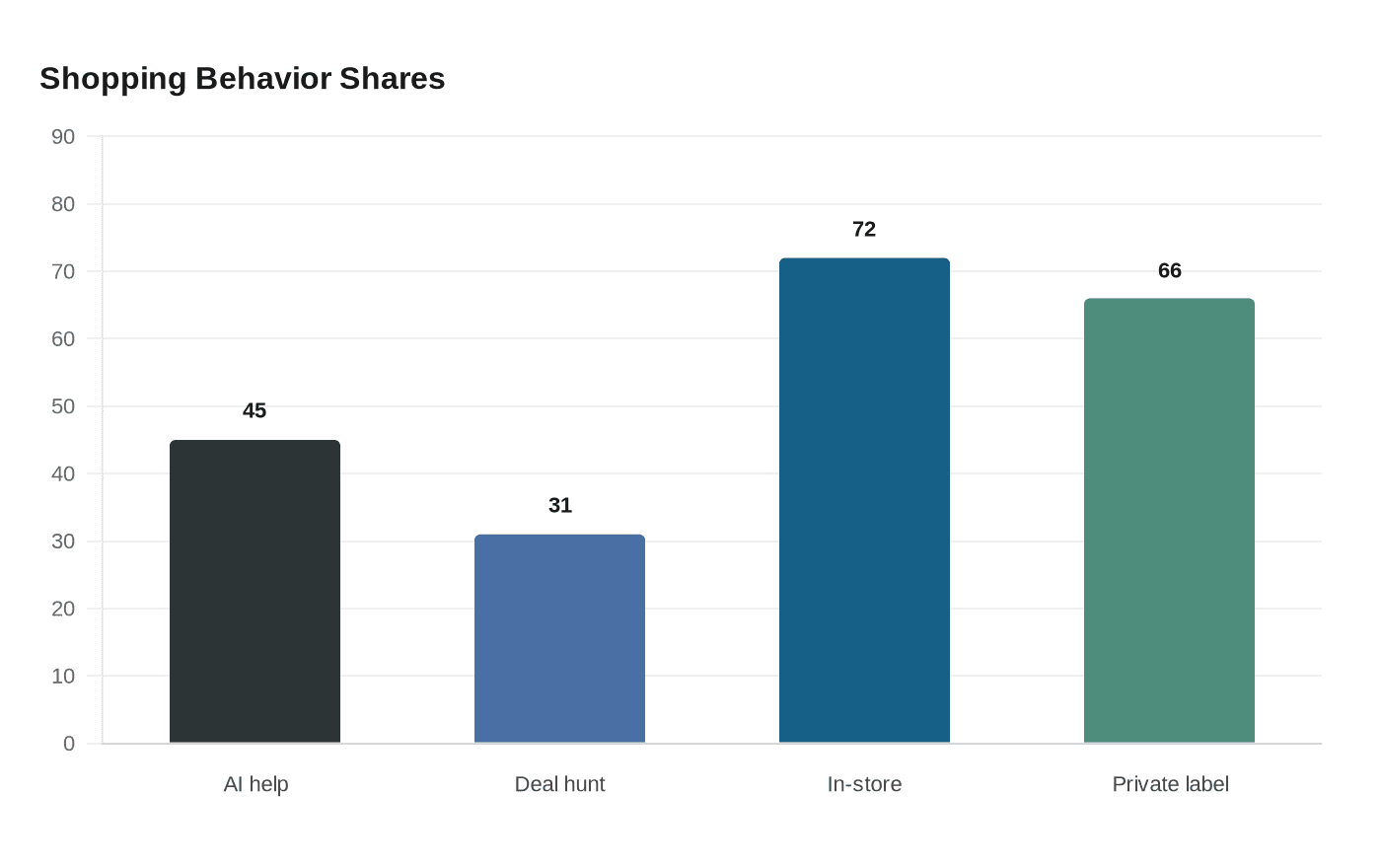
The shopping journey itself has become more phygital, with digital channels and AI shaping discovery while physical stores remain the final arbiters of fit, feel and finish. That matters in fashion, where a sleeve length, a fabric hand or the drape of a skirt can decide the sale. Even as AI moves from early-adopter territory into the mainstream, consumers still want the mirror, the seam, the waistband and the return policy before they commit. IBM and the National Retail Federation found that 72 percent of surveyed consumers still shop in stores.
The broader retail message is clear: this is a spending reset, not a replay of old brand loyalty. Deloitte has described the consumer as wanting more value for the price, not just lower prices, while EY found 66 percent of consumers view private label as just as good as branded alternatives. NIQ says U.S. shoppers are splitting toward lower-cost private label and more differentiated premium goods. For fashion, the winners are the brands that can prove wear, quality and longevity. The losers are the labels selling decoration without durability.
Know something we missed? Have a correction or additional information?
Submit a Tip