Dolce & Gabbana Names Former Gucci Executive Stefano Cantino Co-CEO
Dolce & Gabbana put former Gucci executive Stefano Cantino beside Alfonso Dolce in a two-CEO model, signaling a sharper push for growth, control and modernization.

Dolce & Gabbana has placed Stefano Cantino at the center of its next act, naming the former Gucci executive co-CEO alongside Alfonso Dolce and formalizing a leadership model built for scale rather than theatrics. Cantino’s résumé, which spans senior roles at Prada, Louis Vuitton and Gucci, gives the Milan house a luxury operator with deep experience in the machinery of brand expansion, store networks and corporate discipline.
The appointment took effect immediately and comes as Dolce & Gabbana pushes into a more complicated phase of its business. Alfonso Dolce said he was pleased to have Cantino by his side in a “new phase of growth and development,” a line that reads less like ceremony than strategy. In a founder-shaped house where creative identity has long been tightly held, the decision to split executive power suggests a deliberate modernization of governance, not a simple handoff.
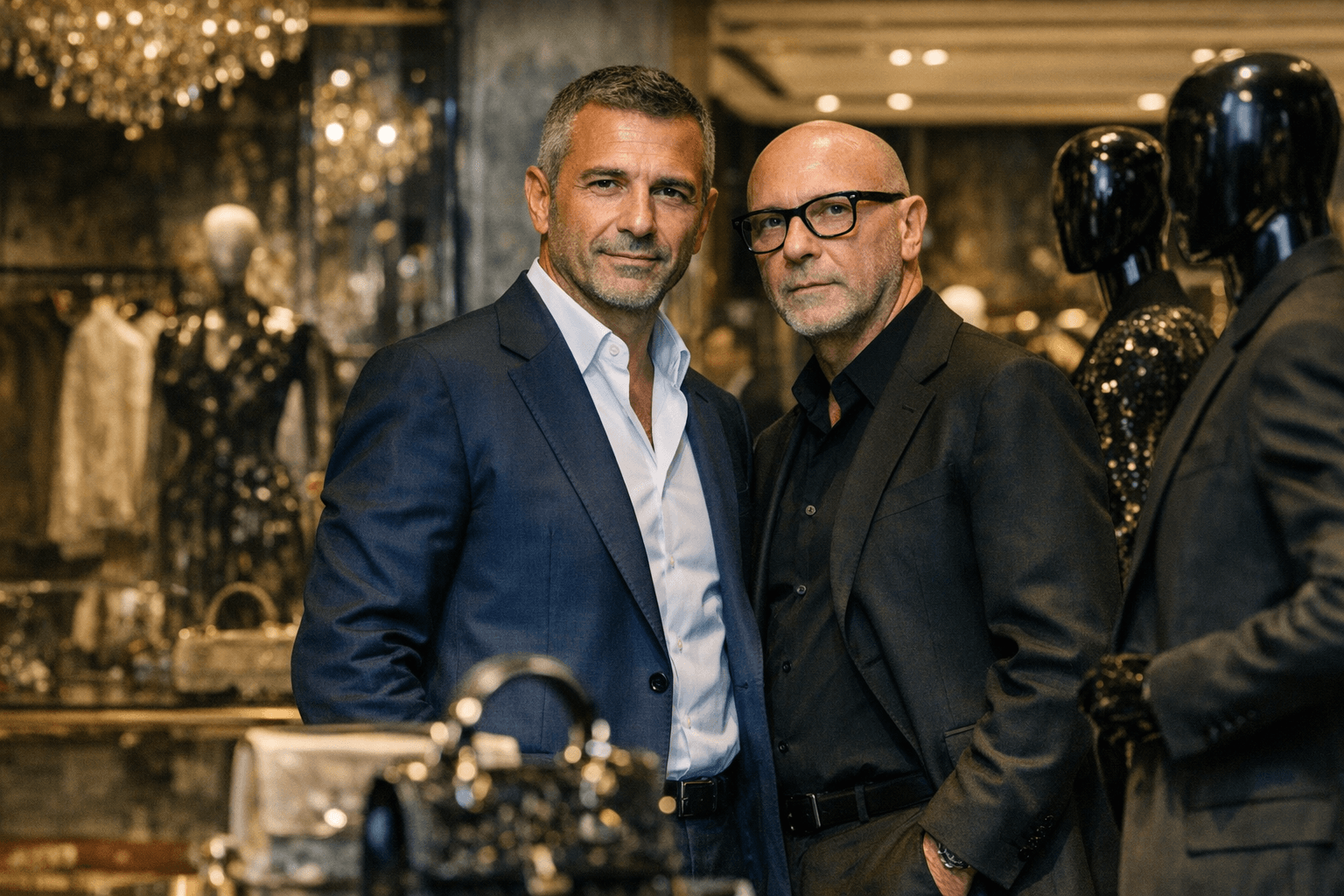
The move also follows a deeper reshaping at the top. Stefano Gabbana resigned from oversight roles effective Jan. 1, 2026, while keeping a creative role, and the company described that shift as a “natural evolution” of governance. Dolce & Gabbana also said Gabbana’s departure from management has “no influence whatsoever” on his creative activity, an important distinction for a brand whose visual language remains inseparable from its founders.
Behind the boardroom change sits a business that is still sizable, but under pressure. Dolce & Gabbana reported revenue of €1.871 billion for the fiscal year ending March 2024, up 17 percent year over year, yet it also posted an operating loss of €13 million. The company has been investing heavily in its store network and beauty business, and as of March 31, 2024, it operated in over 30 countries with 249 directly operated stores. That footprint gives Cantino a much bigger operational stage than a pure image role would suggest.
The timing matters. Recent reporting has pointed to roughly €450 million in debt restructuring, sharpening attention on how Dolce & Gabbana will finance its next phase. Alfonso Dolce said in 2024 that the company was ready to consider opening its capital to third-party investors through a listing or other financial instruments, a remark that now looks less like theory and more like a preview. Cantino’s arrival signals that the house is preparing for a broader, more institutional future without surrendering the aesthetic control that built its name.
This article was produced by Prism’s automated news system from verified source data, official records, and press releases, then run through automated quality and moderation checks before publishing. The system is built and supervised by the people who set the standards it runs under. Read our full AI policy.
Did this article answer your question?


