Fashion Speakers Urge Shift From Volume to Value Amid EU Rules
Fashion is being pushed away from endless volume and toward resale, repair, and product passports. The brands that win next will make circularity profitable, not just preach it.

The new fashion math is simple: less volume, more value
The loudest message out of ChangeNOW in Paris was not about prettier sustainability language. It was about a hard pivot away from chasing units at any cost and toward building value through resale, repair, data, digital product passports, and textile recycling. That matters because the old playbook, sell more, move faster, hope the discount rack cleans up the mess, is getting squeezed from every direction at once.
This is not a mood-board debate. It is a business model fight. If a brand can make money from taking a garment back, fixing it, reselling it, or proving exactly what it is made of, then circular fashion stops sounding like a side project and starts looking like the next operating system.
Why the EU is making this conversation unavoidable
The pressure is coming from Brussels, and it is specific. The European Commission’s textiles strategy says it wants textiles designed to last longer, be easier to repair, and be easier to recycle. It also plans to introduce a Digital Product Passport for textiles and mandatory, harmonised extended producer responsibility rules across all member states. That means fashion companies will not just be asked to do better, they will increasingly be required to track, fund, and design for the end of a garment’s life.
The legal backbone is already in place. Regulation (EU) 2024/1781, the Ecodesign for Sustainable Products Regulation, was adopted on June 13, 2024 and creates the framework for digital product passports and wider product sustainability requirements. Add in the fact that EU rules already required member states to set up separate collection systems for used textiles and textile waste by January 1, 2025, and the industry no longer has the luxury of treating textile waste like an abstract future problem. The bin is here, the rules are here, and the cost of ignoring both is rising.
Resale and repair are the first models that can actually touch how you shop
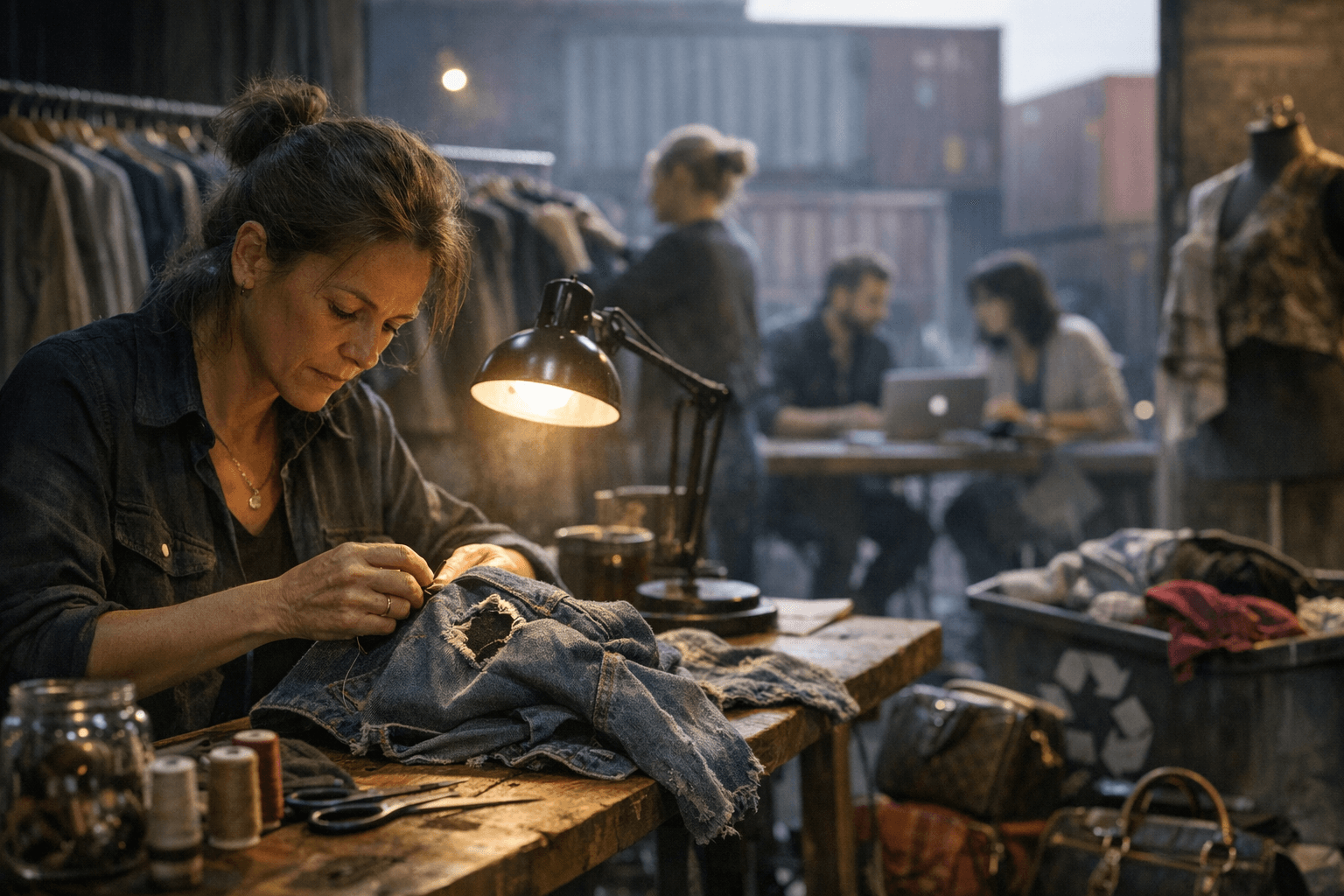
Of the ideas on the table, resale and repair are the most immediate. They do not require a total reinvention of taste, just a different attitude toward what a garment is worth after the first owner is done with it. In practical terms, that could mean brands launching their own resale platforms, offering buyback credits, or building repair into loyalty programs the way some labels already build in alterations.
For shoppers, the effect is easy to imagine within the next one to three years. A jacket with a visible repair service attached becomes easier to justify at full price. A brand that will buy it back later makes the initial purchase feel less like a gamble. The real shift is psychological as much as commercial: clothing starts behaving more like an asset and less like a disposable hit.
Repair also has a style upside. The best brands will not hide mending in a back room. They will make it part of the look, part of the story, part of the value. That matters in a market where people already pay extra for durability, character, and provenance.
Digital product passports could be the most useful thing no one can see
Digital product passports are the least glamorous idea in the room, but they may end up being the most consequential. Once they are built into the system, they can help verify what a garment is made from, where it came from, and how it should be repaired or recycled. In other words, they turn a label into something more like a file, and that file could become the receipt, care guide, and authenticity check all at once.
For consumers, this could change buying behavior fast. A passport could tell you whether that sleek black blazer is mostly virgin polyester or a more recyclable blend, whether replacement buttons are available, and whether the brand actually designed the piece for disassembly. In a resale market that is already flooded with counterfeits and vague product descriptions, verification is not a perk. It is leverage.
This is where the next 1 to 3 years get interesting. The passport does not just help regulators. It helps shoppers decide what is worth buying new, what is worth repairing, and what is worth reselling at a premium later.
Textile recycling is necessary, but it is not the whole answer
Recycling sounds like the cleanest solution because it keeps the loop spinning, but it is not a magic trick. The industry still has to sort, collect, and process mountains of mixed fibers, trims, coatings, and finishes, which is exactly why the EU’s separate collection requirement matters so much. Once used textiles and textile waste have to be collected separately, the infrastructure conversation gets real, fast.
That is also why textile recycling cannot be treated as a PR shield for overproduction. The industry can recycle more and still drown in excess if the volume keeps climbing. The sharper version of the ChangeNOW argument is that recycling should support a smaller, smarter system, not excuse a bigger one.
The carbon question is really a production question
Paris Good Fashion has made the uncomfortable part plain: it said a 5% production cut by 2030 is crucial if fashion is going to align with climate goals. That is the number that cuts through all the glossy circularity talk. If the sector keeps producing more and more, then resale, repair, and recycling will spend their lives trying to catch up with the overflow.
The group itself is no small side note. Founded in 2019, it says it now has more than 110 members, which tells you the debate is not stuck in a niche activist corner. It is moving through the city that still sets a huge amount of fashion’s tone, from luxury to streetwear to the businesses between them. And because Paris still matters this much, the production argument matters too.
What actually changes next
In the near term, the most visible changes are likely to be the ones shoppers can touch. Expect more resale tied directly to brands, more repair programs that feel built-in rather than charitable, and more product data that helps verify authenticity and material content. Expect better care labeling and more pressure on brands to prove that a garment can live beyond one season.
The bigger shift is structural. Fashion is being pushed to earn its growth instead of just chasing it. The brands that adapt will make value last longer than hype, and that is the only kind of scale the new rules seem willing to reward.
This article was produced by Prism’s automated news system from verified source data, official records, and press releases, then run through automated quality and moderation checks before publishing. The system is built and supervised by the people who set the standards it runs under. Read our full AI policy.
Did this article answer your question?


