Federal Court Narrows Nike Securities Fraud Case Over DTC Strategy
Just one Nike statement survived a scienter test in an Oregon fraud ruling, as execs allegedly sold $245 million in stock while touting a strategy shoppers ultimately saw unravel.

Of the dozens of statements investors challenged as fraudulent, a single one cleared the full legal bar for securities fraud. That ratio, buried in the technical language of a March 31 federal court order, says more about how tightly courts police the line between corporate storytelling and provable deception than any ruling on the merits could.
The Oregon federal court substantially narrowed In Re Nike, Inc. Securities Litigation, a class-action case carrying docket number 3:24-cv-00974-AN, filed in 2024 and targeting Nike's Consumer Direct Acceleration strategy, the initiative that reshaped where and how the brand sold its products for the better part of four years. The court concluded that plaintiffs adequately pleaded falsity as to seven of the challenged statements but established scienter, meaning knowing or reckless deception, as to only one. That single surviving claim keeps a narrow portion of the case alive against Nike and former CEO John Donahoe.
The named defendants include Donahoe, current CFO Mathew Friend, and Executive Chair Mark G. Parker. Investors allege that while the three executives publicly praised the CDA strategy's momentum, they collectively sold 1.95 million shares of Nike stock for proceeds exceeding $245 million, during a class period running from March 2021 to October 2024. Cohen Milstein represents the plaintiffs.
To understand what was actually at stake for shoppers, it helps to know what CDA meant in practice. Nike had grown direct-to-consumer sales from 15 percent of total revenue in 2010 to 32 percent by 2019, and the CDA was supposed to push that share toward 60 percent by 2025. Operationally, that meant severing or scaling back relationships with multi-brand wholesale partners and redirecting consumers toward Nike.com, the Nike app, and branded store concepts. Products that had been widely available at Foot Locker and department stores became increasingly concentrated in Nike's own channels, where the brand controlled pricing, loyalty data, and returns. The DTC share of Nike's 2024 sales failed to grow for the first time in more than a decade, and Nike quietly reversed course, re-engaging wholesale. Four partial disclosures of the strategy's deterioration, beginning in December 2023, triggered the lawsuit.
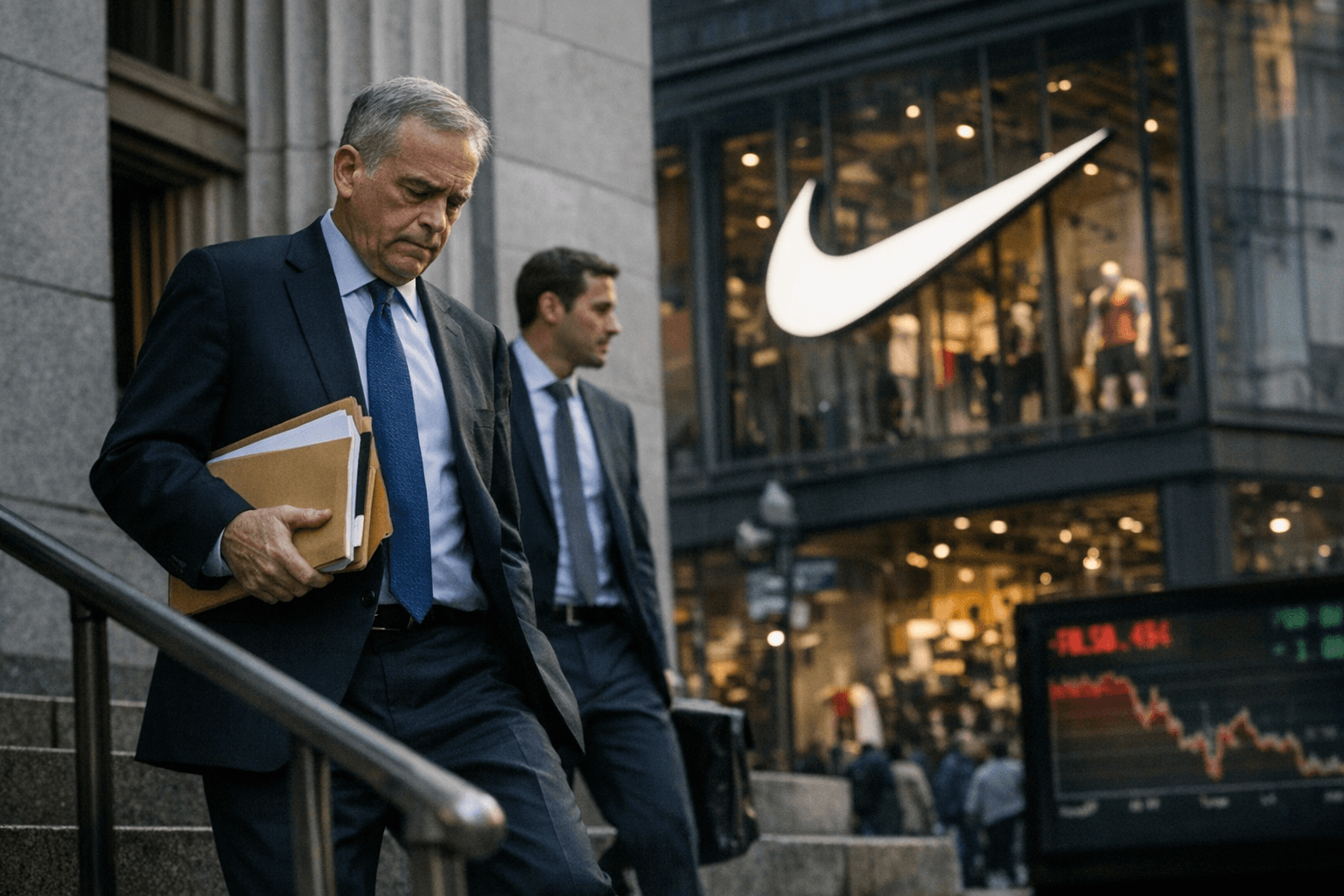
The court's dismissal of most claims rests on a foundational distinction securities law calls puffery: broad assertions of strategic confidence, such as declaring digital transformation is on track or that a DTC pivot is gaining momentum, are too vague to constitute actionable fraud. No reasonable investor, courts have long held, should treat forward-looking optimism as a specific factual guarantee. Fraud requires a plausibly false specific statement and evidence that the speaker knew or disregarded the falsity at the time. By those standards, the plaintiffs built a sufficient case on exactly one statement.
For every retail brand that has spent the last five years pitching investors on DTC margins, loyalty ecosystems, and personalization as a growth story, the ruling is a precise calibration of risk. Vague digital enthusiasm is litigation-proof; specific operational claims are not. Nike's forced retreat from its 60-percent DTC ambition, and the resulting loss of shelf space and consumer touchpoints that shoppers had relied on for decades, illustrates how quickly the distance between an earnings-call narrative and retail reality can become a courtroom question.
Know something we missed? Have a correction or additional information?
Submit a Tip