Sustainability Signals: Supply Chains, Brand Accountability, and Fashion's Greenwashing Debate
Eco-labels aren't enough anymore: from Zara's Galliano gambit to SHEIN selling its supply chain to rivals, here's what fashion's sustainability claims actually look like under scrutiny.
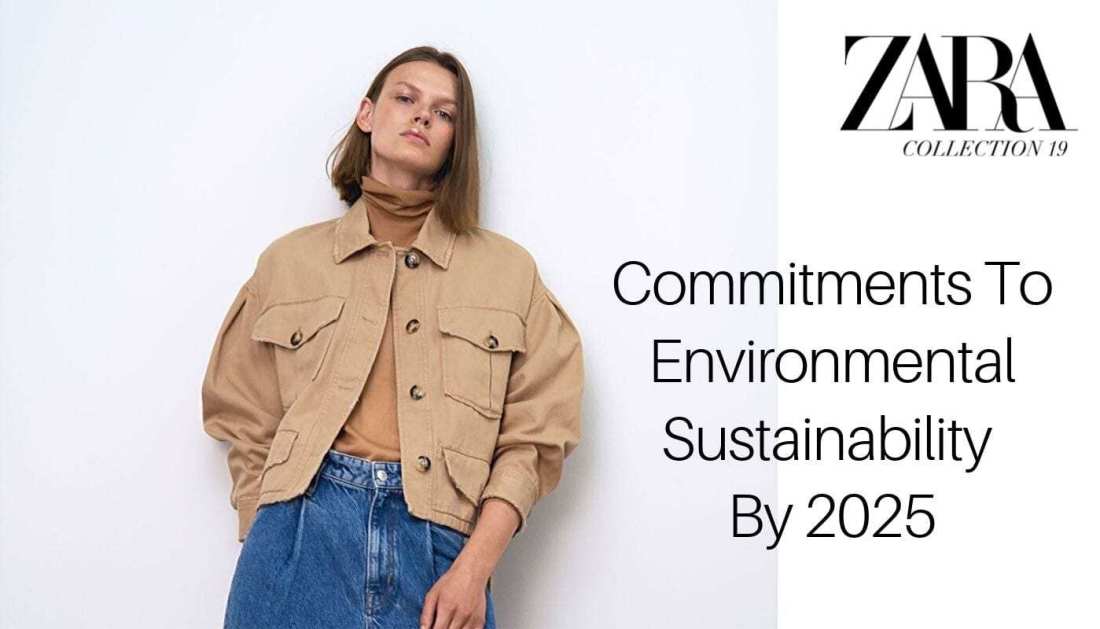
It's no longer enough to slap an eco-friendly label on a linen tote and call it progress. Fashion's sustainability conversation in 2026 has shifted from aspiration to accountability, and the gap between what brands announce and what they can actually prove has never been more visible — or more consequential.
The Zara-Galliano Question Nobody's Answering
Zara has attracted one-off collaborations with fashion's top talents for years, but its deal with John Galliano is a first. Galliano's first collection is set to drop in September 2026, which he has described as "his third act." At 65, the stakes are high — for his legacy and for Inditex's sustainability credibility.
The partnership has prompted a pointed question from industry observers: why would Zara, a brand whose design aesthetic has long been characterized as algorithmic, suddenly ask a designer to rework their existing inventory? Fashion consultant Silvy Vignola has publicly floated one of the more compelling theories: that the EU's Ecodesign for Sustainable Products Regulation may be the real driver, forcing Inditex's hand on circularity before the brand chooses to acknowledge it. That's the kind of regulatory pressure that tends to produce strategic partnerships dressed up as creative vision.
The Galliano hire is also part of a broader pattern worth tracking. In 2024, Uniqlo recruited Clare Waight Keller from Givenchy as Creative Director; that same year, Zac Posen joined Gap as Executive Vice President and Creative Director; and in 2025, Jonathan Saunders left Diane von Furstenberg to become Chief Creative Officer of &Other Stories, the H&M subsidiary. Top-tier designers migrating to mass-market retailers is now a trend, not an anomaly. Whether it moves the sustainability needle at those retailers is the question that rarely gets answered.
SHEIN's Infrastructure Play — and the Reputational Baggage That Comes With It
SHEIN is now offering its on-demand manufacturing model to other brands, positioning itself as a logistics and production partner rather than just a retailer. The pitch is efficient: test small, scale fast, reduce deadstock. The problem is the company selling that pitch. SHEIN faces serious criticism after dodging UK lawmakers' questions on Xinjiang cotton sourcing, with the brand accused of "wilful ignorance" regarding its oversight mechanisms. While the company claims to uphold ethical standards, its lack of transparency raises questions about its supply chain controls.
Any brand that signs on to SHEIN's manufacturing infrastructure inherits those questions by association. The reputational math here is straightforward: outsourcing your production to a company under active parliamentary scrutiny is not a supply chain strategy — it's a liability transfer.
Middle East Shipping: The Disruption Hitting Fashion's Lead Times
Maersk has rerouted its ships via the Cape of Good Hope and suspended all passages through the Strait of Hormuz until further notice, adding eight to fifteen days to Asia-Europe container transit times. MSC instructed all vessels operating in the Gulf region to proceed to safe shelter areas, later announcing it had suspended all bookings for worldwide cargo to the Middle East. Maersk and Hapag-Lloyd had already re-routed their shared ME11 service under the Gemini Cooperation, only to reroute again around the Cape of Good Hope.
The disruption is contributing to higher prices for energy and key industrial inputs sourced from the region, with companies facing risks to input costs, lead times, cash flow, and supply continuity. For fashion specifically, elongated lead times don't just mean slower deliveries — they mean garment workers absorbing production pressure as brands attempt to compensate. The workers at the end of these rerouted shipping lanes are rarely mentioned in brand communications about "supply chain resilience."
Seaweed Dye and Biobased Innovation: Signal or Noise?
A Scottish startup called SeaDyes is using seaweed as the base for natural fabric dyes, offering fashion and textiles manufacturers an alternative to petrochemical-derived colorings. The company is currently in talks with potential investors and partners in the fashion industry, including a luxury Scottish cashmere brand. SeaDyes was founded on the back of a research project between the Scottish Association for Marine Science and Jessica Giannotti, the marine scientist behind Crùbag, a textile studio based in Oban that tells the story of the ocean through its work.
Early-stage financing for biobased dye technology represents genuine innovation — the synthetic dye industry is one of fashion's most environmentally damaging sectors. The caveat is scale: a startup in talks with one cashmere brand is a proof of concept, not a supply chain transformation. The signal is worth watching; the headline claiming revolution is premature.
CFOs and the Decarbonisation Budget Problem
One of the more structural accountability signals in fashion right now is the push to involve CFOs directly in supply chain decarbonisation funding. For years, sustainability teams operated with ring-fenced budgets that rarely survived quarterly reviews. The argument being made to finance teams is that supplier emissions are a balance sheet risk — regulatory, reputational, and operational. Whether CFOs are buying that argument or simply adding "sustainability" to their risk registers without committing capital remains the central question of corporate governance in fashion right now.
The Reader Action Box: Questions That Cut Through the Marketing
Before a brand's sustainability claims earn your trust or your wallet, ask:
- Does the brand publish a supplier list, and is it independently audited? A press release about a "responsible sourcing commitment" is not a supplier list.
- Where is the garment's fabric dyed, and what wastewater standards apply in that country? Biobased fiber means nothing if the dyeing process pollutes local waterways.
- If the brand uses a manufacturing partner — especially one under regulatory scrutiny — what contractual accountability exists for labor standards in that partner's facilities?
- What percentage of revenue is allocated to supply chain decarbonisation? "Net zero by 2050" without a funded transition plan is a target, not a strategy.
- Has any NGO or third-party certifier independently verified the specific claims being made, or is the brand citing its own reporting?
The fashion industry's sustainability conversation has matured enough that the right questions are now known. The gap that remains is between brands that answer them with evidence and brands that answer them with better-designed press releases. That gap is where your purchasing power has the most leverage.
This article was produced by Prism’s automated news system from verified source data, official records, and press releases, then run through automated quality and moderation checks before publishing. The system is built and supervised by the people who set the standards it runs under. Read our full AI policy.
Did this article answer your question?


