Ferrari Style Opens Immersive London Flagship Blending Automotive Heritage and Fashion
Ferrari Style's 9,150-square-foot London flagship recruited circularity-focused Formafantasma for its interiors, but the brand's sharpest sustainability story lives in its certified Q-Cycle garments, not the building.
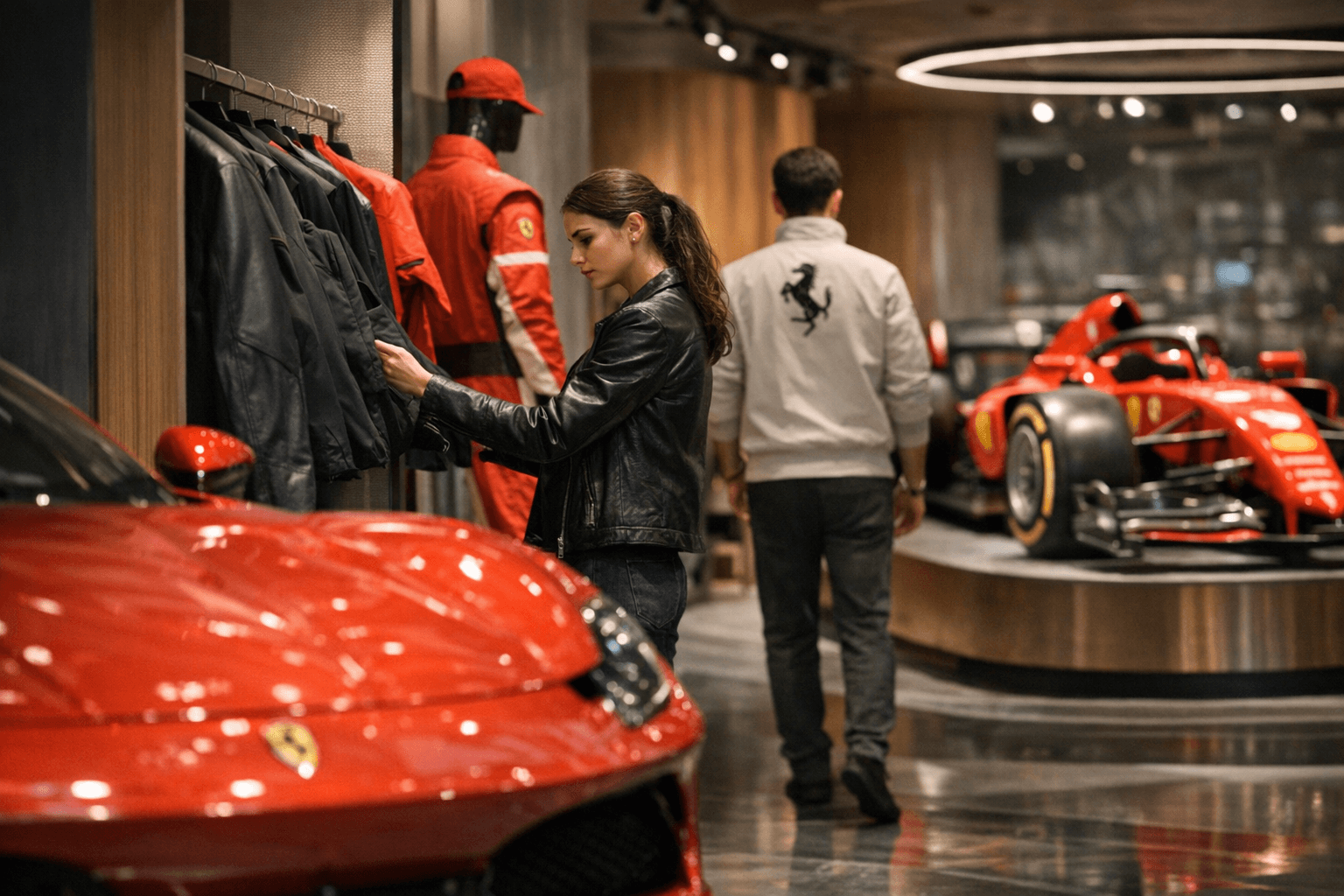
Slapping recycled-content language onto a luxury retail project is easy. Earning it is considerably harder, and Ferrari Style's new London flagship, which opened April 1 at the corner of Old Bond Street and Piccadilly, invites precisely that scrutiny.
The 9,150-square-foot, three-floor store occupies the former De Beers jewelry space at 45 Old Bond Street, a Grade II-listed Queen Anne building dating to 1905. Ferrari preserved the original Portland stone façade rather than reworking it, which sets up the central tension of the entire project: a 121-year-old shell housing a deliberately industrial interior, with neighbors including Cartier, Prada, Tod's, and Tiffany & Co. on either side.
Inside, the design emerged from a collaboration between Ferrari Style creative director Rocco Iannone, Berlin-based architecture firm Gonzalez Haase AAS, and Milan's Formafantasma. The material palette runs to hand-brushed stainless steel, concrete flooring, Alcantara-paneled walls, and aluminium and glass vitrines. Ferrari red threads through everything, appearing in handrails, rugs, mannequins, and packaging, referencing both the brand's signature color and its Spring/Summer 2026 collection. Iannone said he wanted visitors to "immediately understand what we stand for," with the ground floor designed as "a journey of discovery."
The upper floors carry women's and men's ready-to-wear. The Tailor Made Atelier, zoned by floor-to-ceiling leather curtains and anchored by a large circular table, handles made-to-order pieces including the brand's Maranello clutch customization service, a process Iannone deliberately modeled on the experience of commissioning an actual Ferrari. The basement Caveau functions as a private chamber for rare components and collectibles sourced from the brand's Maranello headquarters.
All of this is coherent, considered retail architecture. The friction begins when you examine what "crafted materials" means in this context, particularly given Formafantasma's position in the design world. Founded in 2009 by Andrea Trimarchi and Simone Farresin, the Milan studio has built its reputation arguing publicly that sustainability is a systemic question, not a surface one. Farresin has said it is "not enough to ask designers to be sustainable." Their modular SuperWire lighting series, engineered specifically for user-level LED repair, is the studio at its most principled. Whether any equivalent thinking, around disassembly, fixture longevity, or material traceability, was built into the Old Bond Street fitout has not been publicly documented by the brand.
The most credible sustainability credentials at Ferrari Style currently live in its garments, not its interiors. The brand's Q-Cycle fiber converts end-of-life tyres into polyamide 6.6 yarn through a thermochemical pyrolysis process and carries third-party certifications including ISCC PLUS and Oeko-TEX Standard 100. GRS-certified recycled nylons, wools, and silks appear across the collections alongside padding made from recycled plastic bottles. These are traceable, verified claims with an auditable supply chain behind them.
What the London flagship does not appear to offer is a visible in-store repair service, a garment take-back program, or publicly stated design-for-disassembly principles in its fixtures. The Alcantara walls and brushed stainless perimeter read as precise, expensive, and industrial. Whether the build qualifies as something structurally aligned with circularity depends on material provenance data Ferrari has yet to share. With Formafantasma's name attached to the project, that gap is worth closing.
This article was produced by Prism’s automated news system from verified source data, official records, and press releases, then run through automated quality and moderation checks before publishing. The system is built and supervised by the people who set the standards it runs under. Read our full AI policy.
Did this article answer your question?


