Gucci sales fall 8%, as Kering eyes Demna-led turnaround
Gucci’s sales fell 8% to €1.35 billion, its 11th straight drop, as Kering leans on Demna and a Florence reset to prove the house still has traction.
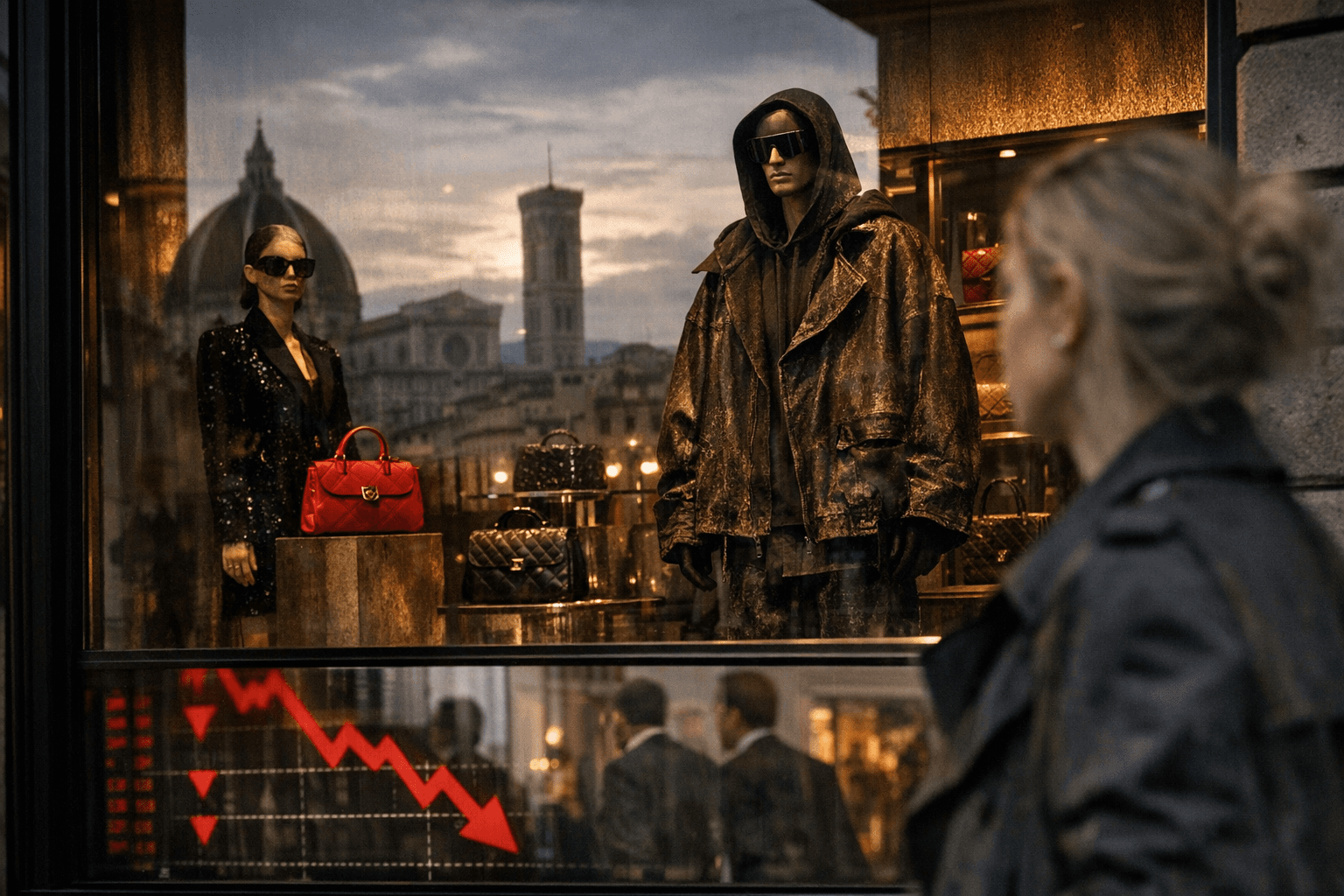
Gucci’s 8% first-quarter sales decline was not just another soft luxury print. It was the brand’s 11th straight quarterly fall, a bruising stretch that makes Kering’s flagship look less like a cyclical disappointment and more like a stress test for whether a once-coveted house can regain cultural pull quickly enough to matter. First-quarter sales at Gucci came to €1.35 billion, while Kering’s group revenue stabilized at €3.568 billion on a comparable basis, a “first step” in the company’s recovery, by its own telling.
The split between macro pressure and brand-specific fatigue was visible in the geography. Kering said the Middle East, which accounts for about 5% of retail revenue, saw retail revenue fall 11% in the quarter. The war in Iran and fragile consumer confidence have clearly strained demand there, and North America offered some relief by offsetting weakness elsewhere. Still, those external shocks do not fully explain why Gucci has now posted quarter after quarter of decline while several other houses in the portfolio managed to grow.
That is where the harder question begins: how much of Gucci’s problem is the market, and how much is the product? Kering said it has reset Gucci’s product architecture and sharpened its category focus, with new collections rolling out progressively through 2026. The company said Gucci remains its top priority, but priority and momentum are not the same thing, especially when the label’s identity has felt unsettled and the turnaround has yet to produce a decisive new silhouette, a new handbag shape or a fresh fashion instinct that shoppers instantly recognize.
Investors are already treating the answer as unfinished business. Kering shares fell as much as 10% on April 15 and were down about 7% for 2026 at that point, underscoring the skepticism hanging over the group. Citi said the timeline for a Gucci turnaround remains uncertain and likely gradual. JPMorgan went further, saying it would take much longer and require much more work than bulls expected. That caution lands with more force after a difficult 2025, when Kering’s revenue fell 13% to €14.675 billion and Gucci’s annual sales dropped 22%.
The turnaround now rests on a new chain of command and a new creative wager. Luca de Meo took the CEO role on September 15, 2025, after being appointed in June 2025, and Demna, named Gucci’s artistic director in March 2025, is being watched as the brand’s potential catalyst. Kering will present “ReconKering” at its Capital Markets Day in Florence on April 16, but the luxury house cannot reset perception with strategy slides alone. It will need clothes, accessories and a point of view sharp enough to make Gucci feel desirable again.
This article was produced by Prism’s automated news system from verified source data, official records, and press releases, then run through automated quality and moderation checks before publishing. The system is built and supervised by the people who set the standards it runs under. Read our full AI policy.
Did this article answer your question?


