Madewell, Re&Up, Isko launch circular denim capsule from 20,000 used jeans
Madewell, Re&Up, and Isko turned 20,000 used jeans into a three-jean capsule, but the real test is whether that can scale past a glossy pilot.
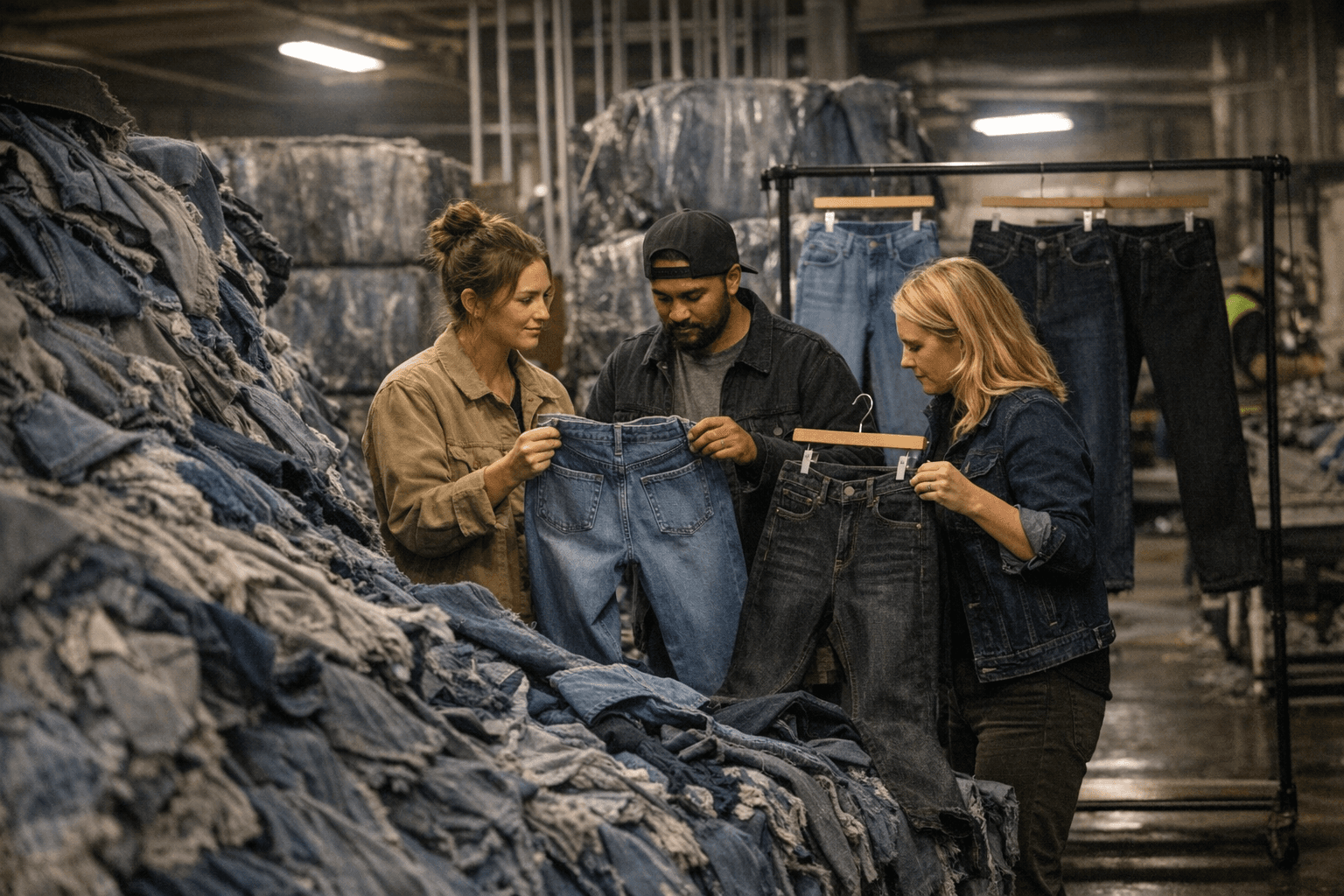
Madewell, Re&Up Recycling Technologies, and ISKO did not just stitch together another sustainability talking point. They turned roughly 20,000 pairs of post-consumer jeans into a textile-to-textile denim capsule, and that number is the whole story: big enough to sound industrial, still small enough to raise the only question that matters, whether circular denim can actually leave the lab and live on the rack.
The launch, announced April 8 and framed by RE&UP as a step toward a closed-loop textile economy, landed with real retail intent, not just mood-board theory. WWD reported that the capsule included three jeans made with fabrics containing recycled cotton derived from jeans collected by Madewell. That matters because it pushes the project past the usual sustainability demo reel and into actual product, the part where fit, hand feel, price, and repeatability stop being talking points and become business.
Madewell has spent years building the collection side of that equation. Its Denim Trade Up program has now collected more than 2.3 million preloved pieces, and it accepts jeans from any brand, which is a far more useful model than a closed little in-house loop. Gently worn pairs are resold through Madewell Forever; beyond-repair denim gets pushed into downstream uses such as housing insulation, sustainable food packaging, or upcycled designs. That is the real supply-chain spine here: pull product back, sort it, keep some of it in resale, and keep the rest moving instead of dumping it.
RE&UP’s pitch is that this collaboration tackles the ugly part of denim recycling, the mixed fibers, metal hardware, and wear histories that make post-consumer jeans so much harder to recover than virgin-cut scraps. That is the technical hurdle the industry keeps skating around. Anyone can downcycle denim into stuffing or insulation. The harder, more valuable move is to recover cotton in a form good enough to spin, weave, and sell again as denim with enough quality consistency that designers do not have to treat recycled fabric like a compromise.
That is why the scale question is so sharp here. Twenty thousand jeans is a strong feedstock pool, but it is still a pilot-sized input compared with the volume needed to change how denim is sourced season after season. For textile-to-textile denim to become everyday retail reality, collection has to stay steady, sorting has to get cleaner, fiber recovery has to hold quality, and costs have to come down enough to compete with virgin cotton and conventional production. Until then, this capsule is proof of concept with better styling, not yet a finished system.
This article was produced by Prism’s automated news system from verified source data, official records, and press releases, then run through automated quality and moderation checks before publishing. The system is built and supervised by the people who set the standards it runs under. Read our full AI policy.
Did this article answer your question?


