How to Choose Jeans That Last Beyond Seasonal Trends
The best jeans do more than fit this season: they pay you back in repairs, rewashes, and fewer replacements.
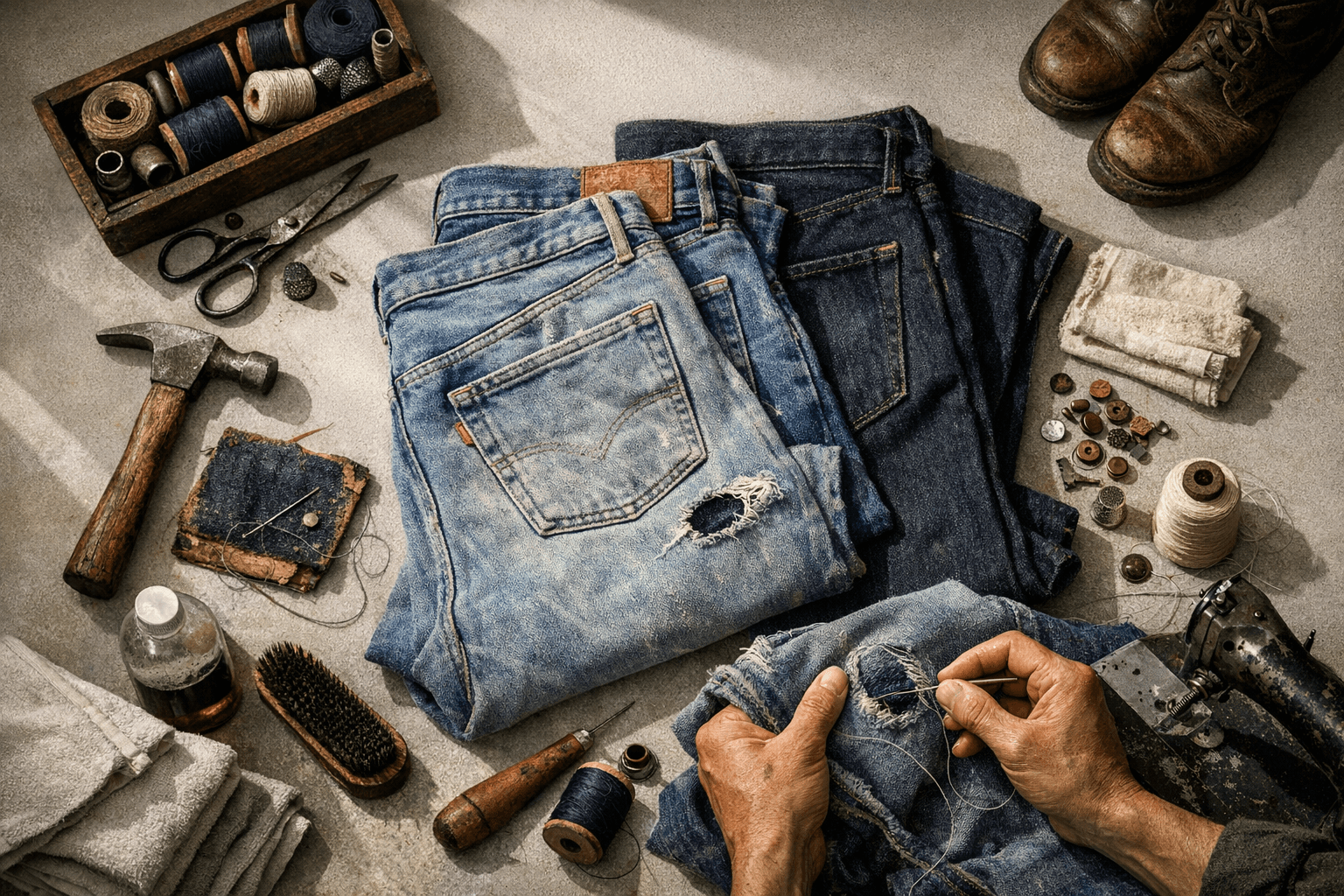
The smartest denim buy is the pair that asks for less
Good jeans should make your life easier, not louder. The right pair earns its place by being worn hard, washed often, repaired cleanly, and still looking intentional after the trend cycle has moved on. That is the real payoff: fewer replacements, easier fixes, and a lower cost per wear, which is why the best denim shopping decision is less about chasing novelty and more about reading the cloth with a sharp eye.
The anti-greenwashing rule is simple. Ignore the breezy language about durability, and inspect the parts of the jean that actually determine whether it will last: fiber content, fabric weight, construction quality, and how the finish will age after repeated washing. If a pair cannot survive those four tests, it is not a good buy, no matter how convincing the marketing looks on a hanger.
Start with fiber content, because the yarn tells the truth
The label is the first place to look, but only if you read it like an editor, not a slogan. Denim with a higher share of cotton usually has the familiar dry hand and the kind of patina that softens beautifully over time, while blends can add stretch or recovery that helps the jeans hold shape day to day. What matters is whether the blend serves longevity or simply masks a flimsy cloth with temporary comfort.
A small amount of stretch can be useful, especially if you want ease at the waist or knee, but too much can make jeans collapse before the season is over. The best long-wearing pairs tend to keep the fiber story straightforward, because simple compositions are easier to understand, easier to repair, and less likely to rely on synthetic gimmicks to feel substantial at the fitting-room stage.
Fabric weight changes everything you feel and everything you keep
Weight is one of the clearest clues to how jeans will behave after months of wear. Heavier denim usually feels more substantial in the hand and tends to hold structure better, while very light denim can be breezier and softer but often shows wear faster, especially at stress points like the inner thigh, pocket edges, and knees. You do not need to memorize denim jargon to use this information well, only to notice whether the cloth feels robust enough to outlast repeated use.
There is a practical sweet spot for everyday wear: enough heft to resist sagging, enough movement to avoid stiffness that discourages regular wear. When a pair feels too delicate to be worn often, it is already failing the first test. Jeans should not be treated like special-occasion tailoring, because the whole point is that they become more useful, not more precious, with time.
Construction is where the quiet luxury of denim lives
Good denim is built, not merely dyed. Look closely at the seams, the stitching density, the reinforcement at stress points, and the hardware. Rivets, zippers, buttons, and belt loops are not decoration here, they are load-bearing details, and if they feel insubstantial, the rest of the jean is likely cut from the same compromise.
Pay attention to where the inside is finished. Clean seams and sturdy pocket bags matter because they determine whether the jeans will survive frequent wear and occasional repair without falling apart at the edges. A well-made pair should invite mending, not resist it, which is why repair-friendly construction is such a strong marker of value. If a brand makes it difficult to replace hardware, patch fabric, or alter a hem, it is telling you that longevity was never the priority.
Watch the finish, because the wash should age, not expire
The most convincing denim finishes are the ones that can look better after they are lived in. A wash that already seems overprocessed, overly distressed, or dependent on novelty is often the first thing to feel dated. By contrast, a cleaner wash with depth in the indigo or a restrained fade pattern tends to age with more grace, especially after repeated laundering and wear.
This is where anti-greenwashing shopping gets serious. A jean can look convincingly “vintage” on the rack and still be designed to fail visually once the first few washes change the tone. Choose finishes that can soften, crease, and evolve rather than those that only look finished when they are brand new. Denim should develop character, not unravel into gimmick.
Choose silhouettes that can outlast micro-trends
The safest shapes are rarely the least interesting. Straight legs, clean bootcuts, and classic five-pocket construction remain resilient because they are easy to style across seasons and less dependent on a fleeting proportion shift. When the cut is simple, the jean can move between sneakers, loafers, boots, and heels without feeling trapped in one era.
That is the hidden advantage of restraint. Wider, lower, or heavily detailed silhouettes can be stylish in the moment, but the more a pair depends on a specific fashion mood, the faster it dates itself. A simpler cut gives you more styling range, more chances to wear it, and more years before you feel pressured to replace it.
A practical checklist for the fitting room
Before you buy, run the jeans through a quick reality test:
- Check the label for a composition that makes sense for long wear, not just immediate softness.
- Hold the denim up to the light and judge whether it feels substantial enough to resist fast wear.
- Inspect seams, rivets, buttons, pocket bags, and belt loops for sturdiness.
- Look at the wash and ask whether it will still make sense after repeated washes, or whether it depends on a fresh, fashionable effect.
- Favor cuts that feel unforced and adaptable, because simple silhouettes are easier to repair and easier to wear for years.
This is the opposite of impulse buying. You are not choosing the loudest jean in the room; you are choosing the one most likely to stay in rotation long after the current mood has passed.
The best denim is the pair you keep reaching for
When jeans are well made, they stop acting like a seasonal purchase and start functioning like infrastructure. They move with you, break in with dignity, and get better at the job the more often you wear them. That is why the best denim investment is not the pair that promises reinvention, but the one with enough substance, simplicity, and repair potential to remain useful when the trend has already moved on.
This article was produced by Prism’s automated news system from verified source data, official records, and press releases, then run through automated quality and moderation checks before publishing. The system is built and supervised by the people who set the standards it runs under. Read our full AI policy.
Did this article answer your question?


