Indian Men Redefine Style With Bandhgalas, Sneakers and Heirloom Jewellery
A bandhagala with sneakers says the quiet part out loud: Indian menswear is shedding occasion rules and turning heirloom craft into daily uniform.
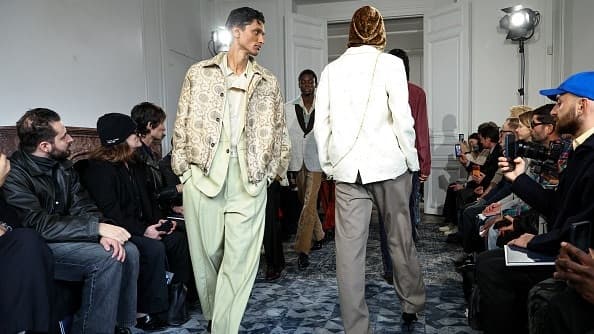
The new code is personal, not prescribed
The sharpest shift in Indian menswear is not a new silhouette so much as a new attitude. Bandhgalas are no longer being saved for weddings, and heirloom jewellery is no longer staying locked in the family safe; both are being folded into everyday dressing, where sneakers, tailoring and ornament now sit in the same outfit without apology. That is the real change: masculinity is moving away from safe basics and toward clothes that carry memory, status and personality in one frame.

This matters because the market is clearly making room for it. India’s menswear sector was estimated at USD 21.9 billion in 2025 and is projected to reach USD 42.4 billion by 2034, while another forecast places it at US$14.7 billion by 2030. The growth is being driven by changing fashion preferences, higher disposable incomes, urbanization and e-commerce, which together have widened the space for men to dress with more intent and less constraint.

Why the bandhagala still holds power
The bandhgala works as a modern symbol because it already carries the weight of history. Fashion accounts trace it back to Jodhpur’s royal courts and the angarkha tradition, then credit Maharaja Pratap Singh with shaping its tailored form in the late 19th century. One widely repeated story says he needed a new outfit quickly after his luggage went missing in England in 1897, which gives the garment a wonderfully practical origin for something now read as ceremonial.
Jodhpur’s royal context gives the jacket its authority. The city belongs to the Rajputana legacy, and Mehrangarh Fort, begun around 1459 by Rao Jodha, still anchors that visual language of power. That is why the bandhgala feels so persuasive today: it is not a costume borrowed from the past, but a cut with a clear lineage, one that can be sharpened, simplified or loosened without losing its sense of place.
How the jacket is being worn now
The modern bandhgala is being edited, not abandoned. Designers and stylists are emphasizing clean, structured cuts, with Vijesh Singhal of Bohame championing a precise, architectural fit and Rahul Khanna arguing that the jacket should flatter the frame without overwhelming it. That advice is important because the new styling depends on balance: the bandhgala still carries ceremony, but it now has to live in a wardrobe built for movement.
The most revealing styling choice is the sneaker. When a bandhagala is paired with low-profile trainers, the message is immediate: polish no longer has to mean stiffness. The shoe breaks the formality just enough to make the jacket feel contemporary, especially when the rest of the look stays tight, lean and thoughtfully proportioned.
Jewellery is no longer reserved for the wedding album
If the bandhgala gives the trend its structure, jewellery gives it its mood. The Ministry of Culture’s Indian Culture Portal treats jewellery as a core part of India’s cultural heritage, and the National Museum in New Delhi makes that history visible in its Alamkara gallery, which displays more than 250 items. That depth matters, because the current turn toward daily-wear heirloom jewellery reads less like novelty and more like a return to something deeply embedded in Indian style.
Current menswear coverage shows how that inheritance is being recast. A 2025 trend report says modern Indian grooms are weaving sarpechs, haars, jewelled buttons and brooches into their wedding wardrobes, while a separate jewellery trend story says heirloom-inspired designs are making a comeback. Vogue India has also kept the conversation alive by treating jewellery styling for men as a question of taste, not taboo.
What this looks like in real wardrobes
The most convincing versions of the trend do not pile on everything at once. They let one formal element carry the look, then cool it down with something everyday, whether that is a sneaker, a pared-back trouser or a clean shirt underneath a structured jacket. The result is less about dressing up and more about recalibrating what counts as normal.
A few combinations define the new mood:
- A dark bandhgala with crisp trousers and sneakers, so the jacket feels ceremonial but the outfit feels lived in.
- A single heirloom ring, brooch or chain worn with a shirt and blazer, so jewellery reads as personal punctuation rather than wedding-only decoration.
- A sharply cut jacket in a rich fabric, kept close to the body, so the silhouette feels disciplined instead of theatrical.
This is where the trend becomes emotionally interesting. The heirloom piece is not being worn to announce family history in a grand, formal way; it is being worn because it says something about the wearer now. That shift, from obligation to self-definition, is what makes the look feel so contemporary.
Ranbir Kapoor and the casual-luxury crossover
The category blur is also being normalized by celebrity-led labels and broader lifestyle branding. When Ranbir Kapoor launched ARKS, its debut line included apparel, sneakers and accessories, which neatly captured the way Indian menswear is collapsing old separations between formalwear and everyday dressing. That launch matters less as celebrity noise than as a signal that sneakers now belong in the same conversation as tailoring and ornament.
It also explains why the current moment feels bigger than one garment. Casual, formal and festive clothing are increasingly overlapping, and Indian men are responding with wardrobes that are more expressive and less rule-bound. The result is a new kind of masculine elegance, one that allows a bandhgala to travel beyond the wedding hall and lets jewellery become part of the daily uniform.
The old dress code told men when to wear heritage. The new one lets them wear it whenever it feels like themselves.
This article was produced by Prism’s automated news system from verified source data, official records, and press releases, then run through automated quality and moderation checks before publishing. The system is built and supervised by the people who set the standards it runs under. Read our full AI policy.
Did this article answer your question?


