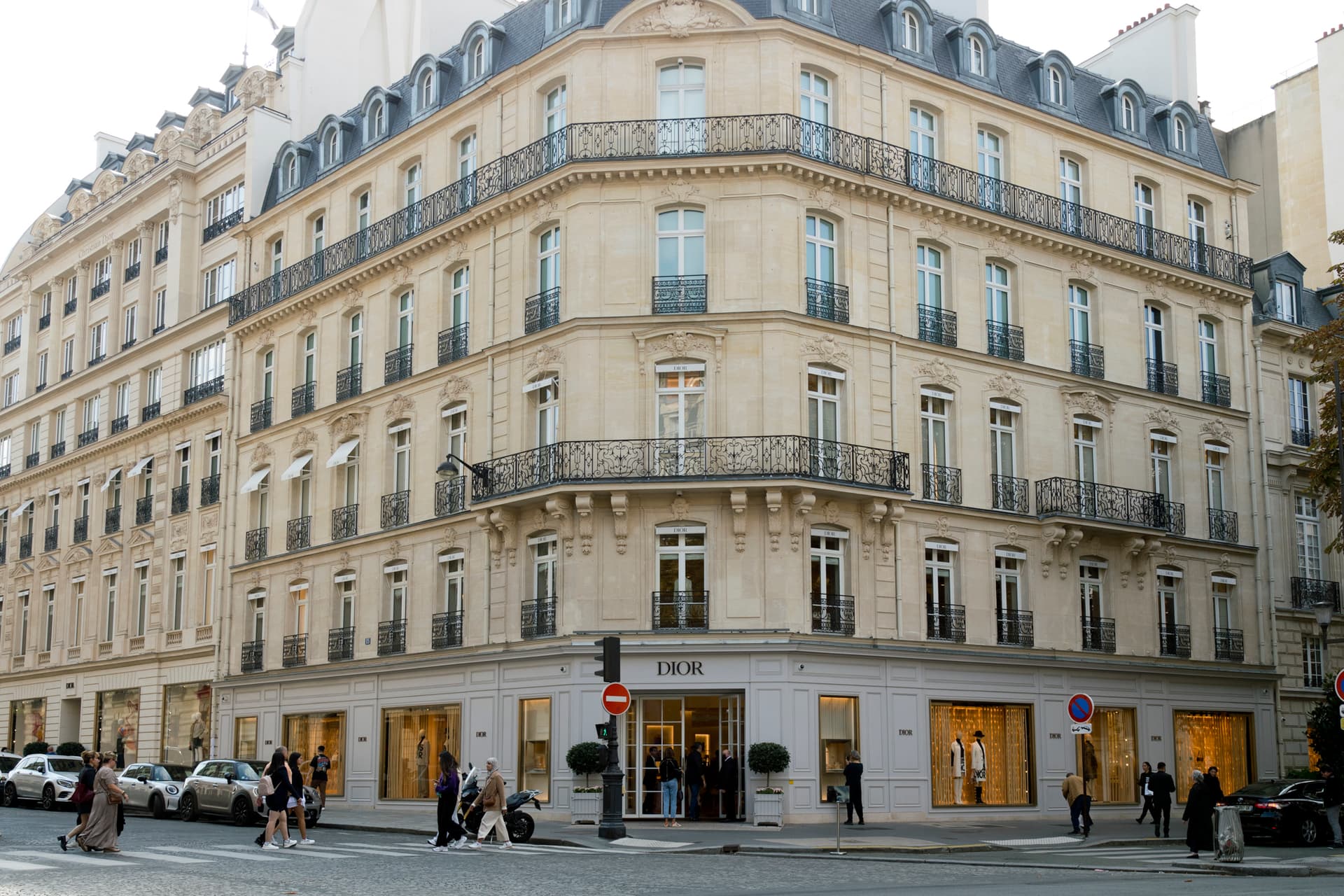
Jonathan Anderson’s Dior Cruise debut channels Hollywood glamour at LACMA
Anderson’s first Dior Cruise show used Marlene Dietrich, vintage convertibles and LACMA’s new Zumthor galleries to recast the house in screen-ready glamour.
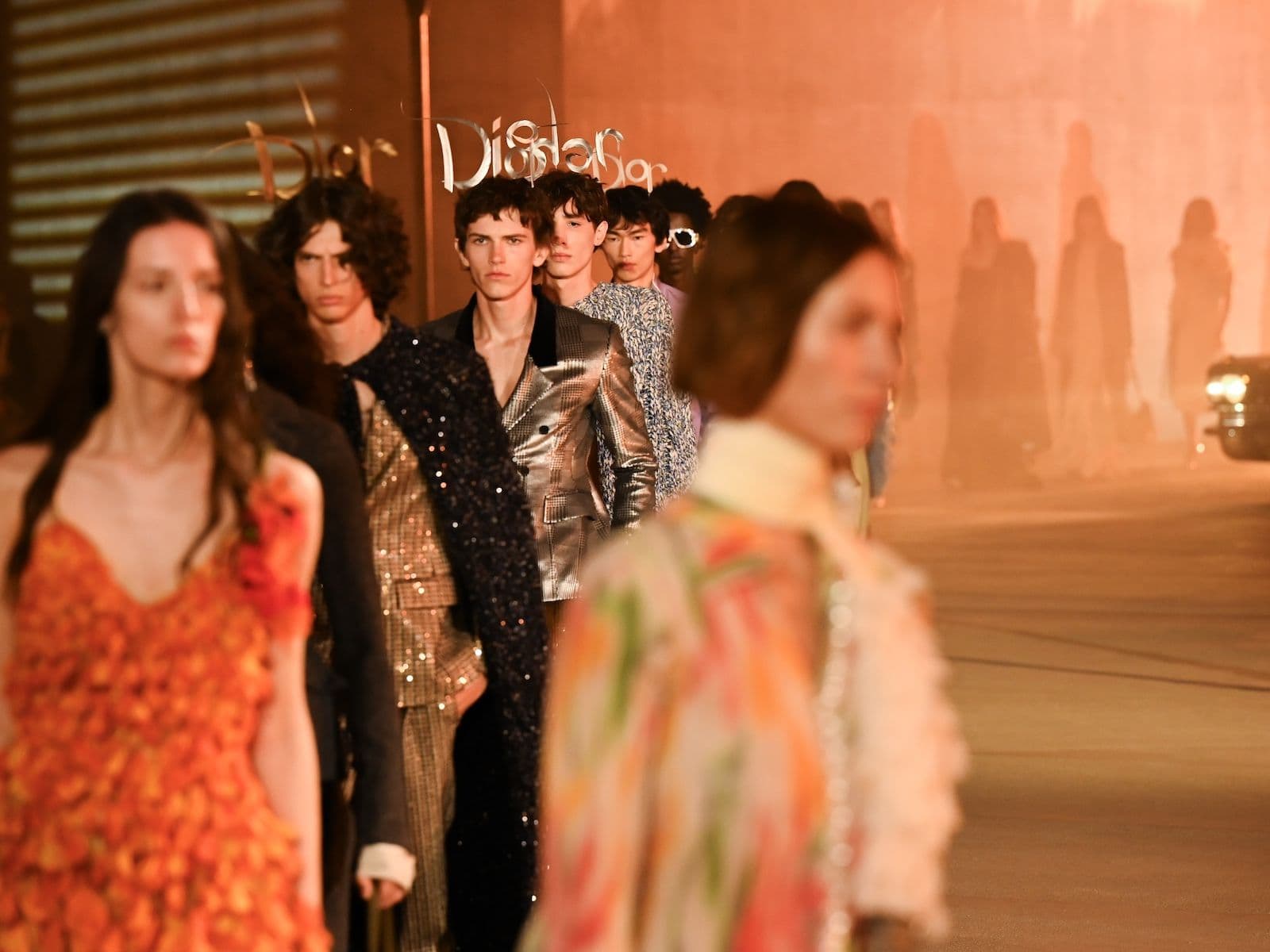
Jonathan Anderson’s first Dior Cruise outing arrived with a crisp, cinematic thesis: Dior was not chasing Hollywood nostalgia so much as trying to own it again. Set just after sunset on May 13, 2026, at LACMA, the show used the museum’s new David Geffen Galleries, designed by Peter Zumthor, as a stage for vintage convertibles, streetlamps and a very specific fantasy of Los Angeles seen through a camera lens.
That matters because Anderson’s opening statement for Dior was less about novelty for novelty’s sake than about giving the house a readable emotional register. The Cruise 2027 collection reached back to Dior’s long relationship with Hollywood and, more pointedly, to a Haute Couture Spring-Summer 1949 jacket worn by Marlene Dietrich in Alfred Hitchcock’s Stage Fright. That reference point does more than name-check old glamour. It signals a Dior built on costume, performance and the kind of polished femininity that can survive both a close-up and a red carpet.
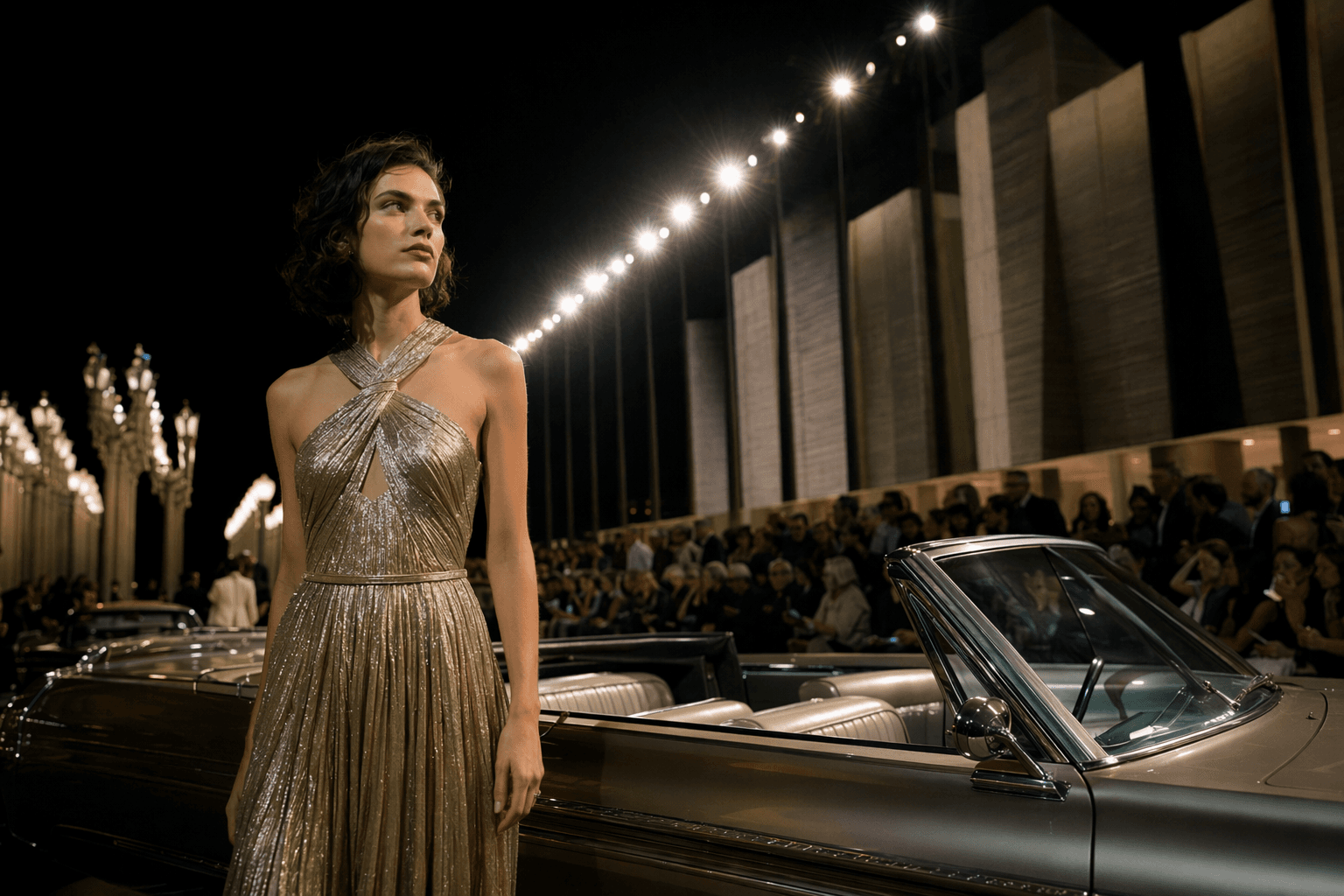
The setting sharpened the message. LACMA had opened the David Geffen Galleries to members on April 19 and to the public on May 4, before closing the campus to the public on May 13 for Dior’s private event. By placing the collection on the museum grounds, Anderson folded fashion into architecture, and architecture into film language. The result felt less like a conventional resort presentation than a premiere, with the museum’s imposing new volume acting as a proscenium for Dior’s screen-ready silhouettes.
What changed, at least in tone, was the mood of authority. Anderson did not present Dior as rarefied or aloof. He presented it as glamorous, legible and broadly desirable, with a clear visual code rooted in old Hollywood rather than abstract concept. That is a commercially smart pivot. Vintage convertibles, streetlamps and Dietrich are not just references for insiders; they are instantly recognizable signifiers that translate into dresses, evening jackets and accessories a client can picture in her own life.
The first meaningful read on Anderson’s Dior, then, is promising. It suggests a house moving toward a more sensual, film-inflected identity, one that respects couture history without freezing it in amber. If he can keep this level of clarity while broadening the wardrobe beyond spectacle, Dior may have found a new direction with real commercial pull.
Know something we missed? Have a correction or additional information?
Submit a Tip