Luxury Turns to 18th-Century Codes to Stand Out in Paris
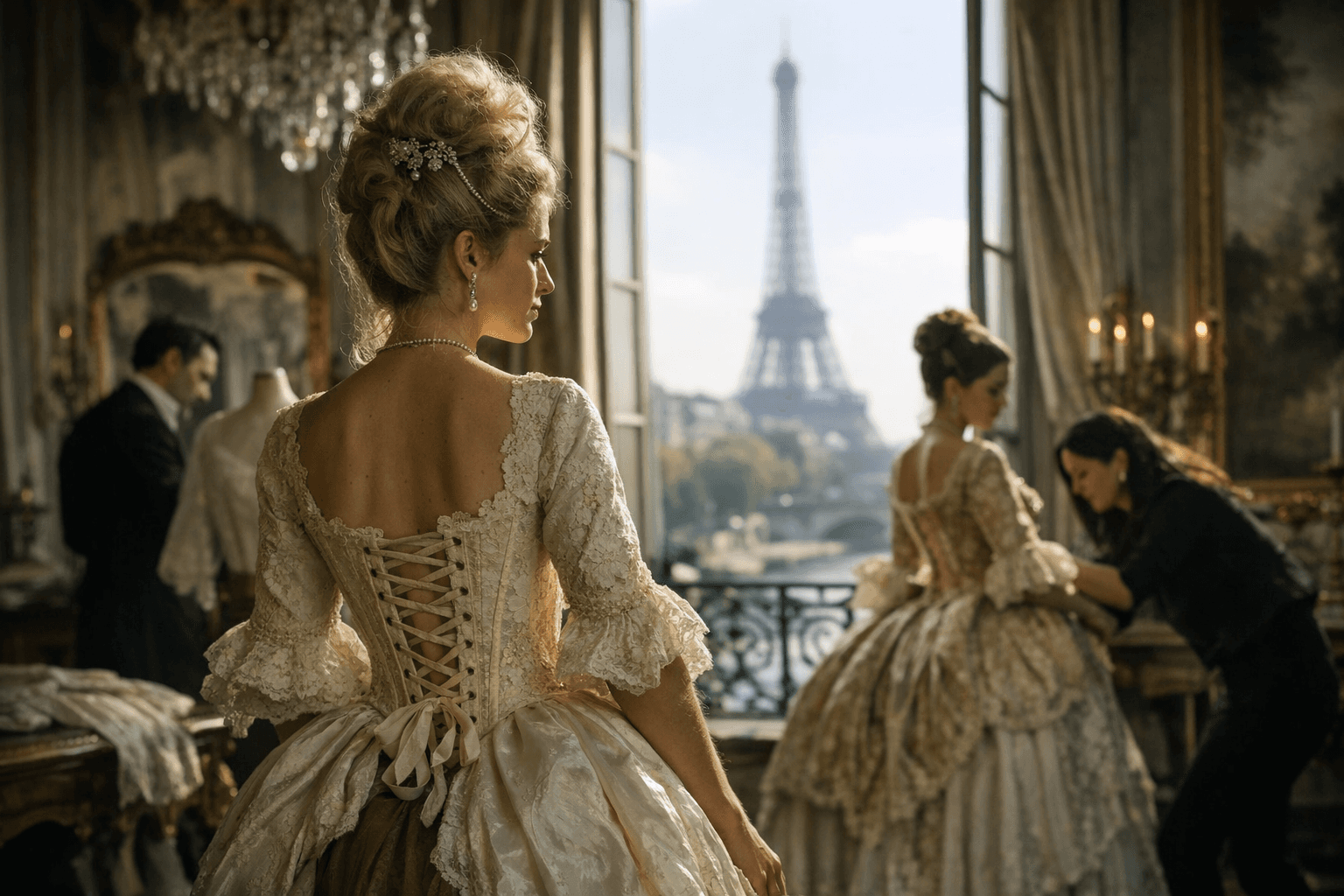
Luxury is mining corsets, crinolines, lace and brocade to look expensive again. In Paris, the 18th century is less costume, more a strategy for brand value.
A reset, not a replay
Luxury has spent the last few seasons whispering. Now it is lacing itself up again. Across Paris Fashion Week in March 2026, the Autumn/Winter 2026/2027 collections pushed 18th-century codes back into view, and the message was blunt: corsets, crinolines, lace, brocade and pale romantic tones are not being revived as nostalgia alone, but as a way to look unmistakably expensive again.
That matters because the market has changed. Bain & Company said the personal luxury goods market was expected to contract by 2% to 5% in 2025, before possibly returning to 3% to 5% growth in 2026. At the same time, McKinsey and The Business of Fashion’s State of Fashion 2026 pointed to economic volatility, shifting consumer priorities and rapid technological disruption. In that kind of environment, looking “nice” is not enough. Brands need a visual argument.
Why the 18th century works now
The 18th century gives luxury something quiet luxury could not: instant legibility. It is all about structure, surface and labor, the things that read as costly the second they hit the eye. A corseted waist, a controlled puff of volume, a panel of lace that actually looks made rather than printed, a brocade with enough depth to catch light in layers, all of it signals skill.
FashionUnited frames this revival as a strategy for differentiation, savoir-faire and brand value. That is the real story here. After seasons dominated by beige restraint, these references offer a way to reintroduce drama without collapsing into costume, at least when the execution stays disciplined.
The Metropolitan Museum of Art’s description of the corset is useful here because it cuts through the fantasy. In the 18th century, the corset was not decoration. It created the structure for posture and deportment. That is exactly why it keeps coming back in luxury: it does more than dress the body. It edits it.
Paris is making the case in public
This is not just a runway mood board. Paris museums are reinforcing the same message, which makes the trend feel less like a passing styling trick and more like a cultural reset. Palais Galliera, Musée des Arts Décoratifs and Musée Cognac-Jay are all feeding the same appetite for historical dress and its afterlives, and that institutional backing matters. When fashion museums start lining up behind a silhouette language, brands usually follow.
The strongest example is Palais Galliera’s exhibition, *Fashion in the 18th Century. A Fantasized Legacy*, running from March 14 to July 12, 2026. It looks at women’s fashion during the Age of Enlightenment and its reinterpretations across fashion history up to the present day. That span is the point. Luxury is not just borrowing a period look. It is borrowing a whole system of value built on craftsmanship, rarity and visual authority.
What looks commercially relevant, and what slides into costume
Not every 18th-century reference is equal. The versions that feel commercially relevant are the ones that soften the silhouette without turning it into theatre. Think corsetry absorbed into a jacket, a laced bodice cut with modern restraint, a crinoline idea translated into controlled volume at the hem, or pale romantic tones used to temper rather than overwhelm.
- Most wearable: corsetry as internal structure, lace as trim or paneling, brocade with a clean cut
- Most marketable: pieces that suggest handwork, couture finishing and shape without needing a literal historical silhouette
- Most risky: exaggerated panniers, head-to-toe brocade, overtly period costume and anything that looks like it wandered in from a salon reenactment
The less successful versions will be the ones that lean too hard into fantasy. If the garment starts looking like it needs a wig and a candlelit ballroom to make sense, the luxury message gets muddy. The sweet spot is tension: enough history to feel elevated, enough modernity to wear in daylight.
What this means for the luxury customer
This shift is also a response to how people shop now. After years of minimalist sameness, a richly constructed silhouette gives shoppers something they can recognize from across the room and across the feed. That is valuable in a market where everyone is competing for attention, resale credibility and a reason to justify price.
The daily-life impact is simple: the clothes are getting more visible again. Waistlines are moving, sleeves are swelling, fabrics are regaining texture, and outfits are asking for better posture, sharper styling and more confidence. Luxury knows that a sharply built garment does half the branding work before anyone sees the label.
The new status dressing
What is happening in Paris is bigger than a romance with the past. The 18th century is being repackaged as a luxury code because it solves a current problem: how to stand out when the market is under pressure and minimalism has gone flat. Corsets, crinolines, lace and brocade are not just decorative references. They are tools for reclaiming visual power, proving craftsmanship and making brand value visible again.
That is why this trend has teeth. It is not asking luxury to be nostalgic. It is asking luxury to be undeniable.
This article was produced by Prism’s automated news system from verified source data, official records, and press releases, then run through automated quality and moderation checks before publishing. The system is built and supervised by the people who set the standards it runs under. Read our full AI policy.
Did this article answer your question?


