Met Gala Red Carpet Signals Body-Horror, Naked Dressing, Tech Couture
The Met’s loudest signal is a reset: body-horror shapes, rebuilt sheer dressing, and tech glamour are replacing nakedness as the new red-carpet flex.

A reset, not a replay
The Met Gala just drew a hard line under the naked-dressing era. What read most strongly on the carpet was not simple exposure, but a sharper, stranger glamour: body-horror silhouettes, sheer dressing rebuilt with structure, and tech-inflected couture that looked engineered rather than merely styled.
That matters because the Met still functions like fashion’s loudest public test kitchen. When a room that includes Beyoncé, Nicole Kidman, Venus Williams, Anna Wintour, Jeff Bezos, and Lauren Sánchez Bezos is asked to dress for “Fashion is Art,” the result is never just celebrity theater. It is a preview of how eveningwear, beauty, and aspirational dressing will mutate next.
Why this Met mattered so much
The 2026 gala took place on Monday, May 4, 2026, as the annual fundraiser for the Costume Institute, which the Met says provides its primary source of funding for exhibitions, publications, acquisitions, and operations. That alone makes the carpet consequential. The institution’s fashion collection is huge, more than 33,000 objects spanning five continents and seven centuries, so this is not a vanity parade. It is the public face of one of the world’s deepest fashion archives.
The night also anchored the spring exhibition Costume Art, which opened May 10, 2026 and runs through January 10, 2027. It is the inaugural show in the Met’s new nearly 12,000-square-foot Condé M. Nast Galleries adjacent to the Great Hall, and the museum’s central idea is straightforward but potent: garments paired with artworks to reveal the relationship between clothing and the body. That framing explains why this carpet felt so bodily, so sculptural, and so charged.
Body-horror is the new polish
Fashion Magazine’s read of the night nailed the mood shift. The strongest signals were body-horror dressing, reimagined naked dressing, and tech-inspired couture, all filtered through the gala’s “Fashion is Art” brief. That is a big departure from the soft-focus sexiness that dominated the sheer dress conversation for the last few seasons.
Body-horror in fashion is not about gore. It is about silhouette that seems to strain, bulge, distort, or wrap around the body in a way that feels almost cinematic. The glamour is still there, but it is colder and more intentional, with surfaces that look molded, pressed, or digitally edited into place. On the runway and on the red carpet, that often means the body is not simply revealed. It is reinterpreted.
That is why this direction feels so current. The best-dressed signal this year is not “see-through equals sexy.” It is “construction equals power.” The look is less lingerie, more exoskeleton.
Naked dressing gets rebuilt, not retired
The sheer look is not disappearing, but it is getting smarter. The new version is less about bare skin as the whole point and more about layering, opacity tricks, and controlled exposure. Think illusion mesh under heavy embroidery, skin-toned lining under architectural cutouts, or transparent fabric broken up by seams and hardware so the eye keeps moving.
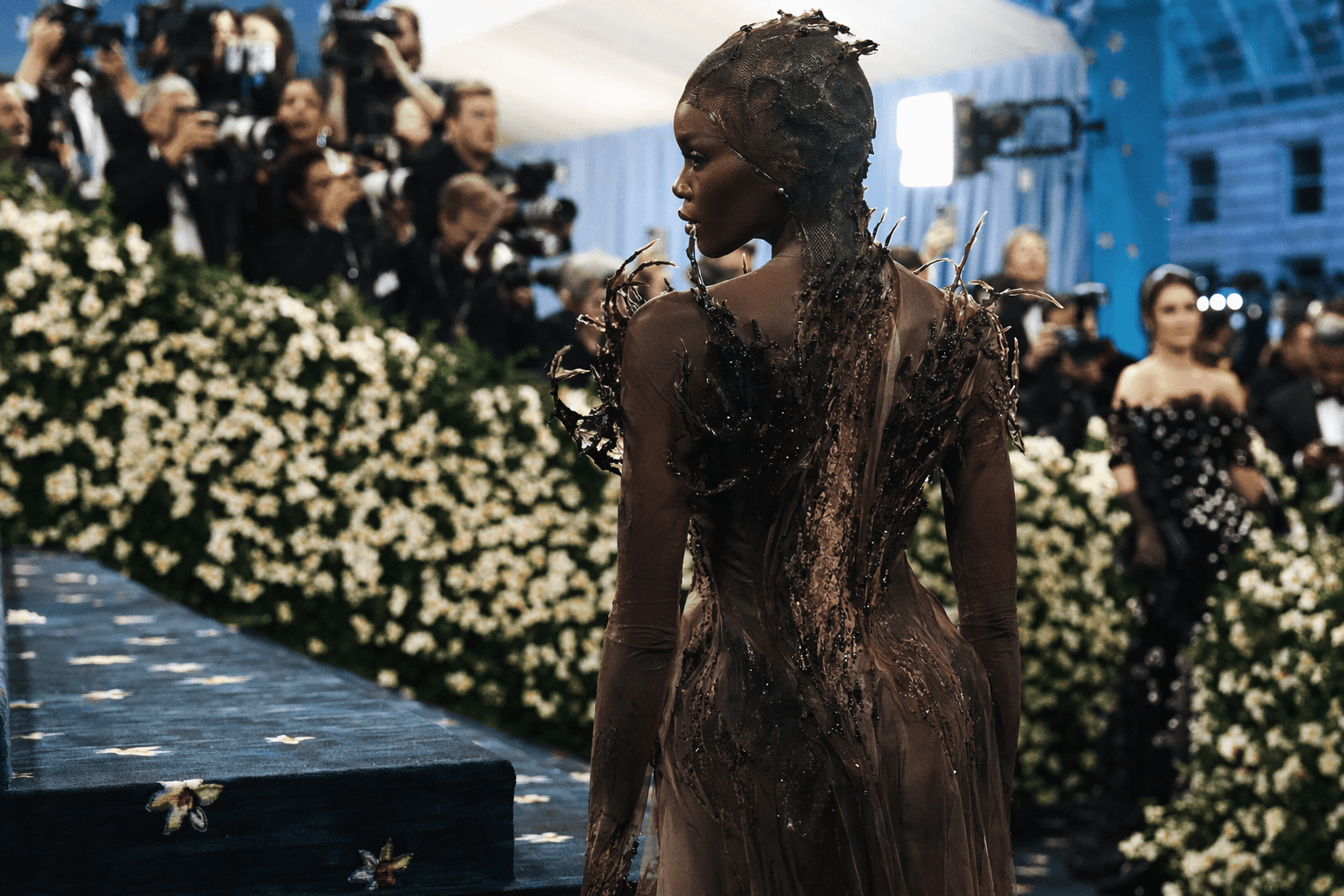
That is the version of naked dressing that will actually travel. Red carpets will keep pushing the envelope, but the everyday translation will be more wearable: mesh tops with built-in structure, dresses with sheer panels that do not feel accidental, and body-skimming pieces that trade pure exposure for a more engineered finish. Fast fashion will absolutely follow, because this is one of those trends that can be simplified fast without losing the mood.
The consumer version will be all about tension. A sliver of skin under a hard shoulder. A sheer skirt over a dense base. A dress that looks vulnerable from a distance, then reveals careful internal architecture up close. That is what makes the shift feel like a reset rather than a rerun.
Tech couture is the new eveningwear language
The other big story was tech. The Met has been here before, too. Its 2024 Sleeping Beauties exhibition foregrounded research tools like artificial intelligence and computer-generated imagery, which gives this year’s tech-leaning glamour a little historical backbone. The message is that fashion is no longer pretending technology is external to beauty. It is part of the fantasy now.
At the gala level, tech couture reads as shine, precision, and a slightly unreal finish. Fabrics look coated rather than draped. Shapes feel calculated rather than romantic. There is a visual slickness that suggests aerospace, lab work, or digital rendering more than old-school red-carpet softness. Even when the clothes are dramatic, the effect is controlled and efficient.
That will trickle down quickly into beauty. Expect more lacquered skin, chrome eye accents, severe center parts, sculpted hair, and makeup that looks edited rather than blended to death. The beauty language of this moment is clean, reflective, and a little robotic in the best way. It pairs perfectly with the clothing shift, because the face has to match the future-facing clothes.
Who is setting the tone
The guest list reinforced the sense that this was not a niche mood. With a lineup that included names like Zoë Kravitz, Sabrina Carpenter, Doja Cat, Gwendoline Christie, Paloma Elsesser, Teyana Taylor, Angela Bassett, Adut Akech, Aimee Mullins, Amy Sherald, and Chase Sui Wonders, the carpet had the mix of cultural fluency and mainstream visibility that turns a trend into a market signal.
And the Met knows how to stage a signal. The College Night programming tied to the new galleries brought finalist designs from the Costume Institute College Fashion Design Competition into the space, which is exactly the sort of institutional move that keeps the gala from floating off into pure spectacle. The museum is not just celebrating fashion as image. It is building a pipeline between young designers, the archive, and the public stage.
That is why this year’s visual direction matters beyond the red carpet. Body-horror glamour will feed editorial fashion shoots and luxury campaign styling. Rebuilt naked dressing will show up in occasionwear and mall racks alike. Tech couture will keep pushing beauty toward shine, edge, and precision. The Met did not just host another costume party. It announced the next year of glamour: less bare, more built, and much stranger in all the right ways.
This article was produced by Prism’s automated news system from verified source data, official records, and press releases, then run through automated quality and moderation checks before publishing. The system is built and supervised by the people who set the standards it runs under. Read our full AI policy.
Did this article answer your question?


