Military Parade Jackets March Into FW26 With Ornate Authority
Military jackets are back as polished authority dressing, with frogging, stand collars and brass buttons turning heritage into modern armor. The best versions are dramatic, but easy to wear.
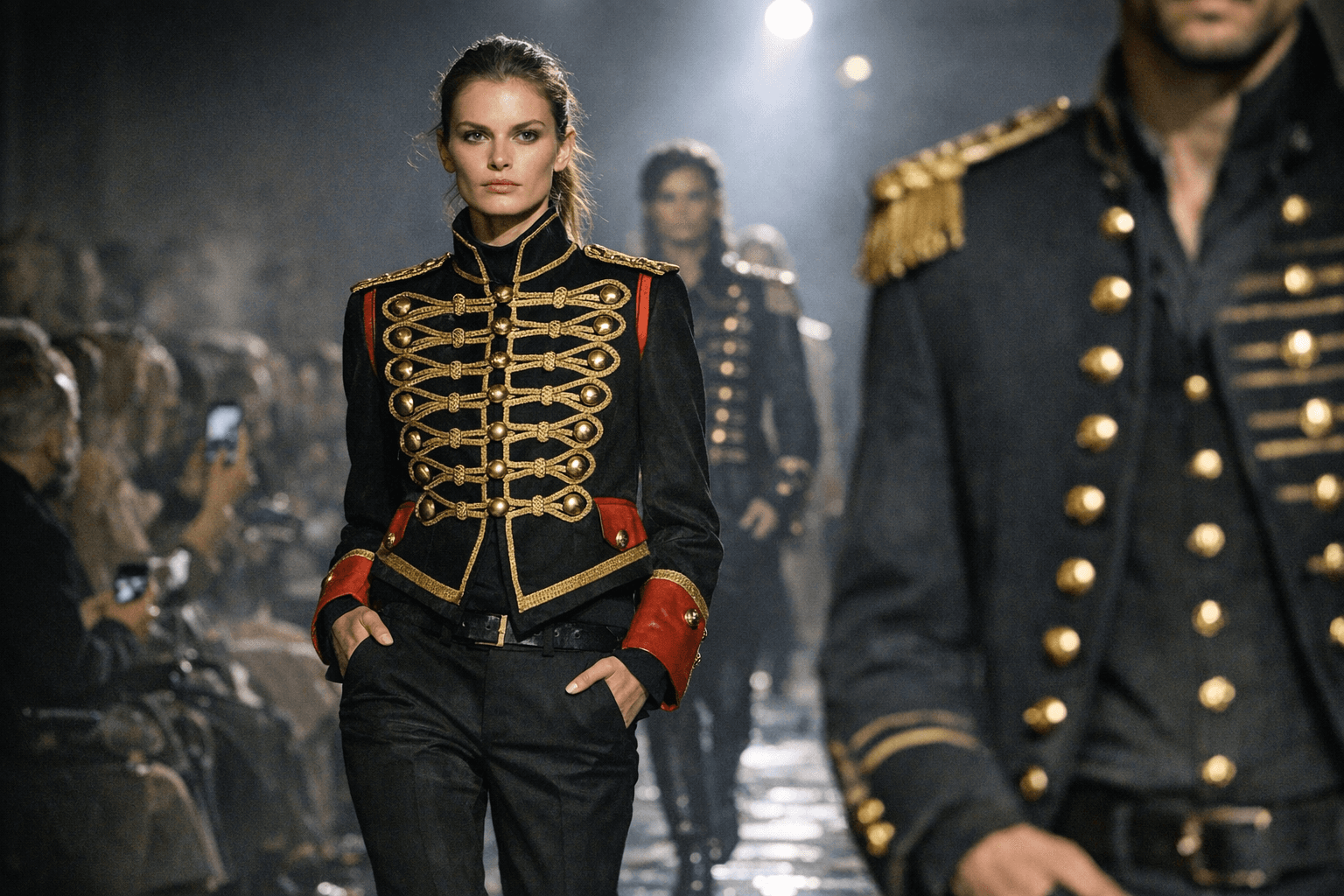
The parade jacket is FW26’s sharpest answer to fashion’s renewed hunger for clarity. It has the discipline of uniform dressing, the seduction of decoration, and just enough historical drama to feel newly relevant again.
Authority dressing, reset
What makes this silhouette land now is not nostalgia, but precision. FashionUnited frames military parade jackets as a structured, Napoleonic-inspired statement trend, and that language matters because the look is doing two things at once: restoring shape to the body and loading that shape with symbolism. After a stretch of relaxed tailoring and softened outerwear, the return of sharp shoulders, stand collars and ornamental closures feels like a deliberate correction.
The mood is less cosplay than code. Military-coded tailoring communicates polish instantly, and that is exactly why it is resurfacing in a season that favors expressive dressing. A jacket with rigid lines and visible fastening details gives a wardrobe the authority of a blazer, but with more theatrical punctuation. It says order, heritage and intent before you have even chosen the trousers.
The anatomy of the look
The clearest runway example is also the most instructive: a cropped jacket with horizontal black braided frogging, silver buttons and a high velvet-trimmed stand collar. Each detail does different work. The frogging brings ceremonial flourish, the silver buttons sharpen the gleam, and the stand collar lifts the whole silhouette into officer territory without requiring a full parade coat.
That balance between spectacle and structure is the heart of the trend. Clean shoulders give the body a frame; decorative braiding adds tension; metallic trim catches light in a way that makes even a dark jacket feel alive. The result is a garment that reads as ornate from a distance, then surprisingly precise up close.
From Pre-Fall khaki to FW26 polish
This did not appear out of nowhere. FashionUnited’s Pre-Fall 26 coverage already pointed to military and utilitarian silhouettes in khaki and olive green, with fitted belted jackets and polished brass buttons. FW26 simply tightens the screws. What felt like a directional whisper in pre-fall becomes a full statement in the winter collections, with ornamented tailoring replacing pure utility as the stronger visual impulse.
That progression is important because it explains why the trend feels more wearable than costume. The earlier season gave us the practical bones, olive, brass, belting, utility structure. FW26 adds the finery: braid, contrast trim, stand collars, and a more explicit parade-ground attitude. The effect is still disciplined, but now it has the confidence to be seen.
Khaite, Etro and Balmain each sharpen the code
Khaite gives the trend its intellectual edge. Catherine Holstein’s Fall/Winter 2026 collection explores “the intersection of art and artifice,” and military-inspired jackets sit neatly inside that frame. The brand’s darker power-dressing mood makes the silhouette feel less like decoration for decoration’s sake and more like a controlled gesture, a jacket that can carry both severity and allure.
Etro pushes the look toward decorative tailoring with a more fluid hand. Marco De Vincenzo’s Fall 2026 collection embraced British tailoring and military references, while the house’s FW26/27 show page brought in cords, sashes and martingale-like details. That mix gives the jacket a slightly more romantic stance, as if a regimented front were being softened by craft and movement.
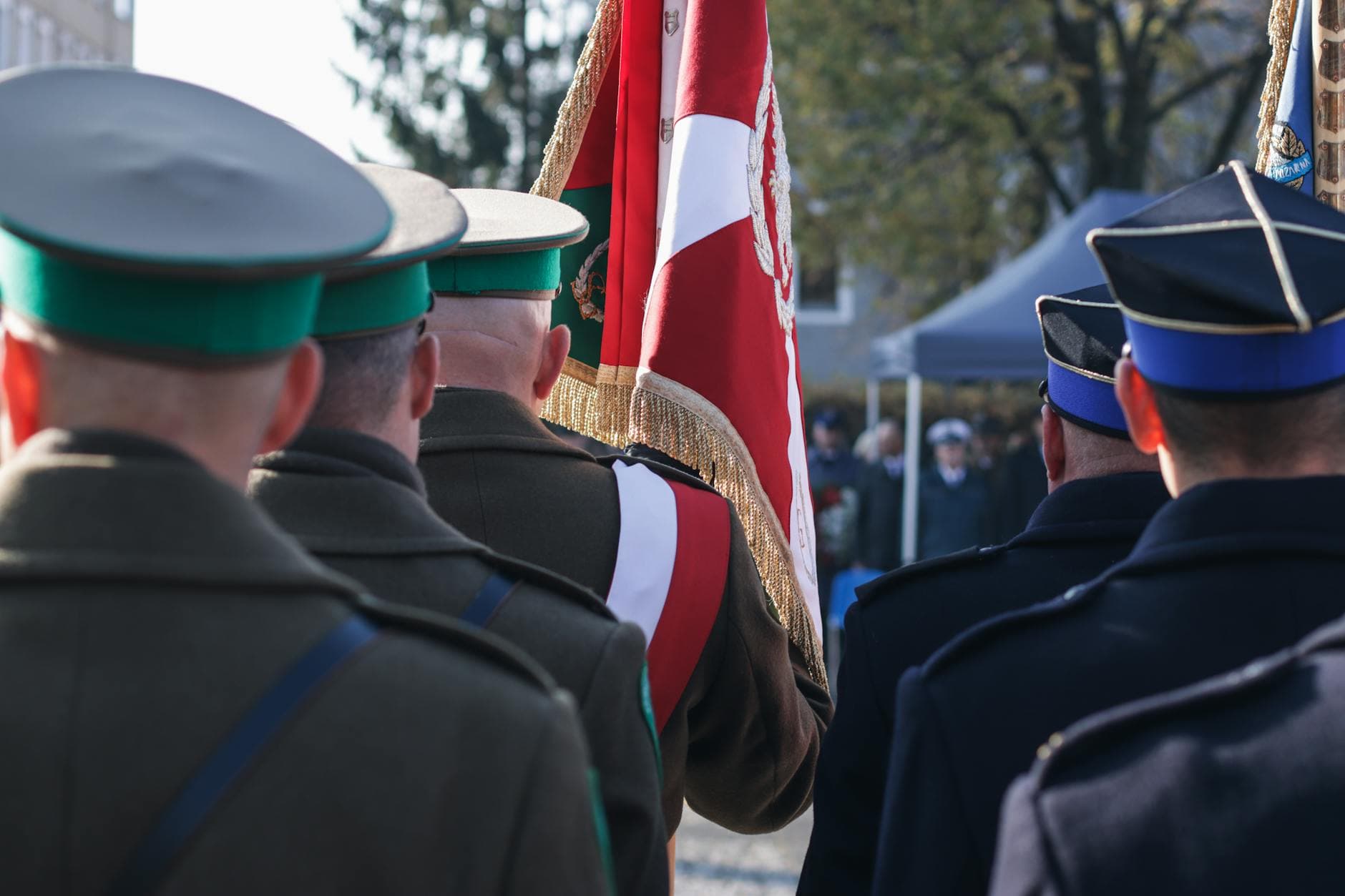
Balmain, meanwhile, keeps the military reference close to house DNA. Antonin Tron used the house’s iconic pilot jacket as a leitmotif in Fall-Winter 2026, and WWD described the debut as a more pragmatic, everyday vision of glamour. That combination is telling. Balmain is not treating military dressing as fantasy dress-up, but as a way to ground glamour in something sturdier, darker and more direct.
Why the look keeps coming back
The military jacket has a long runway life because it sits at the intersection of heritage, rebellion and spectacle. Its modern revival also echoes work associated with Vivienne Westwood, Jean Paul Gaultier, John Galliano, Hedi Slimane and Christophe Decarnin, especially at Balmain, where the silhouette has repeatedly been recharged rather than retired. That lineage explains why the jacket never reads as literal uniform. It reads as fashion’s favorite kind of authority, borrowed, stylized and charged with personality.
The current surge also feels broader than the runway. Who What Wear noted that military jackets were already appearing on celebrities and in street style before runway confirmation, which is exactly how a directional piece earns momentum now. Marie Claire went further, calling women’s military jackets one of 2026’s most important trends and pointing to a battalion of war-uniform references on Spring 2026 runways. In other words, the street had already voted before fashion formally crowned the silhouette.
What is runway spectacle, and what is actually wearable
The distinction matters, because not every ornate detail should come home with you. Some elements carry more drama than daily utility, while others translate cleanly into a real wardrobe.
- Most wearable: sharp shoulders, stand collars, polished brass or silver buttons, and a cropped cut that sits neatly over skirts, trousers or denim.
- More directional than practical: heavy frogging across the chest, decorative cords, sash details and highly contrasted braid, which can tip the jacket into costume unless the rest of the outfit stays spare.
- Best for after dark or statement dressing: metallic trim, velvet collar accents and especially ornate closures, which work best when the rest of the silhouette is pared back.
- Easiest way to wear the trend: choose one military code at a time. A stand collar with clean tailoring feels polished; a braided front with plain trousers feels intentional; a fully embellished jacket needs quiet styling to keep it modern.
That is why the parade jacket feels different from a generic revival. It is not asking for full uniformity. It is offering structure with personality, a little ceremony with the everyday. After seasons of slouch, FW26’s ornate authority has the rare advantage of looking dramatic on the runway and decisive in real life.
This article was produced by Prism’s automated news system from verified source data, official records, and press releases, then run through automated quality and moderation checks before publishing. The system is built and supervised by the people who set the standards it runs under. Read our full AI policy.
Did this article answer your question?


