Recover, Prosperity Textile scale recycled cotton denim for global brands
Recycled-cotton denim is moving beyond capsules: Recover and Prosperity Textile are pushing it into core jeans with industrial scale and faster lead times.

Recycled-cotton denim is finally being treated like a volume business, not a lab experiment. Recover and Prosperity Textile announced on April 14 that they are pairing recycled-cotton fiber science with denim manufacturing built for core collections, aiming to make circular jeans easier for global brands to buy, repeat and scale.
That matters because recycled denim has always run into the same three walls: price, durability and volume. Fashion brands can sign off on a sustainability capsule with a soft launch and a limited run, but the everyday jeans market asks for something harder. Fabric has to be consistent. Lead times have to work. Handfeel, wash performance and strength have to hold up across thousands of yards, not a few hero styles.
Recover is building the partnership under its Recover Fabrics umbrella and says the initial fabric developments will go first to selected brand partners. Sample garments were shown at Kingpins Amsterdam to demonstrate how the platform could work across denim categories, from core five-pocket jeans to more fashion-forward applications. The companies describe the system as flexible, able to shift with customer demand, volume and end-use needs, which is exactly the language that signals a push from novelty into mainstream buying.
The scale question is where this becomes interesting. Prosperity Textile, founded in 2002 and based in Hong Kong, operates production hubs in China and Vietnam and says its annual capacity approaches 100 million yards. That kind of industrial muscle is what recycled cotton has lacked when it tries to compete with conventional denim on reliability and replenishment. Stafford Lau, Prosperity Textile’s chief executive, said the partnership is meant to deliver competitive, high-volume denim fabrics that meet global brands’ expectations for performance, lead time and quality. Anders Sjöblom, Recover’s chief executive, framed the deal as a way to move circular materials beyond niche collections and into core quality denim ranges.
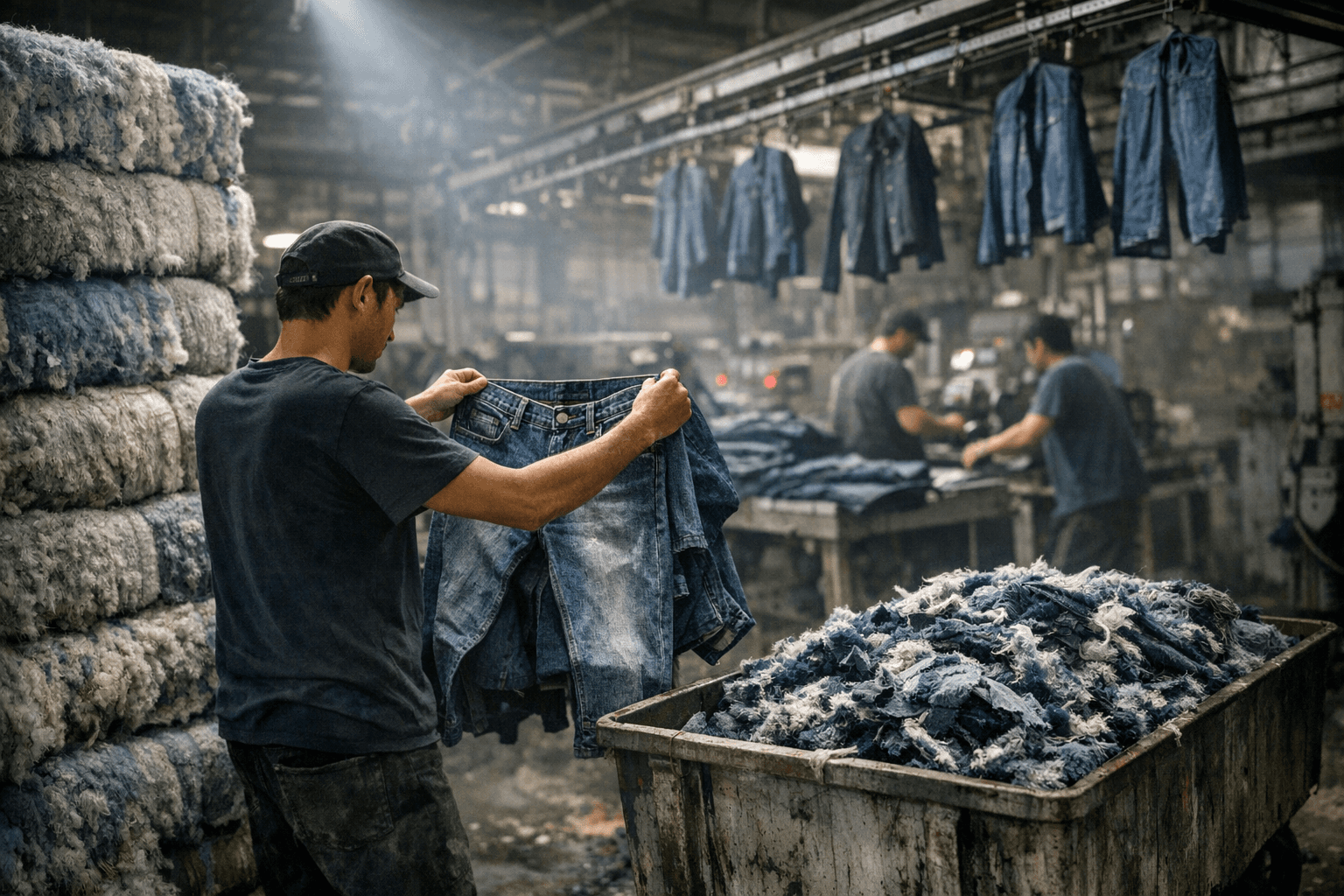
Recover’s side of the equation is the fiber. The company says its recycled cotton comes from post-industrial waste as well as pre- and post-consumer textile waste, and that its fibers are certified under the Global Recycled Standard, which covers recycled input and chain-of-custody requirements. Recover also says life-cycle assessments for its production hubs in Bangladesh and Pakistan show environmental savings versus conventional cotton. Backed by STORY3 Capital and Goldman Sachs, the company has spent years trying to scale recycled cotton, including earlier plans to reach 200,000 metric tons of annual capacity by 2025 and to open new facilities in Dhaka, Bangladesh.
The larger signal is hard to miss. Recover signed a multi-year agreement with H&M in 2025 to support the scaled commercial introduction of mechanically recycled cotton, and this denim partnership reads as the next step in that same ambition. If it works, recycled cotton will no longer sit in the sustainability corner of the store. It will start showing up where denim lives every day: in the jeans people actually wear, reorder and replace.
This article was produced by Prism’s automated news system from verified source data, official records, and press releases, then run through automated quality and moderation checks before publishing. The system is built and supervised by the people who set the standards it runs under. Read our full AI policy.
Did this article answer your question?


