Reformation cuts product carbon intensity 29 percent, nears circularity goals
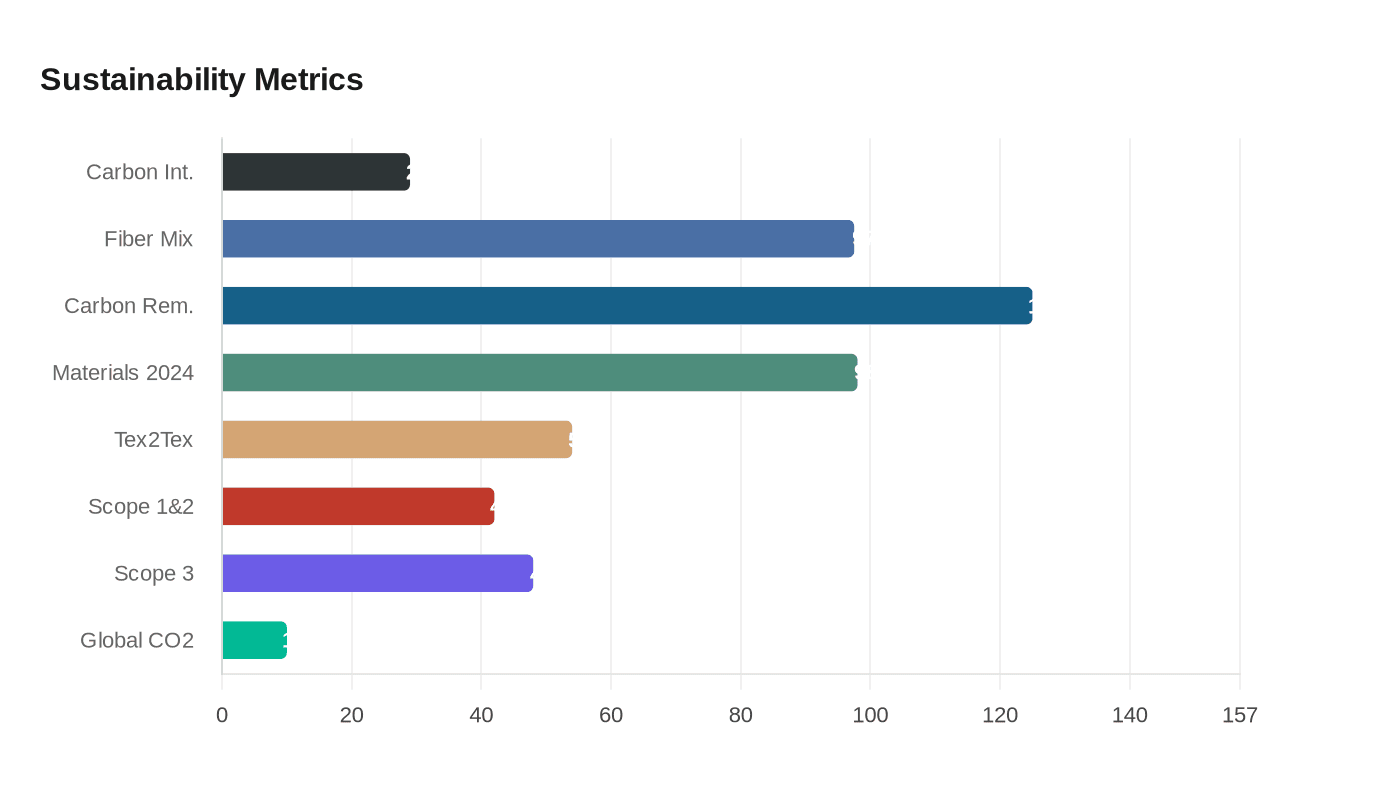
Reformation said it cut product carbon intensity 29 percent and sourced 97.5 percent of fibers from lower-impact inputs. The harder test: Scope 1 and 2 targets still slipped.

Reformation walked into the sustainability conversation with a headline number that matters: product carbon intensity fell 29 percent from 2021 to 2025. It also said 97.5 percent of its fibers came from recycled, regenerative or renewable inputs, a figure that sounds impressive until you ask the more annoying question fashion still has to answer: how far does progress go when the supply chain is this messy?
The brand’s own answer was part triumph, part reality check. Reformation said it met its science-based Scope 3 targets in its five-year climate roadmap and invested in carbon-removal projects equal to about 125 percent of its total footprint. That is more ambitious than the usual offset theater, but it still sits inside a system where the hardest emissions are built into materials, manufacturing and logistics long before a dress lands in a fitting room.
That tension is exactly why Reformation has made such a point of public accountability. The company has been publishing quarterly and annual sustainability reports and now frames its work around People, Planet, Product and Progress. In its January 2024 framework, Reformation said fashion can account for up to 10 percent of global carbon emissions and tied its mission to bringing sustainable fashion to more people while aligning with the United Nations Sustainable Development Goals.
The latest numbers show how far the brand has pushed on materials. In its Q1 and Q2 2024 sustainability report, Reformation said 98 percent of materials used were recycled, regenerative or renewable, and 54 percent of products were textile-to-textile recyclable through RefRecycling. That is real movement, not just recycled-content branding. But it is also a reminder that circularity is still a fraction of the business, not the whole machine.
The limits show up in the fine print. Reformation said it missed some Scope 1 and 2 targets, the kind of direct operational emissions that expose how hard it is to clean up retail and production at once. Its 2023 annual sustainability report had already set a tougher long game: reduce absolute Scope 1 and 2 emissions by 42 percent and Scope 3 emissions by 48 percent per value added by 2030, from a 2021 base year. That puts the 2025 roadmap inside a broader decade-long reset, not a finish line.
Kathleen Talbot has also been candid about why this takes so long. She has said materials account for roughly two-thirds of a product’s footprint, and that silk and cashmere have been especially hard to replace. That is the real story behind Reformation’s 29 percent figure. Progress in fashion is measurable now, but it is still bounded by material reality, and even one of the category’s most credible sustainability names is showing how much work remains before “better” becomes genuinely low-impact.
This article was produced by Prism’s automated news system from verified source data, official records, and press releases, then run through automated quality and moderation checks before publishing. The system is built and supervised by the people who set the standards it runs under. Read our full AI policy.
Did this article answer your question?


