Riga Fashion Week spotlights craftsmanship, local identity, and sustainability
A 42nd-edition lineup of 18 designers shows how Riga is turning craft, local memory, and sustainability into a sharper fashion identity.
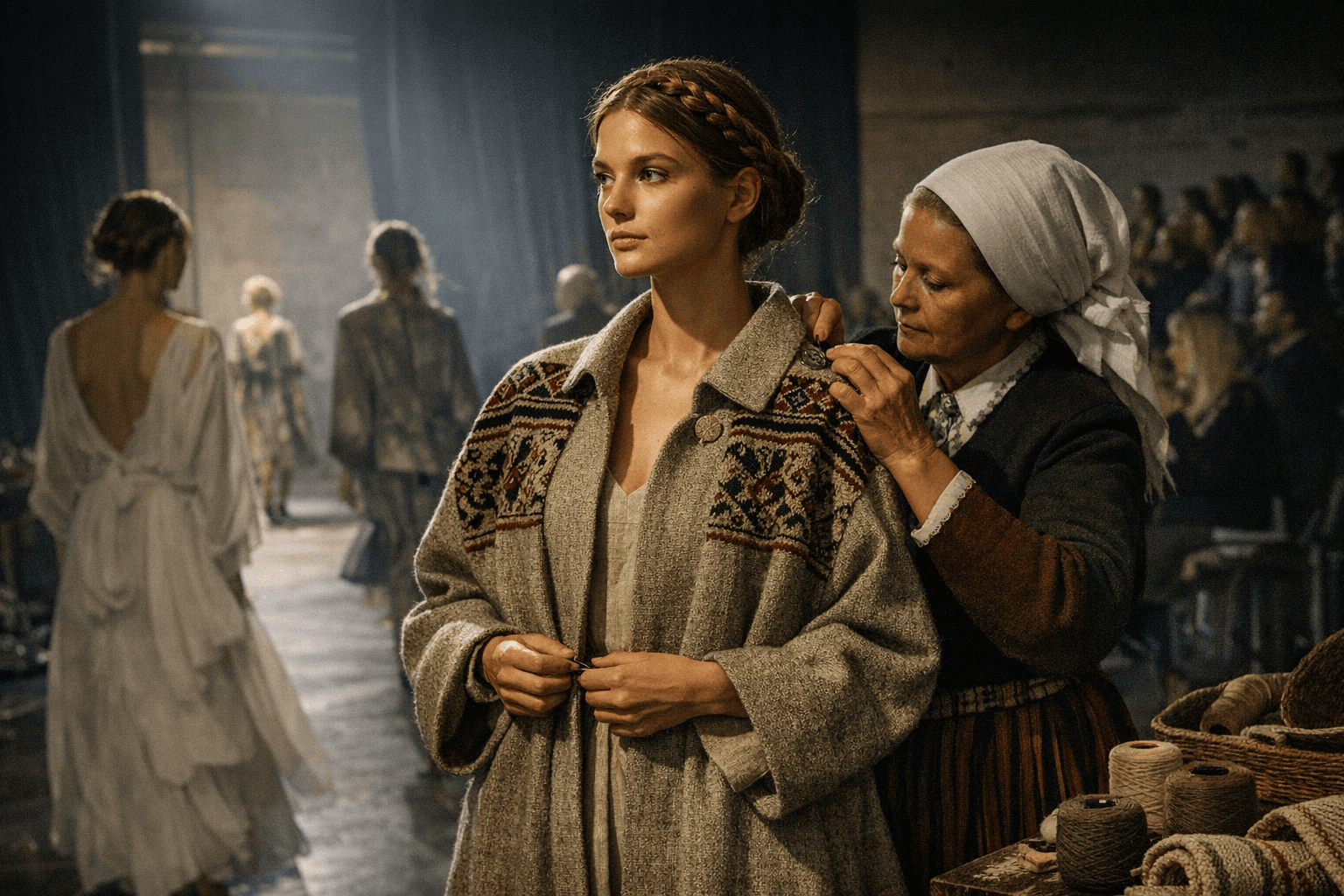
A reset, not a replay: Riga Fashion Week’s 42nd edition shows how a smaller fashion market can look louder by looking inward.
Heritage becomes the new shorthand
The clearest message from Riga this season is that local history is no longer decorative, it is strategic. The city’s emerging labels are leaning into deep-rooted identity and hands-on creativity instead of chasing the sameness of global branding, and that shift gives the Baltic scene a point of view that feels immediate, not borrowed. In a fashion market where big names keep reaching back to archives and brand DNA to find momentum, Riga’s designers are doing something more practical: turning place, craft, and durability into a recognizable aesthetic.
That matters because the show is not a one-off moment. Riga Fashion Week, founded by Elena Strahova and organized by the Baltic Fashion Federation, has spent more than two decades presenting Baltic designers to international media, retailers, and consumers. Its 42nd edition, held from April 14 to 18, 2026, brought together 18 designers and framed itself as the key fashion industry event in the Baltic region. This is a scene with infrastructure, not just atmosphere.
The lineup makes the case for regional identity
The season’s cast tells the story in full. Latvian names such as Natālija Jansone, Iveta Vecmane, Una Bērziņa, Baé, Katya Katya, Verens, Anna Kruz, Studio MX, and Sviests by Sergey Hatanzeisky gave the week its local backbone, while Lithuanian designers Laura Daili and Lilija Klim-Larionova widened the regional conversation. First-time appearances from Hannes Rüütel from Estonia, Paul Williams Atelier from the United Kingdom and Nigeria, and A.Cont from Spain added fresh accents without diluting the event’s Baltic focus.
That blend is one of the most transferable ideas to watch. The point is not that every label needs to become overtly folkloric. The smarter lesson is that a clear local lens can coexist with international ambition, and that is exactly how smaller fashion markets build distinction. When a lineup includes both established regional voices and new entrants from outside the usual circuit, the result is less about novelty for its own sake and more about proving that identity can travel.
The setting underlines the message
Riga Fashion Week did not stage itself like a closed industry ceremony. The opening reception took place at the Benjamin House, while the main runway shows were held at Verde and Hanzas Perons, giving the season a spread of settings that felt connected to both culture and commerce. The program also reached beyond the catwalk, with exhibitions, educational initiatives, designer boutique and showroom activations, plus parties at Tribe Riga City Centre and Pullman Riga Old Town.
That mix is telling. Fashion now needs more than a runway image if it wants to matter in daily life, and Riga’s format makes the clothes feel usable, shoppable, and socially legible. The week’s structure suggests a practical retail future: present the work in a cultural frame, then move it quickly into the spaces where people actually decide what belongs in their wardrobes.
What to take from the Riga mood
The spring 2026 edition also put sustainability and responsible fashion at the center, which sharpens the edit even further. In place of excess, the signal here is durability, mindful production, and craftsmanship that can justify itself beyond a single season. That emphasis makes the Baltic aesthetic feel less like a trend chase and more like a considered response to how people want to dress now.
The most transferable ideas are clear:
- Choose texture over noise. The strongest reading of Riga this season is tactile and made by hand. Expect interest in fabrics and finishes that feel worked, not mass-processed.
- Let place do some of the styling. The labels that stand out are the ones using local perspective as a design tool. That can mean restrained references, structural details, or a mood rooted in the region rather than borrowed from elsewhere.
- Think durability first. The official focus on sustainability and responsible fashion points to garments designed to last, which is becoming a selling point in its own right. Clothes that wear well now read as more modern than clothes that only photograph well.
- Build the fashion story around how people encounter it. Riga’s mix of runway shows, exhibitions, educational programming, boutique activations, and nightlife shows how a collection becomes part of a wider culture. That matters because style moves faster when it is experienced in layers, not only on a runway.
For readers, the daily-life payoff is simple: this is the kind of fashion that should make you rethink what counts as luxury. At Riga, luxury looks less like flash and more like intent, with craftsmanship, identity, and responsible making doing the work that a logo used to do on its own.
Why Riga feels unusually relevant now
There is also a bigger reason this season lands well beyond the Baltics. Smaller fashion markets often have to work harder to be seen, and Riga’s answer is to make specificity the advantage. Rather than flattening itself into an international template, the week is using Latvian, Estonian, Lithuanian, and broader European talent to show that local character can be commercially useful and visually sharp at the same time.
That is why the 42nd edition feels like more than a regional calendar stop. With 18 designers, a program built around culture as much as commerce, and a platform that has been operating twice a year for decades, Riga Fashion Week is offering a blueprint for how independent labels can stand apart without shouting. The message is elegant in its own way: the future of distinction may look a lot like place, memory, and clothes made to earn their keep.
This article was produced by Prism’s automated news system from verified source data, official records, and press releases, then run through automated quality and moderation checks before publishing. The system is built and supervised by the people who set the standards it runs under. Read our full AI policy.
Did this article answer your question?


