Saks Global Secures $500 Million Exit Financing, Eyes Summer Bankruptcy Emergence
Saks Global locked in $500M from bondholders to fund its Chapter 11 exit, with 650+ brands back shipping and a reorganization plan filing weeks away.
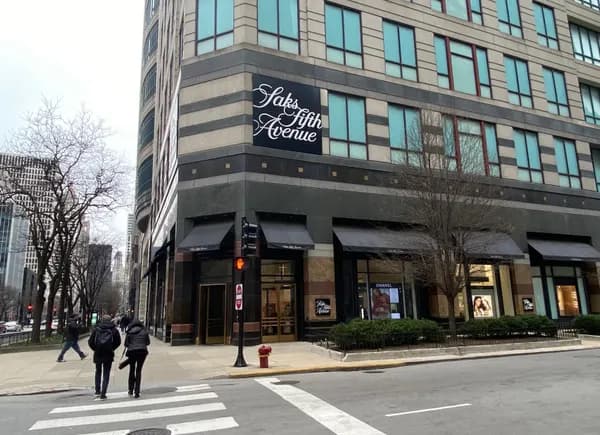
The numbers coming out of Saks Global's latest court filing tell a story the luxury retail world has been waiting months to hear. The parent company of Saks Fifth Avenue, Neiman Marcus, and Bergdorf Goodman secured a restructuring support agreement with an ad hoc group of senior secured bondholders who committed $500 million in exit financing, to be released the moment the company steps out of Chapter 11 protection. That moment, Saks said, is now expected this summer.
The agreement, announced April 2, clears what had been the most uncertain stretch of a bankruptcy filing that began January 14 when the weight of a $2.7 billion Neiman Marcus Group acquisition finally broke the balance sheet. At that time, the company had drawn roughly $1.75 billion in debtor-in-possession financing just to keep the lights on and the floors stocked. The new $500 million commitment is a different kind of money: forward-looking capital meant to fund operations and growth once Saks emerges on the other side.
CEO Geoffroy van Raemdonck, the executive who previously guided Neiman Marcus through its own bankruptcy emergence and was appointed to lead Saks Global on the same day it filed, called the agreement a signal of restored confidence: "Achieving this important milestone underscores the progress we are making on our transformation and reflects our capital partners' confidence in our go-forward vision, guided by our relentless devotion to the luxury customer."

The operational metrics behind that confidence are real. More than 650 brands, many of which pulled shipments after the January filing amid concerns over unpaid invoices, had resumed sending merchandise to Saks's selling floors. Those returning vendors released $1.5 billion in retail receipts, representing more than 90% of the inventory the company had projected for its fiscal first quarter. March inventory receipts alone rose 18% year-over-year. Customer spend per store visit was up 6%, and online conversion across Saks Fifth Avenue and Neiman Marcus climbed 11%.
The recovery in vendor relationships matters enormously in luxury retail, where the brands on the floor are as much the product as anything in a fitting room. A Saks floor without its top-tier consignors is just real estate.

The path forward, however, runs through significant contraction. The company had already closed eight Saks Fifth Avenue locations and one Neiman Marcus store before a March 6 announcement added 12 more Saks closures and three additional Neiman Marcus locations to the list. Roughly two dozen full-line stores are expected to close in total. Van Raemdonck has framed the trimmed footprint as "the best-performing locations in markets with a high concentration of luxury customers," a description that amounts to a bet that concentration and curation will outperform scale.
Bergdorf Goodman, the Fifth Avenue institution that has operated largely outside the operational turbulence hitting its sister banners, remains unaffected by the latest store-closure wave. That insulation tracks with Saks Global's stated intent to file a formal Plan of Reorganization within weeks, pending court approval of the bondholder agreement. If the timeline holds, the restructured Saks Global that emerges this summer will be smaller, leaner, and backed by half a billion dollars in fresh capital to prove the luxury department store still has a place in 2026.
Know something we missed? Have a correction or additional information?
Submit a Tip