Tokyo AI Fashion Week 2026 Challenges Designers to Blend Generative AI With Functional Style
OpenFashion's Tokyo AI Fashion Week challenges creators to design workwear and disaster-ready garments using generative AI, with entries open through April 27.
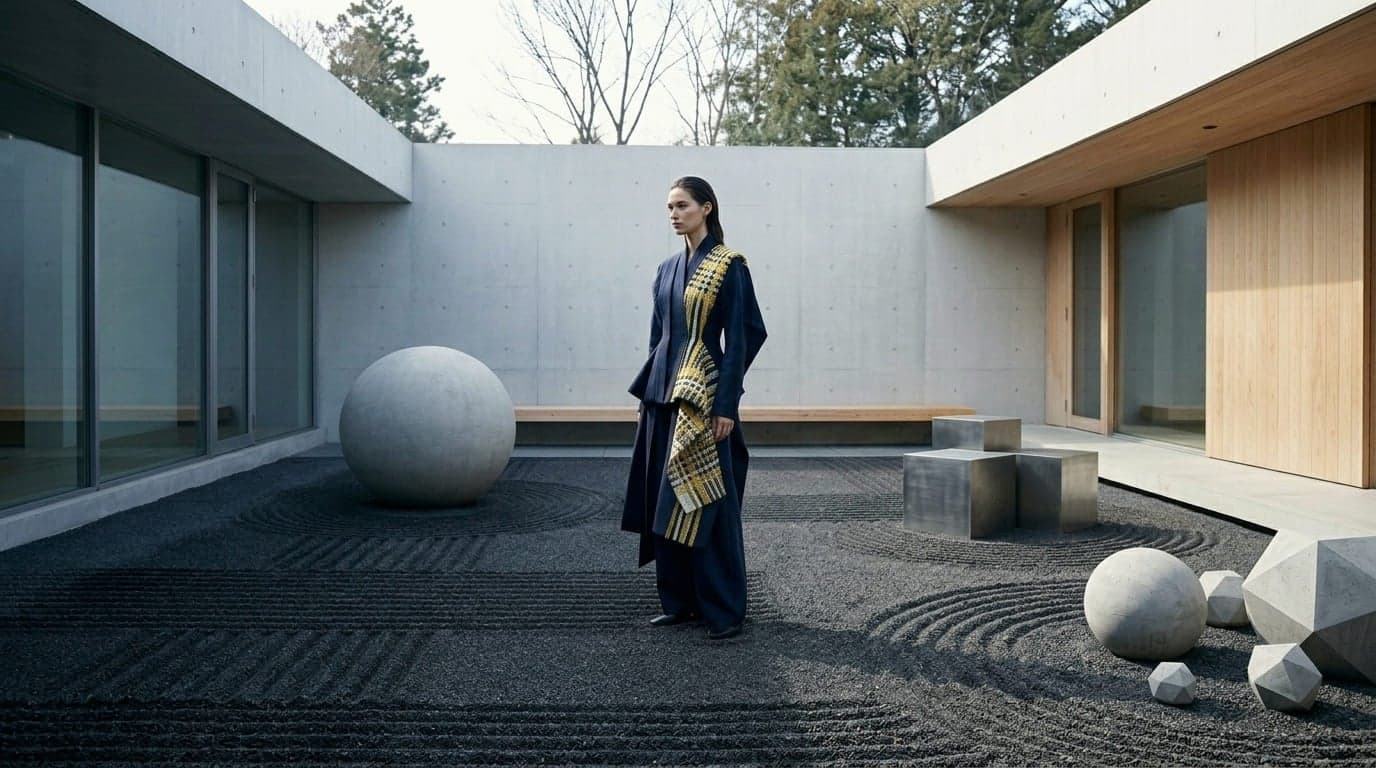
Generative AI has made its boldest pitch yet to the fashion industry's most skeptical buyers: the people who actually need clothes to work. Tokyo AI Fashion Week 2026, organized by OpenFashion and launched April 3, opened with a contest theme that puts function ahead of fantasy. Under the banner of "Future Utility," participants are challenged to conceive collections in workwear, uniforms, and disaster-ready apparel, using generative AI as both design tool and creative collaborator.
The contest runs on a multi-stage schedule. Entries are accepted through April 27, with public voting and jury review rolling through May and June. Collections must be generated using AI image tools, submitted as cohesive visual concepts with entries evaluated on creativity, visual expression, and what the organizers call "innovation and influence," meaning the potential for AI-native work to reshape how the industry thinks about design. OpenFashion has previously staged contests around themes including "High Fashion × Workwear for Non-Desk Workers," but the 2026 framing sharpens the brief considerably: disaster-ready garments require specific performance criteria that aesthetic novelty alone cannot satisfy.
The question that hangs over this iteration of the event is whether "Future Utility" will be held to its own standard. Designing a technically credible emergency evacuation uniform using Midjourney or OpenFashion's proprietary MaisonAI platform is a fundamentally different exercise than generating a mood-board-ready editorial. MaisonAI, which launched in beta in August 2023 and doubled its user base within 18 months, includes an AI Agent function that allows creators to assign specialized roles, including fashion designer and patternmaker. Whether that patternmaker simulation produces garments engineered for, say, heat resistance or mobility under load remains an open question that the contest judging criteria do not explicitly address.
OpenFashion has published its own generative AI usage guidelines, noting that "depending on the content of input data and how the generated products are used, it may violate laws or infringe on the rights of others." That disclosure covers the three platforms the company sanctions for contest entries: MaisonAI, ChatGPT, and Midjourney. The guidelines represent a starting point, though training data attribution and intellectual property credit for human patternmakers whose work informs AI outputs remain areas where the event's framework offers direction without resolution.

The week's program extends beyond the contest itself. Seminars address practical AI integration across brand development, design workflows, and business strategy, framing the event less as a showcase and more as applied research into what these tools can do at industry scale. OpenFashion, headquartered in Minato-ku, Tokyo under CEO Toru Ueda, has positioned itself at the intersection of fashion consulting and AI platform development. For emerging designers without studio infrastructure, the contest offers legitimate exposure; for the software vendors whose tools are being stress-tested against functional briefs, the results will carry more credibility than another editorial iteration.
The real value of a "Future Utility" mandate may be exactly that pressure: requiring AI-generated fashion to justify itself against a use case, not just an aesthetic. Whether the winning collections will inspire production, or simply more compelling content, will clarify itself by July.
This article was produced by Prism’s automated news system from verified source data, official records, and press releases, then run through automated quality and moderation checks before publishing. The system is built and supervised by the people who set the standards it runs under. Read our full AI policy.
Did this article answer your question?


