Baccarat Rouge 540 Shows Why Fragrance Is Luxury's Quietest Status Signal
At $28,000 for just 35ml, the Baccarat Rouge 540 Millésime makes the case that the most powerful luxury status signal is one nobody else can see.
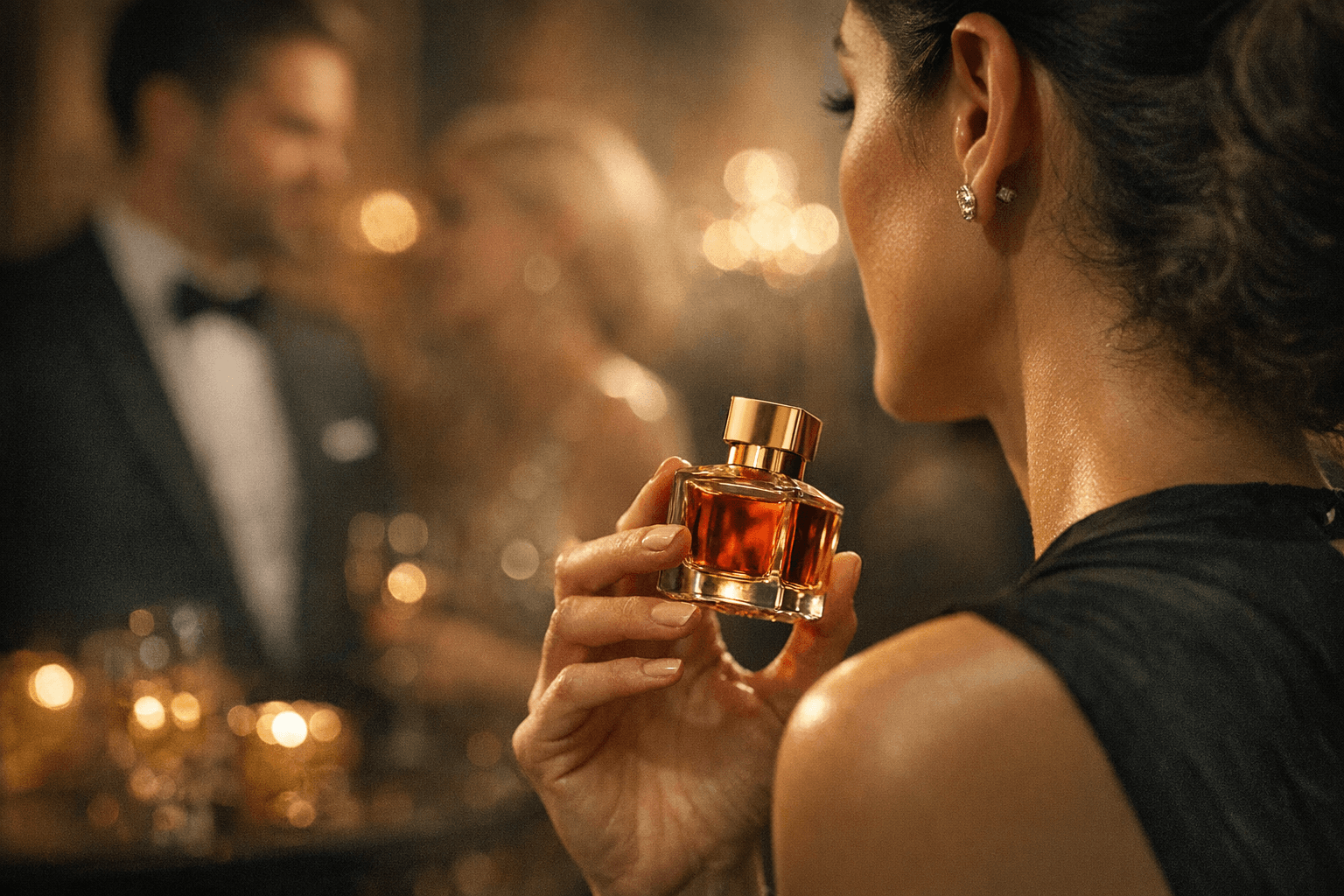
The number that stops the room is $28,000. Not for a watch, not for a bag, not for a piece of jewellery. For 35 millilitres of perfume. Maison Francis Kurkdjian has unveiled a $28,000 limited-edition version of Baccarat Rouge 540, and only 54 bottles will be made each year. Over a decade, that adds up to 540 pieces total, a production span designed to highlight what is, by every measure, a fully artisanal object. The price, the scarcity, and the craft all serve a single argument: that fragrance has become luxury's most sophisticated status category, and wearing it correctly is a discipline unto itself.
What Makes the Millésime Edition Different
Baccarat Rouge 540 was created in 2014 to celebrate the 250th anniversary of the Baccarat manufacture. Its name comes from the temperature, 540 degrees Celsius, at which gold dust and crystal fuse into a molten red hue. The Millésime takes that origin story and pushes it into collector territory. Francis Kurkdjian reworked the scent's original composition around a rare and costly ingredient: genuine ambergris. The resulting extract is enclosed in a small red crystal bottle whose facets form a K, a design by artist Fred Rawyler.
The bottle is housed in a chest inspired by the ones Baccarat used in the 1950s. Spruce wood contrasts with white taurillon leather; the shine of bevelled mirrors reveals the subtle glow of a rechargeable pedestal. Maison Francis Kurkdjian describes the edition as being "protected with the care reserved for invaluable works of art." The rechargeable design is not incidental either: it also presented a technical innovation challenge, since the flacon needed to function as a modern spray while retaining the integrity of a fully artisanal piece. This is, in the most literal sense, a perfume you keep.
The Stealth-Status Logic of Fragrance
A $28,000 scent is not the most expensive bottle ever created. Some of the most expensive perfumes have been Bulgari's Opera Prima at $235,000 in 2014 and Dior's J'adore L'Or Prestige Edition at $75,000 in 2016. But price alone misses the point. What makes fragrance the defining old-money luxury category right now is precisely what it doesn't do: it doesn't display a logo, it can't be photographed from a distance, and it requires close proximity to be perceived at all.
A Birkin announces itself across a restaurant. A scent only reveals itself when someone leans in. That asymmetry is the appeal. Maison Francis Kurkdjian is LVMH-owned, and the brand joins a wider range of LVMH labels unveiling fragrances at prices once reserved for handbags and jewellery, as collectors' enthusiasm drives demand. The house that perfected the collector-edition model within LVMH is Guerlain, which has long released limited extrait editions in Baccarat crystal. Ultra-high-end collectible fragrance launches have become more frequent at the luxury house as avid collectors have helped drive a high-end fragrance boom.
Baccarat Rouge 540 occupies a peculiar cultural position. It is simultaneously one of the most copied scents in the world, with 25.5 million TikTok posts attached to its hashtag, and one of the few fragrances to cross from the niche category into mainstream cultural conversation. Drake referenced it in his music. That kind of penetration normally kills a scent's cachet. Instead, MFK responded with the Millésime: a version so scarce and so expensive that cultural overexposure at the mass level actually reinforces its collector appeal at the top.
The Market Behind the Mystique
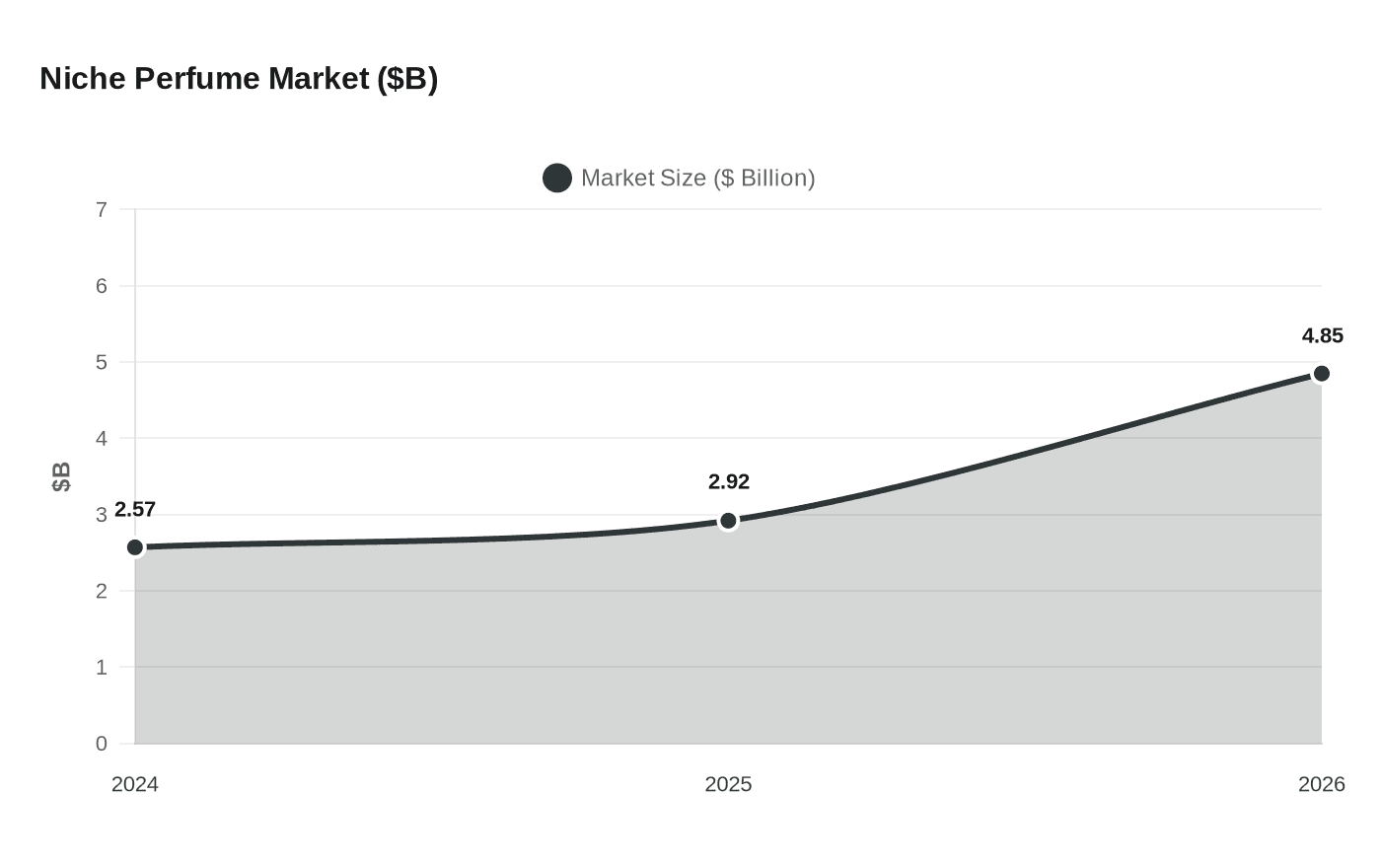
The niche perfume market is expected to reach $4.85 billion by 2026, forming a meaningful share of the broader $56 to $57 billion luxury fragrance industry. The segment has grown consistently, from $2.57 billion in 2024 to $2.92 billion in 2025. The direction of travel is clear: prestige fragrances are growing at 12% in the United States compared to just 4% for mass-market counterparts, according to market research. Around 58% of consumers now seek personalized, unique scents, which is significantly driving demand for niche fragrances.
Luxury houses have understood this for years, and fragrance is now deployed strategically. It carries lower production costs than leather goods, offers higher price elasticity, and serves as an entry point for consumers who aren't yet ready to spend on a handbag. A $695 bottle of Baccarat Rouge 540 EDP introduces someone to Maison Francis Kurkdjian at a fraction of what a piece of Loro Piana cashmere would cost. The Millésime then exists at the opposite extreme: not to sell volume, but to anchor the brand's prestige ceiling.
How to Wear an Expensive Perfume
This is where most people go wrong. Old-money fragrance etiquette is not about projection; it's about restraint. The goal is a scent that someone notices when they're close, not one that announces your arrival from across the room.
A few principles that apply whether you're wearing a $28,000 extract or the standard edition:
- Apply to pulse points where body heat will gently amplify the scent: the inner wrists, the base of the throat, behind the ears, and the inner elbows. These are not suggestions; they are the architecture of how a fragrance develops over hours.
- Never rub your wrists together after applying. It crushes the top notes and disrupts the development of the dry-down. Press lightly, or simply let the scent settle.
- Moisturized skin holds fragrance significantly longer than dry skin. Apply an unscented lotion first, or use a matching body cream if the house offers one, and you'll extend longevity without adding a single extra spray.
- For an extrait or highly concentrated formula like the Millésime, two sprays is the ceiling. The concentration of raw materials is high enough that more is genuinely too much.
- A light application to the hair, or to a silk scarf worn at the neck, creates a diffuse sillage that moves with you rather than preceding you. This is the most discreet and most effective way to wear a fine fragrance in close quarters.
The Decision Framework
*Signature scent versus fragrance wardrobe:* The collector impulse is real, and the fragrance wardrobe, meaning a curated rotation of scents for different contexts, is a rising behaviour among serious buyers. But a signature scent carries its own logic: worn consistently over years, it becomes olfactory identity. For old-money dressing, where the goal is coherent, considered personal style rather than trend-chasing, a signature scent worn with restraint is the more powerful move.
*Full bottle versus decant:* If you're testing an expensive fragrance, a decant from a reputable retailer or fragrance community is an intelligent first step. For anything above $300, commit only after wearing it for several weeks across different temperatures and occasions. The dry-down in summer heat is not the same scent you tried on a cold afternoon in a department store.
*The Millésime versus the standard edition:* The permanent collection bottle is priced at $695 for 6.8 ounces. The Millésime's price premium comes partly from the addition of ambergris to the ingredient list, but the crystal packaging and collector positioning take top billing. For wearing purposes, the two are distinct objects: one is a fragrance, the other is an artefact. Buy the standard edition to wear. Consider the Millésime only if you understand what you're acquiring, which is closer to a piece of functional sculpture than a bottle of perfume.
Alternatives That Deliver the Same Aura
The original Baccarat Rouge 540 EDP at $695 for 200ml remains the most coherent entry, and frankly the correct one for daily wear. The amber, woody, and faintly floral composition is complex enough to reward the price. For those who want the warm, polished register of BR540 at a lower commitment, the Maison Margiela Replica line offers well-constructed ambient scents in the $170 to $220 range. Parfums de Marly consistently delivers similar warm-spiced density with genuine staying power and fine-fragrance pedigree. Both brands are worth building toward as part of a thoughtful fragrance rotation.
The Millésime edition will likely never be assessed purely as a scent. It lives in the same cultural space as a vintage watch or a numbered art print: a luxury object that communicates seriousness without requiring an audience. In a market saturated with visible status signals, wearing something that only exists in the memory of those who get close enough to notice is, quietly, the most refined flex there is.
*Citations based on reporting from Business of Fashion, Wallpaper, Formes de Luxe, Cosmetics Business, and market analysis from Scento and Business Research Insights.*
This article was produced by Prism’s automated news system from verified source data, official records, and press releases, then run through automated quality and moderation checks before publishing. The system is built and supervised by the people who set the standards it runs under. Read our full AI policy.
Did this article answer your question?