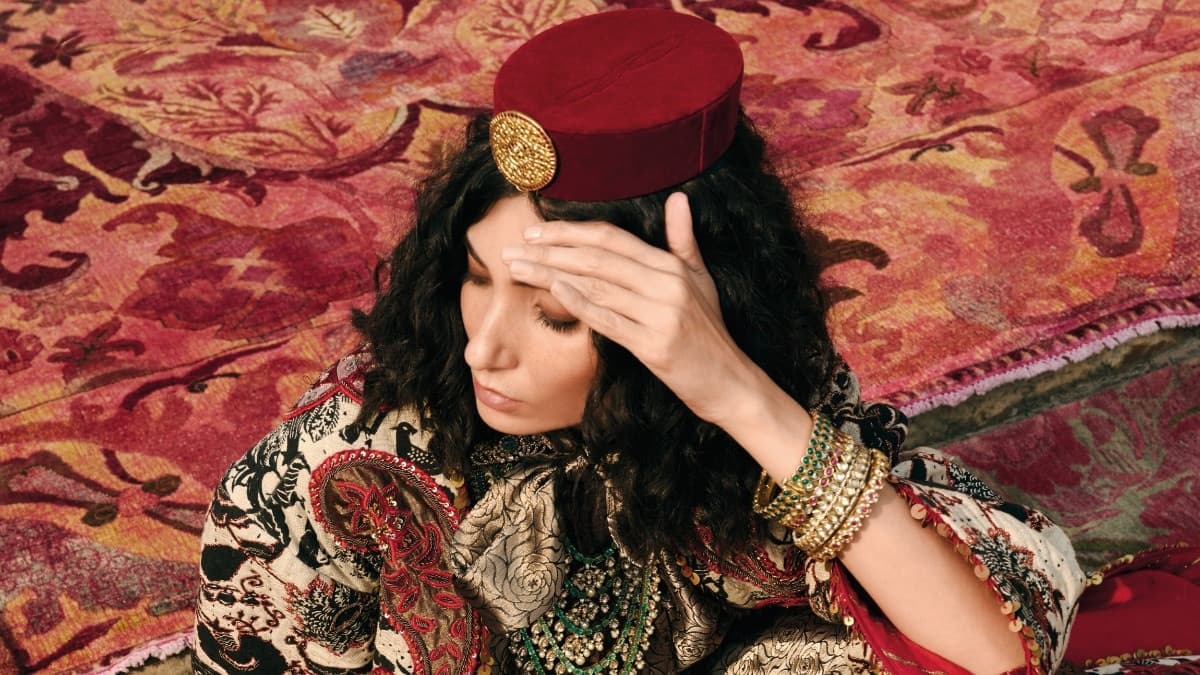
French luxury’s long American legacy returns to the spotlight
French luxury did not just inspire American taste, it taught America how to read status. The old-money wardrobe still speaks in the accents Cartier, Chanel, and Dior made unmistakable.

French luxury taught America the grammar of status
Old-money style is often described as quiet, but its quietest signals were trained by France. The American elite learned to read polish through the gleam of a Cartier case, the discipline of couture, and the authority of Parisian finishing. That is why French luxury still lands with such force in the United States: it does not merely suggest wealth, it certifies taste.
The new spotlight on this history is less about nostalgia than power. Comité Colbert, the French luxury collective created in 1954 at the initiative of Jean-Jacques Guerlain and named for Jean-Baptiste Colbert, Louis XIV’s finance minister, is using its New York exhibition, “Hidden Treasures, 250 Years of Franco-American Luxury Stories,” to frame luxury as cultural diplomacy. Running May 26 to 31, 2026 at The Shed in Hudson Yards, the show gathers more than 65 French luxury maisons and cultural institutions around never-before-seen American archives, and it arrives as part of the 250th anniversary celebrations of Franco-American friendship.
Bénédicte Épinay, the organization’s president and CEO, said the exhibition reveals the “invisible threads” linking France and the United States through craftsmanship, creativity, and cultural exchange. That is exactly the point. French luxury has never been only about objects. It has always been about the systems that make objects feel inevitable, rare, and socially legible.
Cartier made luxury portable, and America learned to notice
Cartier’s American story begins with a crossing, not a storefront. Pierre Cartier arrived in New York in 1909, and by 1917 the house had secured one of the most famous real-estate exchanges in luxury history: an exceptional pearl necklace for the Fifth Avenue Mansion owned by Morton Plant. That trade did more than give Cartier a spectacular address. It turned the house itself into a monument to elite aspiration, a place where jewelry, architecture, and social rank collapsed into a single address on Fifth Avenue.
This is one of the great French lessons in American status dressing: luxury should feel both personal and institutional. A Cartier piece is not only ornament. It is a sign that someone understands the codes of inherited refinement, from travel trunks and jewelry cases to the polished restraint that lets quality speak before logo ever does. The house’s New York presence became shorthand for transatlantic taste, and that shorthand still works because it implies access to a world that is curated, not merely purchased.
Old-money dressing has always borrowed from that logic. The ideal is not flash, but control: the right leather, the disciplined silhouette, the object that looks as though it has moved easily through generations. Cartier helped teach America that status could be carried, packed, and placed on display without ever seeming loud.
Chanel gave America elegance with a cinematic edge
If Cartier taught America how to recognize luxury in objects, Chanel taught it how to recognize luxury in image. In 1931, Gabrielle Chanel traveled to Hollywood to dress United Artists actresses such as Gloria Swanson, bringing Parisian polish directly into the machinery of American celebrity. That move mattered because Hollywood was already a national style factory. Once Chanel entered that frame, French couture no longer belonged only to salons and society pages. It became part of the visual language of fame.
Chanel’s contribution to old-money style is harder to pin to a single garment than to a feeling: ease sharpened by discipline. The house’s appeal in America has always rested on a careful contradiction, clothes that appear simple but are built on exacting construction. That tension, between effort and restraint, became one of the most durable markers of social confidence in American wardrobes. It is the difference between looking expensively dressed and looking as though elegance is second nature.
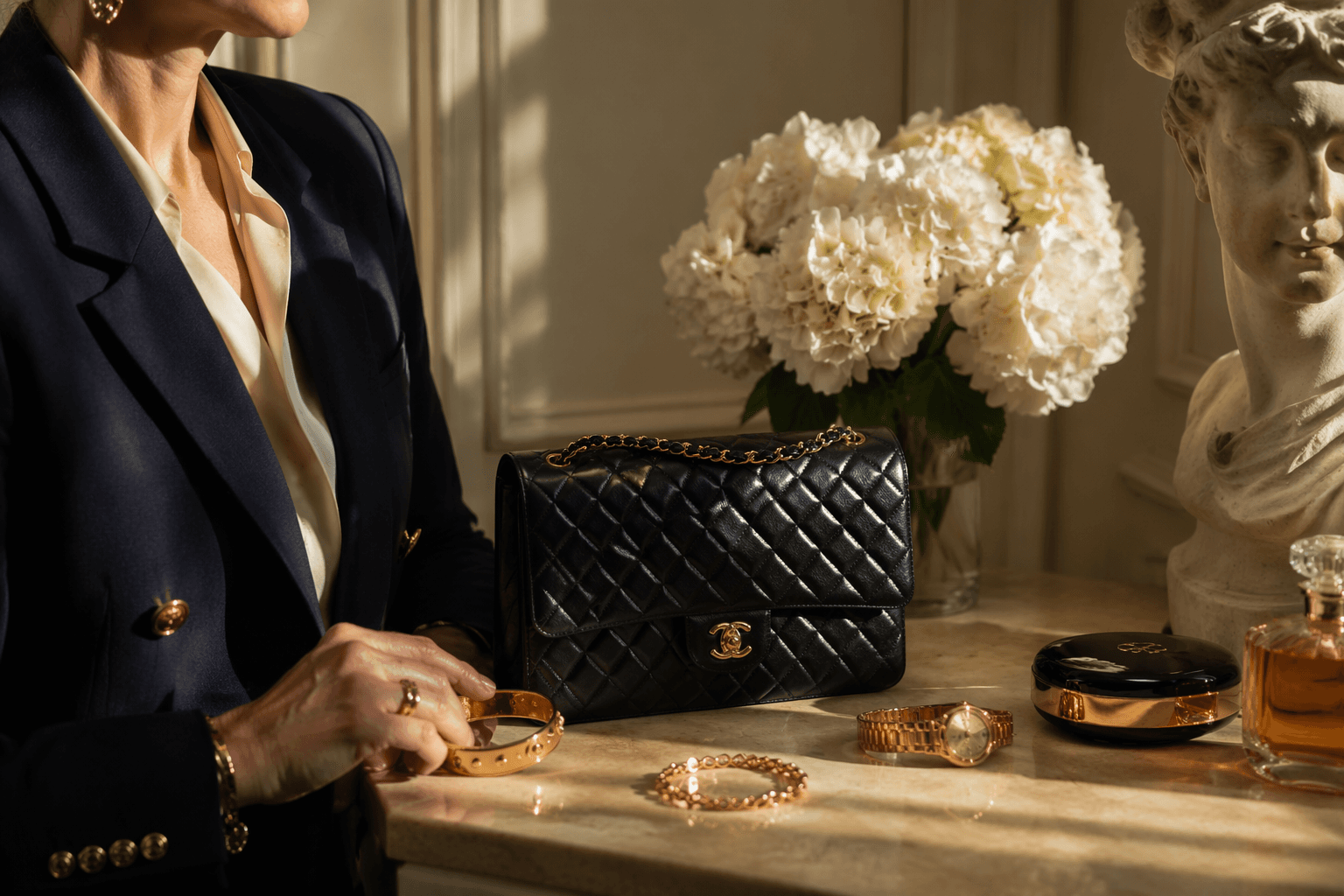
Hollywood amplified that message. Gloria Swanson and her peers did not just wear Chanel, they helped turn Chanel into a visual code for a woman who understood taste as poise. In America, that became its own form of old-money dressing: polished, slightly aloof, and unmistakably composed.
Dior turned couture into a postwar power move
Then came Dior, and with him the full force of Parisian fashion as a social reset. On February 12, 1947, Christian Dior unveiled his debut collection in Paris, and the press quickly dubbed it the “New Look.” The name stuck because the silhouette was impossible to ignore: rounded shoulders, a cinched waist, and a full skirt that restored drama to women’s dress after the severity of war.
Dior’s breakthrough matters to old-money style because it formalized the idea that luxury could be architectural. The New Look was not casual prettiness. It was construction, proportion, and theater. It announced that dressing well meant understanding line, volume, and the authority of a well-managed shape. In America, that translated into a lasting appetite for clothes that feel finished from every angle, whether the source is couture, bespoke tailoring, or the carefully controlled wardrobe of inherited privilege.
What Dior gave the U.S. was not just a trend but a template. The cinched waist and full skirt became shorthand for opulence, and the house’s success reinforced the idea that Paris still set the terms for aspiration. Even now, when old-money style favors understatement, it often borrows Dior’s discipline: a clean waist, a deliberate shoulder, a silhouette that suggests money without needing to advertise it.
Why these French codes still read as authority
French luxury still carries weight in America because it has spent more than a century becoming a shared social language. Cartier gave status a physical address. Chanel linked refinement to celebrity and modern femininity. Dior gave postwar America a vision of luxury as structure, not excess. Together, they created a pipeline in which French codes became embedded in American ideas of class, polish, and inheritance.
That is why old-money style so often returns to the same materials and gestures: smooth leather, tailored lines, impeccable finishing, and the impression that nothing is accidental. It is also why French houses continue to feel like default references when the conversation turns to taste. They do not merely sell beautiful things. They sell the recognition of beautiful things.
The current anniversary programming makes that legacy feel especially immediate, but it is not actually new. It simply reminds America that much of what it calls quiet luxury, old money, or polished restraint was educated by France long ago. The look may cycle, but the code remains stubbornly intact.
This article was produced by Prism’s automated news system from verified source data, official records, and press releases, then run through automated quality and moderation checks before publishing. The system is built and supervised by the people who set the standards it runs under. Read our full AI policy.
Know something we missed? Have a correction or additional information?
Submit a Tip