French Women’s Spring Staples, Fringing, Short-Sleeve Blouses, and Flat Mules
Three French-girl staples look quietly polished this spring, but only their most restrained versions belong in an old-money wardrobe.
Fringing
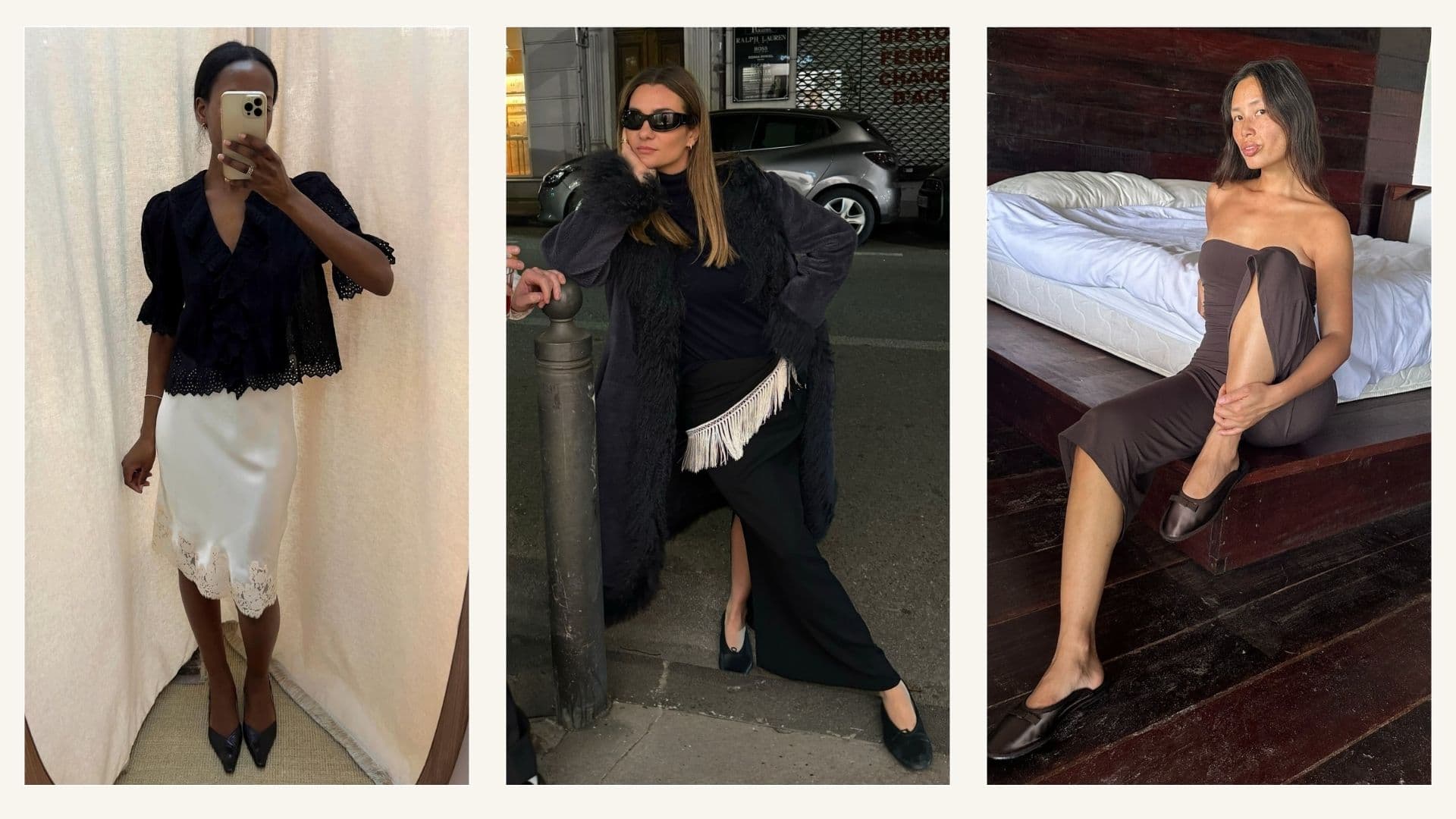
The smartest fringe this spring is the kind you almost miss at first glance. Who What Wear places fringing among the season’s minimalist French-woman trends, and that is exactly the point: it works when it behaves like texture, not theater. A whisper of movement at a hem or cuff can soften tailoring and add depth to a monochrome look, but once fringe turns shaggy, high-contrast, or overly long, it drifts straight out of polished territory.
That restraint matters because the trend has already gone wider than the cliché would suggest. Fringe trims were surfacing on the streets at Copenhagen Fashion Week in January 2026, and by spring they are showing up on skirts, trousers, tops, earrings, and even shoes. The version that feels right for an old-money minimalist wardrobe is the one that looks considered from a distance and tactile up close, like brushed suede, matte silk, or a clean trim stitched in the same tone as the garment.
French style has been shorthand for elegance for a reason, with fashion design and production prominent in France since the 15th century. But the modern lesson is more disciplined than decorative. If you want fringing to read as chic rather than bohemian, pair it with sharp lines: a crisp shirt, a tailored trouser, a lean knit, and no competing embellishment. The more the rest of the outfit stays quiet, the more fringe can do its subtle work.
Short-sleeve blouses
If French women are dressing with instinct rather than effort, the short-sleeve blouse is the easiest proof. Who What Wear says French women’s transitional wardrobes “start with a pretty blouse,” and PORTER places romantic blouses among the covetable staples for spring and summer 2026. That is not a call for sweetness. It is an argument for polish, lightness, and a silhouette that feels finished without looking stiff.
The best versions are the ones that breathe. Think delicate broderie anglaise, subtle scalloping, a slightly boxy shape that skims rather than clings, and a sleeve that lands just enough off the arm to feel easy. In practice, this is the kind of blouse that can move from pressed trousers to straight denim without losing its composure, which is why it sits so comfortably inside a restrained wardrobe.
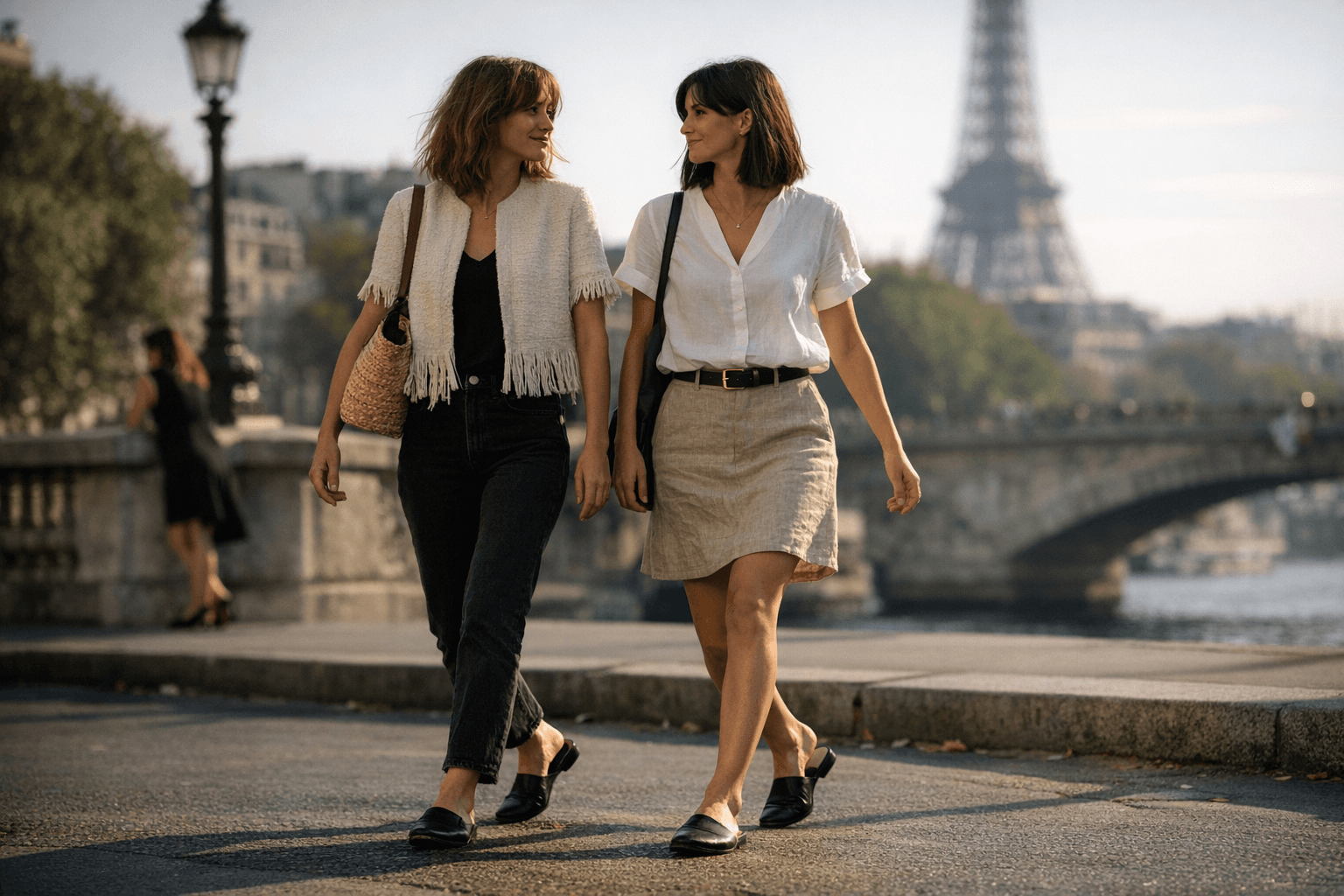
The French references most often cited in this conversation, including @annelauremais, @sylviemus_, and @vikilefevre, lean into that same balance. Nothing feels overbuilt. The blouse is the statement only in the sense that it sharpens everything around it. For readers who prefer old-money minimalism to performative chic, the rule is simple: choose clean fabric, delicate detail, and a shape that lets the collarbone and wrist do some of the work. Skip the prairie excess, the exaggerated ruffle, and anything that turns the blouse into a costume piece.
Flat mules
Flat mules are the most convincing of the three trends because they are both practical and quietly historical. Who What Wear says flats have “cemented themselves” as a fashion-set favorite, and among the spring 2026 options it highlights almond-toe mules, a shape that feels especially compatible with French-girl dressing. The appeal is obvious: they slip on, they sharpen a hemline, and they make in-between weather look intentional instead of transitional.
The shoe’s history gives it extra credibility. The Metropolitan Museum of Art notes that mules were popular as at-home footwear in the 17th and 18th centuries for both men and women, and Who What Wear’s mule history explains that wealthy French court women including Madame de Pompadour and Marie Antoinette later wore them publicly under ball gowns. That lineage is exactly why the mule still reads as elegant even when it is flat. It carries a sense of ease that never quite loses its refinement.
For an old-money wardrobe, the best flat mule is narrow, understated, and made in leather or suede with a clean almond toe. Black, tan, cream, and deep brown all make sense; chunky soles, loud hardware, and exaggerated platform shapes do not. French women are leaning on flat-shoe trends instead of trainers, and that choice feels particularly persuasive when the rest of the outfit is pared back: a crisp blouse, a lean trouser, a skirt with movement, nothing noisy. In that combination, the mule does exactly what French style does best. It looks effortless, but never accidental.
This article was produced by Prism’s automated news system from verified source data, official records, and press releases, then run through automated quality and moderation checks before publishing. The system is built and supervised by the people who set the standards it runs under. Read our full AI policy.
Did this article answer your question?