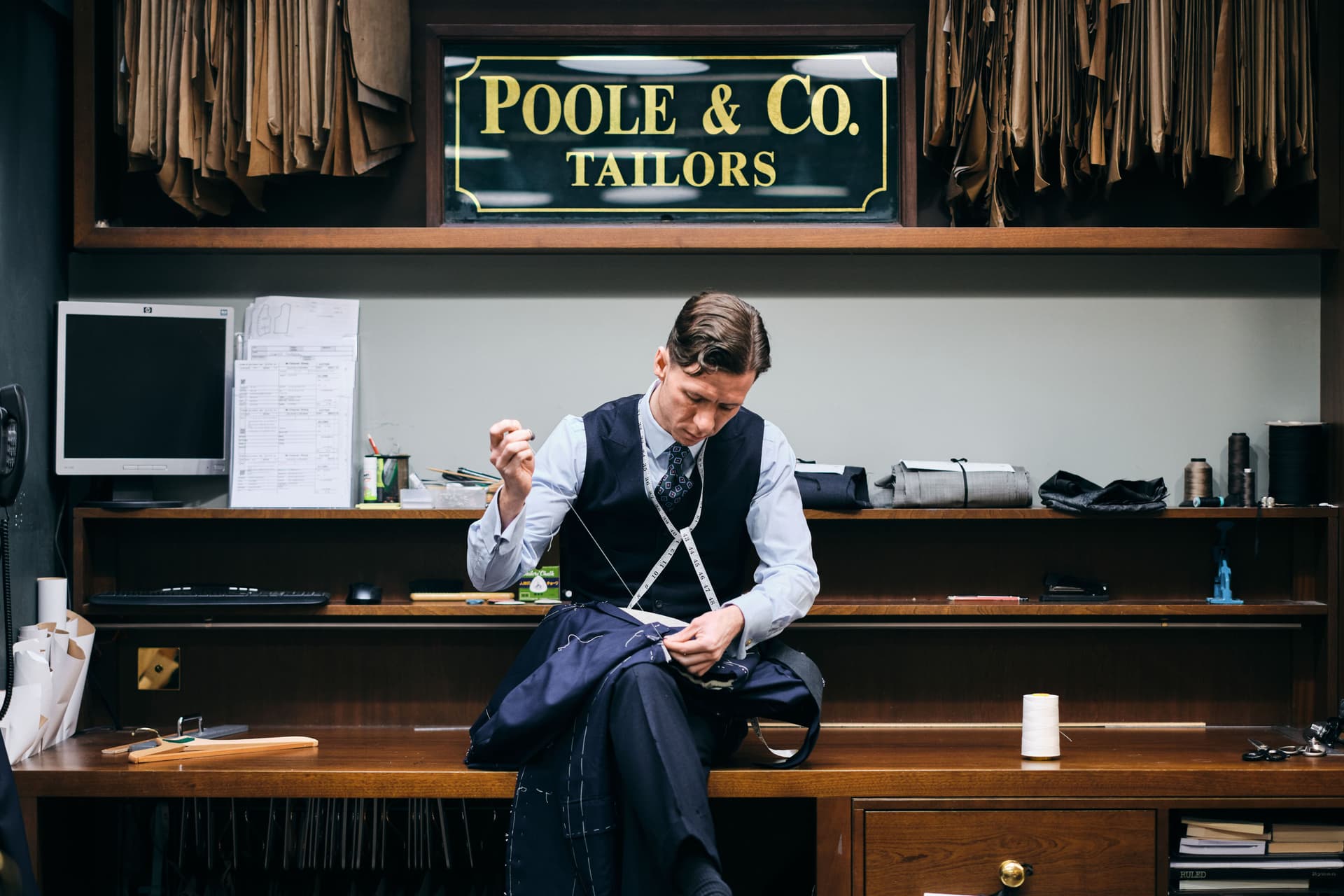
How fabric choice defines old money style and quiet luxury
Old money reads first through fabric: wool, cashmere, linen, tweed, and silk soften, patina, and drape in ways synthetics never quite can. The difference is felt in country-house tweed, yacht-club linen, and city suiting.

A wardrobe built on wool flannel, cashmere, Irish linen, silk twill, Harris tweed, and full-grain leather reads as inherited because those materials age into themselves. They soften, mellow, and hold shape with use, while synthetic blends and overly crisp finishes tend to look newly purchased no matter how expensive they were.
The old-money code lives in the cloth
The distinction shows up in a blazer that looks handled rather than protected. Worsted wool is one of the clearest examples: its smooth surface gives tailoring a refined, almost liquid finish, which is why it makes city suiting look discreet rather than shiny. The word itself comes from Worstead in Norfolk, England, a village long associated with wool production, and that history still hangs over the fabric’s reputation for tailored clothing.
Finishing keeps the appearance and shape of worsted-spun wool consistent at retail and in wear. That is why the cloth aligns with inherited wardrobes: it is built to stay composed after repeated use. The same logic applies to flannel, cashmere, and tweed, which rarely look best on day one. They gain character when the surface is brushed, when the nap compresses, when the edges stop looking exact.
Why these fabrics signal privilege without shouting
Cashmere, merino wool, lambswool, and silk twill all signal wealth because they do not need to announce themselves. A plain crewneck, polo sweater, or V-neck in cashmere or lambswool does more for the old-money look than a logo-heavy knit ever will, because the interest comes from touch and drape. Business of Fashion has put cashmere sweaters anywhere from about $30 to $2,000, which is as much a warning as a price guide: the label can look similar while the fiber quality, spinning, and finishing are worlds apart.
Cashmere is also a vulnerable raw material, not just a mood board staple. That scarcity is part of why cashmere codes as inherited ease. It is expensive to source, hard to maintain at scale, and instantly gives knitwear a softer, more settled line than synthetic substitutes. A cheap acrylic blend may mimic the silhouette, but it rarely mimics the depth, warmth, or graceful wear.
Country-house tweed, yacht-club linen, boarding-school cashmere
The signal is clearest when the fabric matches the setting. Harris tweed and brushed flannel belong in country-house wardrobes because they carry the visual weight of equestrian weekends, ancestral estates, and weather that asks clothes to endure. Tweed should look like it has spent time outdoors. When it is too slick or too uniform, the effect turns costume-like rather than established.
Linen tells a different story. In yacht-club dressing, a sharply cut linen shirt, trouser, or summer suit looks aristocratic because it balances ease with control. The key is discipline: linen should skim, not swamp; crease, not collapse. Oversized, wrinkled linen can feel careless, but well-cut Irish linen or a clean linen blend keeps the look relaxed without losing authority. For colder months, boarding-school cashmere and wool flannel do similar work, giving knitwear and tailoring a calm matte surface that feels lived in rather than staged.
Surface texture matters more than branding
The old-money wardrobe favors matte fabrics because gloss often reads as newness. Worsteds, brushed flannel, tweed, and fine cotton poplin absorb light instead of bouncing it around, which makes the clothes look expensive in a quieter way. Cotton poplin has its place too, especially in shirts, because it can deliver a crisp line without the plastic sheen of synthetic shirting.
This is where imitation usually gives itself away. Polyester-heavy suiting often looks too slick, too springy, too resistant to the body. Poly-cotton shirting can stay unnaturally sharp after washing, but that crispness is different from the settled structure of a well-made wool suit or a properly laundered poplin shirt.
What fashion’s quiet-luxury conversation got right
In 2023, the quiet luxury conversation pushed understated dressing back into the center of fashion as more than a logo detox. Loro Piana, The Row, and Zegna became reference points for understated luxury because fabric, cut, and finish create distinction without noise. The Row, built by Ashley Olsen and Mary-Kate Olsen, is one of the clearest examples of how restraint can become a recognizable point of view.
Phoebe Philo’s return also sharpened the appetite for seasonless clothing, and Old Stone Trade and Cristaseya sit in that same orbit.
How to choose fabric the old-money way
The easiest test is not the label, but the drape and finish. Look for fibers that soften with time, hold tailoring, and keep their dignity after repeated wear.
- For tailoring: choose worsted wool, wool flannel, or a fine herringbone tweed. They hold a clean line and avoid the shine that can make a suit look synthetic.
- For knitwear: choose cashmere, merino wool, or lambswool in crewneck, polo, or V-neck shapes. The point is softness and structure, not decoration.
- For warm weather: choose cotton poplin, Irish linen, or lightweight wool trousers. These breathe, move, and age better than synthetic blends.
- For outerwear and country dressing: choose Harris tweed or brushed flannel. These fabrics deepen in character with wear and fit the country-house vocabulary without looking forced.
- For accessories: choose full-grain leather, which develops a patina instead of peeling or flattening into plastic gloss.
Who What Wear highlighted cotton, cashmere, and silk as the natural fibers worth adding to a closet. In its 2025 piece on natural materials, Gentleman's Gazette argued that fabrics once treated as ordinary are now often framed as luxury items.
This article was produced by Prism’s automated news system from verified source data, official records, and press releases, then run through automated quality and moderation checks before publishing. The system is built and supervised by the people who set the standards it runs under. Read our full AI policy.
Did this article answer your question?