How to Buy Pre-Owned Watches That Hold Their Value
Rolex, Patek Philippe, and Audemars Piguet pre-owned prices hit a three-year low in 2024, making now the shrewdest entry point for investment-grade watches.
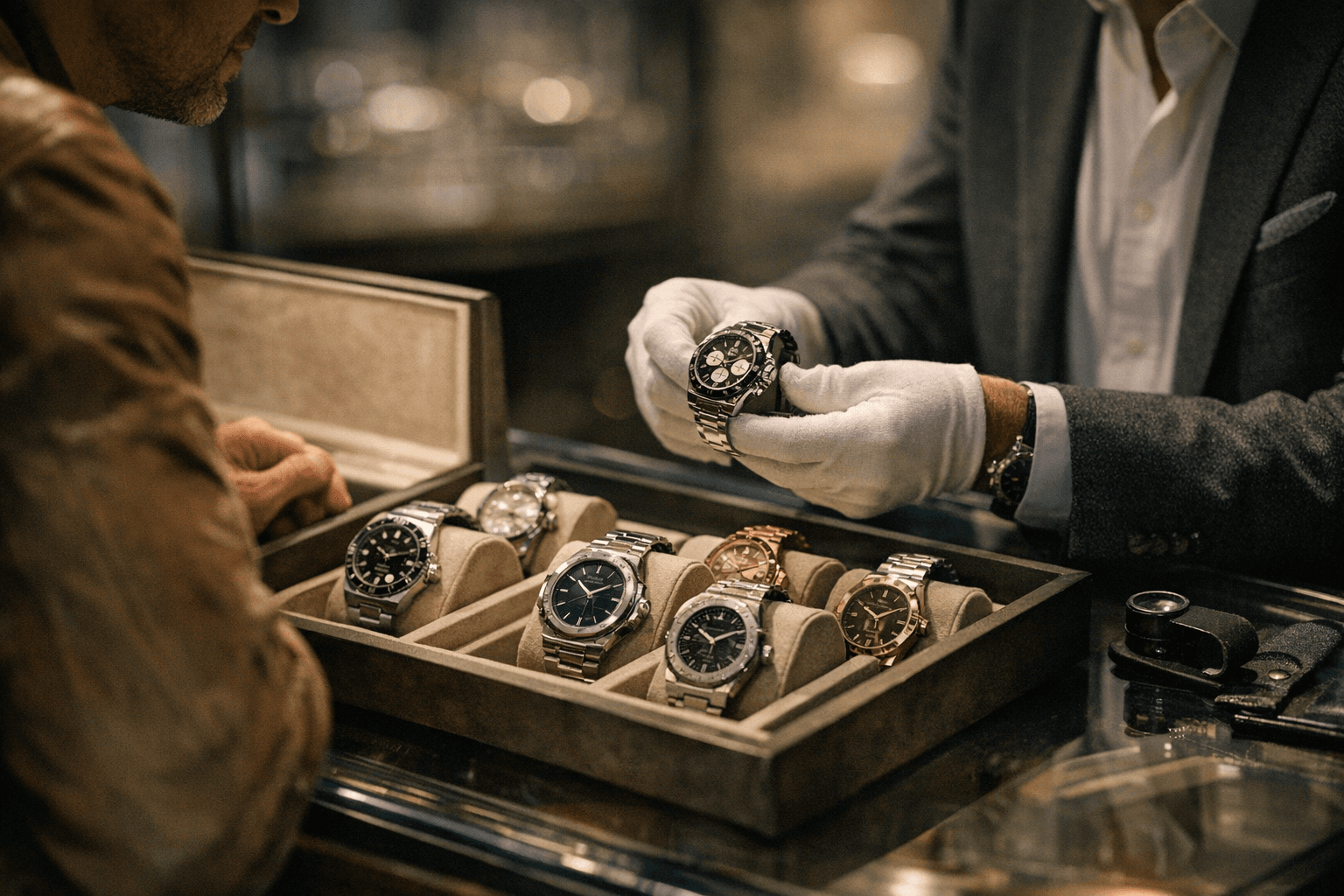
The Bloomberg Subdial Watch Index, which tracks the 50 most traded timepieces by transaction value, recorded a drop of nearly 6 percent across Rolex, Patek Philippe, and Audemars Piguet on the secondary market in 2024, hitting the lowest point since 2021. For anyone who has been waiting for the right moment to buy into horological heritage, that moment has arrived. But a softened market doesn't forgive careless buying. The pre-owned watch world rewards the methodical and punishes the impatient.
Authentication Is Now the Baseline, Not the Bonus
A watch is only as valuable as its movement's authenticity and serviceability. In-house calibers, like the Rolex 3235 or the Omega 8900, maintain a stronger value than modified base movements, but only if genuine. The counterfeit market has grown sophisticated enough that even seasoned collectors can be caught off guard by high-quality replicas. What separates a confident purchase from a costly mistake is a thorough authentication process: serial-number verification cross-referenced against enclosed paperwork, advanced imaging of the movement, and confirmation that the dial, case, and caliber all belong to the same watch.
Authentication catches "Frankenwatches," where cases and dials are real but movements are swapped. Before buying, ask: "Has the movement been photographed and verified against manufacturer specifications?" TrueFacet's authentication team, for example, treats serial-number cross-referencing as the absolute first step upon receipt of any piece. That process, now standard across reputable platforms, has moved authentication from luxury to baseline expectation.
The Case Size Shift Collectors Are Getting Right
One of the most telling signals in today's market is the migration toward right-sized cases. Searches for "unisex luxury watches 36mm to 38mm" are among the fastest-growing on Google, up 142% since 2022. The oversized sport watches that dominated the mid-2010s are giving way to something more considered. Even Rolex has increased production of 36mm and 34mm models, with the Oyster Perpetual 34 emerging as a crowd favorite in 2025.
Vintage 36mm Rolex Submariners regularly sell for $20,000 or more, often commanding more than modern 41mm versions. The Patek Philippe Calatrava 36mm from the 1970s fetches premium prices at auction. The lesson is counterintuitive but consistent: restraint in case diameter has historically correlated with stronger resale performance. A 36-40mm case reads as proportional, elegant, and era-agnostic, which is exactly what the secondary market rewards.
Provenance and Service History Are Worth Real Money
In 2025, provenance matters more than ever. Watches with original boxes, warranty cards, and purchase receipts can command a 10 to 30 percent premium over naked models. That range is significant. On a $15,000 Datejust, the difference between a complete set and a bare watch could be $1,500 to $4,500. A well-documented service history from the brand or a certified service center adds further value, confirming not just where the watch has been but that its movement has been maintained by hands qualified to touch it.
Unlike new luxury watches with fixed retail prices, pre-owned watches are subject to a wide range of variables: condition, service history, rarity, brand perception, and provenance. When you're evaluating a piece, treat the documentation as part of the watch itself. A box-and-papers Rolex and a bare Rolex are functionally two different purchases.
The Brand Hierarchy Worth Understanding
The pre-owned luxury watch market has evolved significantly, with certain models from Rolex, Patek Philippe, and Audemars Piguet commanding premium prices that often exceed their original retail values. This phenomenon stems from limited production runs, discontinued models, and the enduring appeal of Swiss horological craftsmanship.
Within that tier, the distinctions matter:
- Rolex anchors the market in liquidity. Sport references, particularly the Submariner, GMT-Master II, and Daytona, trade with consistency because demand is global and broad. Stainless steel sport models remain in highest demand across the secondary market.
- Patek Philippe skews toward complication and rarity. Complications such as chronographs, perpetual calendars, and moon phases tend to retain value exceptionally well. Patek's annual calendar references and the Nautilus have demonstrated sustained appreciation over decades.
- Audemars Piguet built its secondary market identity almost entirely on the Royal Oak. The original Gerald Genta design from 1972, with its integrated bracelet and octagonal bezel, remains one of the most recognized and consistently valued references in the market.
Mid-tier houses, while producing genuinely excellent timepieces, carry greater resale risk. Brands without Rolex's liquidity depth or Patek's complication cachet tend to depreciate more steeply and recover more slowly. That doesn't make them bad watches; it makes them different purchases.
How to Buy Safely in an Online Market
Authenticated pre-owned pricing typically runs 30 to 70 percent below current retail, which represents real value, but only when the authentication is genuine. Reputable online marketplaces now combine transparent fee structures with third-party authentication, closing the information gap that once made remote buying feel like a gamble. The key is understanding what you're paying for beyond the watch itself: shipping insurance, return windows, and whether authentication is performed in-house or outsourced to a certified third party.
Discontinued references, once production halts, see scarcity fuel appreciation. Unique dial colors, particularly green, blue, and meteorite dials, command premiums in the current market. When shopping online, filter for these specifics rather than browsing broadly. A targeted search by reference number gives you a market price anchor before you engage any seller.
The Red Flags That Should End Any Negotiation
The checklist before committing to any pre-owned purchase:
- Mismatched parts: Dial, hands, and case back should all be correct for the reference. Even period-correct components from a different reference lower the watch's value significantly.
- Franken dials: A dial from one generation mounted in a case from another is not a vintage watch; it's a composite. Authentication imaging should catch this, but always ask explicitly.
- Unpolished case: Mint condition and unpolished cases are especially desirable. A heavily polished case has lost the crisp edges and finishing distinctions that collectors prize, and it cannot be undone.
- No service records: Even a watch in apparent visual condition may have a movement that hasn't been serviced in decades. A mechanical watch typically requires service every five to seven years. Without records, that cost falls to you.
- Reluctant sellers: Any seller who deflects questions about movement photographs, serial verification, or documentation should be treated as a red flag, not a negotiation opportunity.
Buyers are paying high premiums for pre-owned models from top brands like Rolex, Patek Philippe, and Audemars Piguet, as well as from leading independents such as F.P. Journe and De Bethune, with the expectation that the value of these watches will continue to rise. The pre-owned watch market is projected to grow at a compound annual rate of 7.2 percent through 2031, which means the watches worth buying today are the ones with the documentation, authentication, and provenance to perform in that market. The entry point is favorable right now. The standards for what you buy into it should not be.
This article was produced by Prism’s automated news system from verified source data, official records, and press releases, then run through automated quality and moderation checks before publishing. The system is built and supervised by the people who set the standards it runs under. Read our full AI policy.
Did this article answer your question?