Jackie Kennedy’s Givenchy wardrobe made diplomacy look effortless in Paris
Jackie Kennedy used private Givenchy commissions to look culturally fluent, not flashy, and Paris read the message instantly.
Clothes as diplomacy
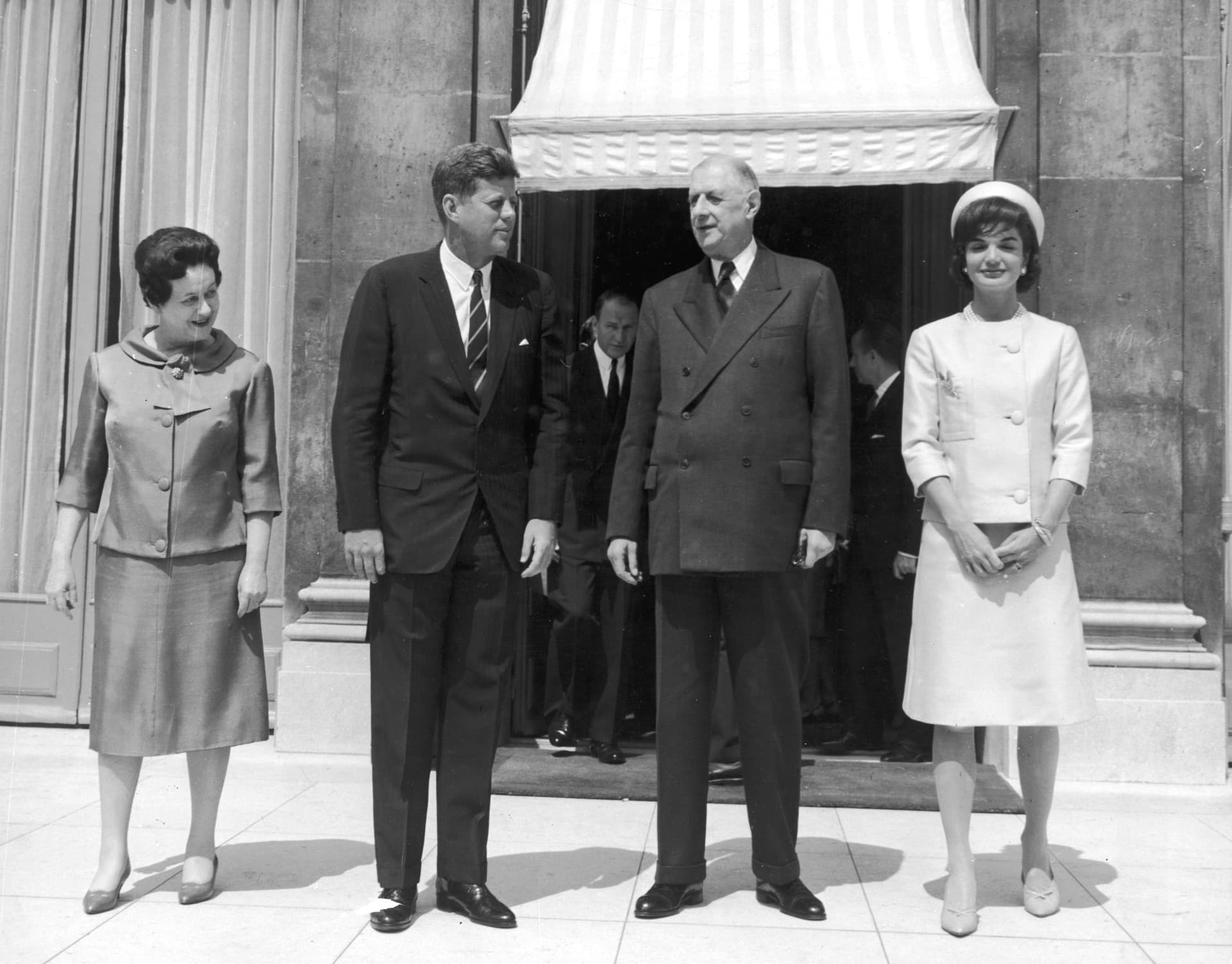
Jackie Kennedy did not dress to dominate Paris. She dressed to look inevitable, and that is the sharper kind of power. Her private Givenchy commissions turned a state visit into a master class in old-money authority dressing, where the message was not wealth but fluency, not trend but tact.
That is why the look still lands. Legacy houses and bespoke tailoring have always carried the same social charge: they signal that you know the code without needing to perform it. The clothes look composed, almost unbothered, yet every seam does political work.
Why Paris paid attention
The Kennedys arrived in France for the official trip from May 31 to June 2, 1961, and the optics were loaded before a single outfit entered the conversation. John F. Kennedy was 43, newly elected, and on his first overseas visit as president, which made the trip less a tour than a debut on the world stage. Paris was not just watching the American president; it was watching the wife who understood how to translate status into style.
On June 2, JFK made the line that tells you everything about the balance of attention in the room: “I am the man who accompanied Jacqueline Kennedy to Paris.” That joke was a compliment and a confession. French media and officials saw Jackie as a cultural asset, and Paris Match reportedly centered her rather than him, because she brought something rarer than spectacle: she looked at home in a city that prizes ease over effort.
Her advantage was not accidental. Jackie’s French fluency, Parisian education and polished manner made her unusually effective in a diplomatic setting where manners are part of the message. She did not need to shout her relevance. She wore it.
The Givenchy formula: discretion with edge
Hubert de Givenchy was already a serious force by then. He founded the House of Givenchy in 1952 and launched prêt-à-porter in 1954, which matters because his name already carried both craftsmanship and modernity. Jackie’s choice of him was not about chasing a logo or buying into a trend cycle. It was about aligning herself with a house that understood restraint as luxury.
That is the old-money formula in one sentence: the most persuasive clothes are the ones that look effortless while quietly signaling discipline, education and access. Givenchy gave Jackie exactly that. The silhouette did not beg for applause; it projected polish, the kind that reads instantly to people who know how power dresses when it is comfortable with itself.
This is also why legacy houses keep mining the same language. They know that discreet tailoring, controlled proportion and impeccable fabric still communicate status more effectively than loud novelty. When the objective is authority, the best garment is often the one that looks as if it has nothing to prove.
The gray suit that did the heavy lifting
One of the most telling pieces from the Paris trip was Jackie’s Givenchy gray suit, worn during a Louvre museum tour with André Malraux on June 2, 1961. Gray is the whole story here: disciplined, urbane, almost architectural. It does not beg for the camera, but it photographs with a cold clarity that makes the wearer seem composed even in motion.
The suit’s afterlife matters just as much as its first appearance. Jackie wore the same Givenchy gray suit again at JFK’s United Nations address in New York on September 21, 1961, which turns the garment into more than a chic one-off. It became part of her diplomatic wardrobe, a repeat performance that reinforced continuity, memory and control.
That repeat wear is the kind of move old-money dressing understands instinctively. Repetition says confidence. It says the clothing is not a costume for a single event, but part of a stable personal code. In Jackie’s case, the suit became a visual shorthand for an image the world was already learning to read: elegant, reserved, and strategically present.
Versailles was the theater, Jackie was the signal
The glamour peaked at Versailles on June 1, 1961, when the Kennedys were hosted by Charles de Gaulle for an official dinner. Versailles notes that this was the first time since Woodrow Wilson in 1919 that an American head of state had come to the palace on an official visit, which tells you the scale of the occasion. This was not just a dinner. It was a declaration of transatlantic ceremony.
The evening included a reception in the Hall of Mirrors and a cultural program after dinner, both of which intensified the performance of statecraft. At Versailles, clothing becomes architecture’s partner. A refined dress or gown does not merely complement the setting, it helps the guest appear worthy of the room.
Jackie understood that logic better than almost anyone. Whether in the palace, at the Louvre or beside the president, she used clothes to soften the hard edges of politics. That is the hidden genius of her Givenchy wardrobe: it made authority look civilized.
What modern luxury keeps borrowing from Jackie
The reason this wardrobe still matters is that it exposed a durable truth about elite dressing. Power is most persuasive when it looks like inheritance, even when it is carefully constructed. Jackie’s Givenchy looks worked because they suggested an education in taste rather than a hunger for attention.
- precise tailoring instead of loud branding
- rich fabric handled with restraint
- silhouettes that look expensive from across a room
- polish that reads as cultural fluency, not fashion desperation
You can still see this formula in the way legacy houses sell status today:
Jackie Kennedy’s Paris wardrobe made that code visible at a moment when America needed softness, sophistication and seriousness all at once. Givenchy gave her the uniform, but the real achievement was political: she made diplomacy look effortless, and that is still the oldest old-money trick in the book.
This article was produced by Prism’s automated news system from verified source data, official records, and press releases, then run through automated quality and moderation checks before publishing. The system is built and supervised by the people who set the standards it runs under. Read our full AI policy.
Know something we missed? Have a correction or additional information?
Submit a Tip