Kanika Agarwal redefines Indian luxury in Paris with quiet restraint
Kanika Agarwal turns Paris into a study in restraint, using Indian craft, symbolism and poise to make luxury feel intellectual, not loud.

A new luxury code is taking shape in Paris
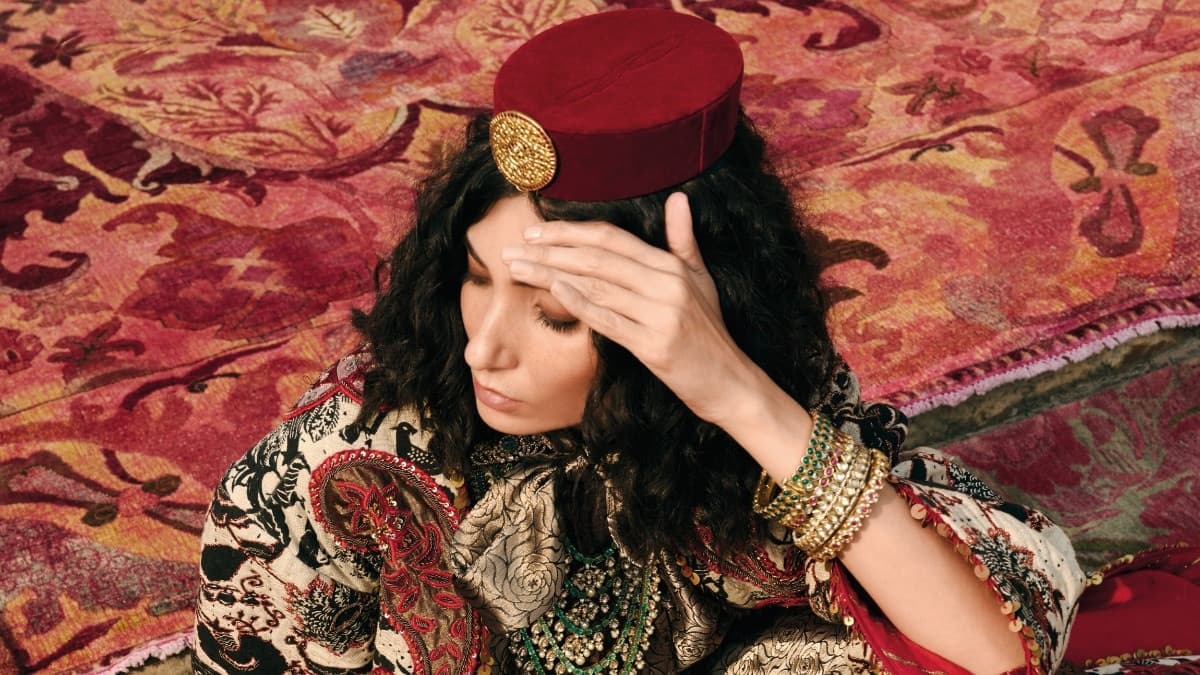
Quiet luxury has been overexposed, but Kanika Agarwal is pushing it into sharper territory: a luxury language shaped by art, philosophy and an instinctive sense of self. Harper’s Bazaar India places her work inside a Paris-facing conversation about clothes that are “shaped as much by thought as by form,” and that framing tells you almost everything you need to know. This is not about decorative excess disguised as taste. It is about authority built through discipline.
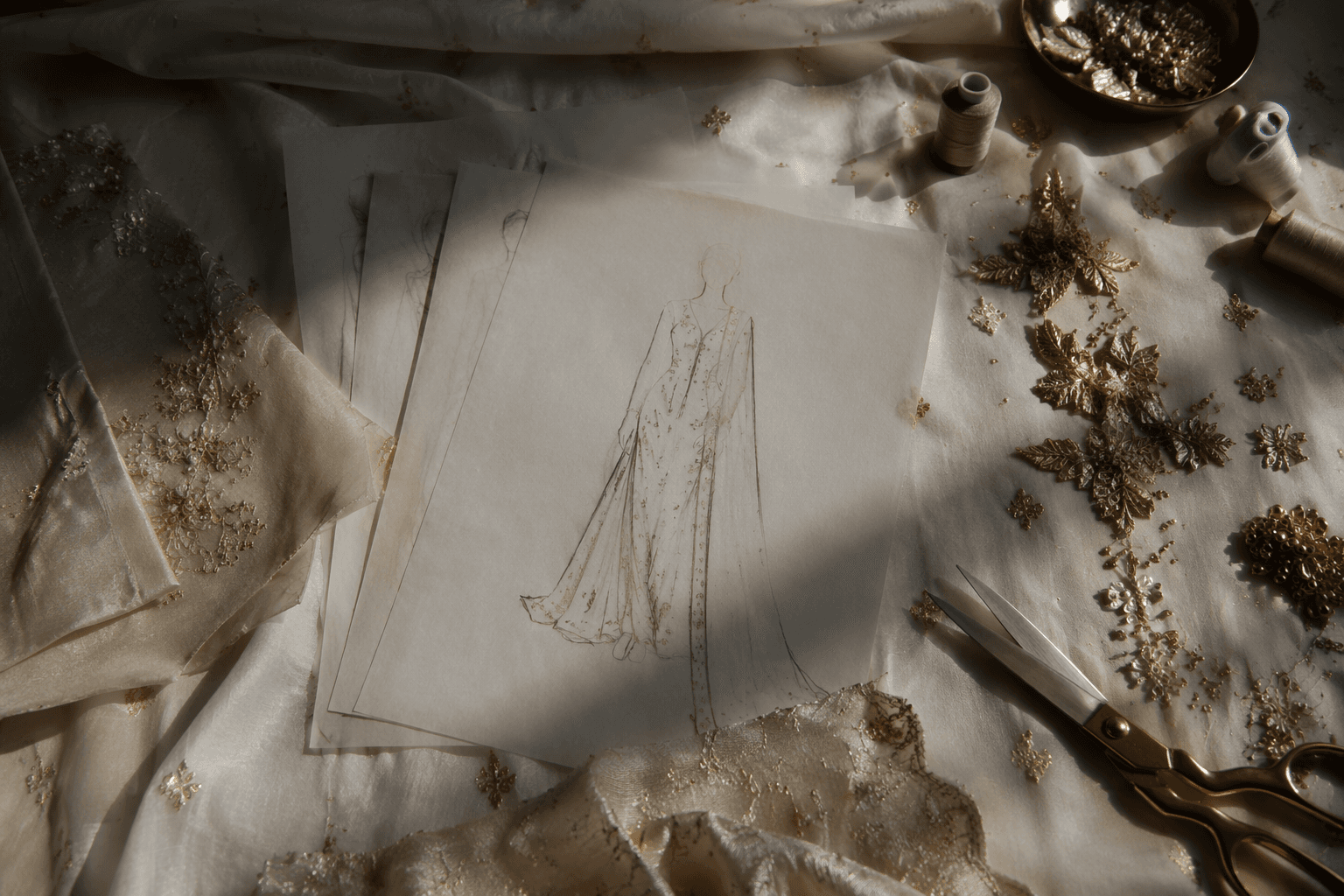
That distinction matters, especially for readers who know that real status rarely announces itself in the obvious places. Agarwal’s appeal lies in the intelligence of her restraint. She is not chasing spectacle for its own sake; she is building a vocabulary where symbolism, proportion and cultural memory carry the weight that embellishment usually would.
Paris as stage, Rajasthan as signal
The most revealing moment came on 3 March 2026, when Agarwal unveiled her first collection launch in Paris during Fashion Week at Galerie Le Cerisier. The presentation centered her Fall/Winter 2026 collection in a setting that translated Indian reference into Parisian context without sanding it down into export-friendly cliché. Rajasthan-inspired arches framed the entrance, while Indian roses supplied a sensory note that felt ceremonial rather than theatrical.
That is precisely why the launch reads as more than a debut. In the old-money register, the strongest dressing often works through codes rather than display, and Agarwal understood that instinctively. The arches suggested architecture and lineage; the roses suggested ritual and atmosphere. Nothing looked overexplained, and nothing needed to be.
The guest list sharpened the point. Suzy Menkes and Alastair McKimm were among the fashion figures reported at the presentation, which matters because their presence signals that Agarwal is not simply being welcomed as an emerging designer, but being watched as someone shaping a serious cross-cultural luxury proposition.
Restraint is the aesthetic, not the absence of one
The strongest luxury today is often mistaken for minimalism, but Agarwal’s work shows the difference between blankness and control. Her presentation was described as centering on form, restraint and cultural reflection, and that combination is what gives the collection its force. The clothes do not rely on noise to be memorable. They rely on line, pause and intention.
That is a more durable proposition for old-money wardrobes than novelty dressing, which dates quickly and often reads louder than it is. Agarwal’s approach suggests a different kind of glamour, one that lets cultural specificity do the work once handled by overt ornament. It is a polished, thoughtful language, where Indian references are not used as decoration but as structure.
This is also why her work feels emotionally literate. The mood is not nostalgic in a costume sense, and it is not performatively avant-garde either. It is composed, considered and slightly withheld, the way truly elegant clothes often are. In a season crowded with maximal gestures, Agarwal’s decision to let meaning accumulate quietly feels almost radical.
The longer arc behind the Paris moment
Agarwal did not arrive in Paris as a sudden discovery. 1 Granary profiled her in 2022 as a Paris-based Indian designer, linking her to the Mentoring Matters program and to Alastair McKimm. That earlier context matters because it helps explain the coherence of the work now on view. Her practice has long been associated with migration, memory and minimalism, and those themes still hum underneath the surface.
Another phrase associated with her work, “migration, memories, and an abstract beyond,” captures the sensibility well. Her design language seems to treat displacement not as instability, but as a source of clarity. Instead of flattening that experience into sentiment, she turns it into form. That is why her minimalism feels eloquent rather than sparse.
For a Paris audience, and especially for fashion insiders fluent in understatement, this kind of work lands with unusual force. It does not ask to be decoded through trend language. It asks to be read as a set of cultural decisions, each one precise, each one deliberate. That is a far more powerful posture than simply being on the right side of the moment.
Why this matters for Indian luxury now
Agarwal’s Paris debut arrives at a larger inflection point for Indian luxury. Condé Nast India’s Luxury Conclave 2026 in Mumbai gathered more than 600 industry leaders to discuss how young Indians are rewriting the rules of luxury across fashion, hospitality, design and leadership. That scale matters. It shows that Indian luxury is no longer being discussed as an emerging category on the margins, but as a force with its own agenda.
Elle India has recently described a wave of designers reshaping “India modern” by blending heritage craft with contemporary silhouettes, and Agarwal sits squarely within that movement. The difference is that her version feels less about hybridization for its own sake and more about refinement. She is not chasing a louder East-West mashup. She is refining the terms until they feel inevitable.
For old-money readers, that is the real shift to watch. Luxury is moving away from visible effort and toward cultural fluency, where the most persuasive clothes are the ones that can carry history without appearing weighed down by it. Agarwal’s Paris presentation suggests that Indian design can now compete in that register with intelligence, restraint and symbolic confidence. That is how a new luxury language is built, and how it endures.
This article was produced by Prism’s automated news system from verified source data, official records, and press releases, then run through automated quality and moderation checks before publishing. The system is built and supervised by the people who set the standards it runs under. Read our full AI policy.
Know something we missed? Have a correction or additional information?
Submit a Tip