Loro Piana's Royal Lightness Blends Silk and Cashmere for Effortless Spring Layering
Loro Piana's Royal Lightness uses merino from the rarest 0.05% of world production, at just 13.5 microns, making spring knitwear almost too delicate to knit.
Stop refreshing your spring knitwear wishlist and commit to one core Royal Lightness piece. By the time you understand exactly what Loro Piana built, the case will have made itself.
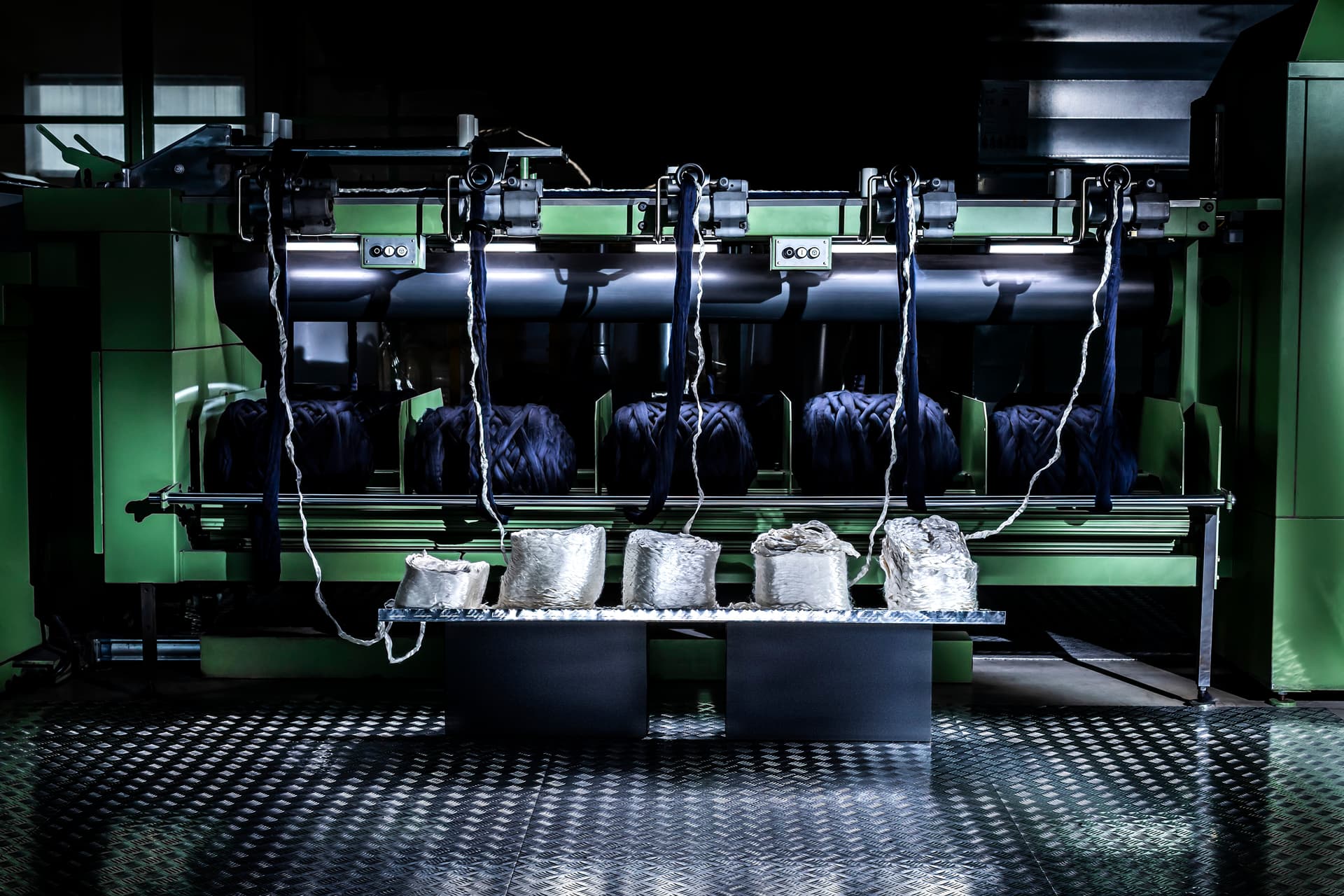
Royal Lightness is not a seasonal capsule name or a colorway story. It is a material innovation: both a trademarked yarn and a trademarked fabric, developed over two years by an in-house team at Loro Piana's mills in Roccapietra and Quarona, the house's Piedmont facilities where its most technically demanding fibers have long been processed. The yarn fuses Mulberry silk, which the brand calls Royal Silk and which measures 21 deniers, considered the finest silk in the world by denier count, with merino wool sourced from farms in Australia and New Zealand. The fabric takes the same Mulberry silk and combines it with long-fiber cashmere, produced as a double-sided cloth weighing 350 grams per meter. Both forms produce a gossamer, luminous result. Neither is simple to make.
The number that stops the room is not 350 but 0.05. That is the percentage of the world's annual merino wool production that falls within the 13.0-to-13.8-micron diameter range, the precise window from which Loro Piana sources its Royal Lightness yarn. The specific clip used measures 13.5 microns. A human hair averages roughly 70 microns. This is not fine wool; it is an outlier within an outlier, a fiber category so narrow that its scarcity is structural rather than curated. Twisted with 21-denier silk, combed and gently sealed with a proprietary finish that locks in both sheen and structural integrity, the resulting yarn sits in territory so delicate that the house itself has stated it is "nearly impossible to knit" without accumulated in-house expertise, demanding "extreme precision, skill and know-how to prevent breaking the threads." The artisans working with Royal Lightness required dedicated retraining before production could begin at scale.
That fragility is precisely what the wearing experience delivers. A Royal Lightness knit from the Spring/Summer 2026 collection sits on the body with the kind of negligible presence that makes the first wearing feel like a calibration error. The sheen is real but not declarative; it catches afternoon light the way a fine habotai silk shirt does, producing depth rather than gloss. Against the S/S 2026 palette of sandy neutrals, pale creams, and earthy terracottas, the luminosity reads as texture. The hand is finer than any standard cashmere polo and warmer than any pure-silk layer of equivalent weight, which is the point: Royal Lightness occupies the specific gap that makes spring dressing genuinely difficult.
The fabric version of Royal Lightness works through different construction logic. Here, 21-denier organzino silk threads are wrapped around 15-micron long-fiber cashmere strands before weaving, lending the cloth both its surface finish and the structural strength required to hold a cut jacket or coat in shape. Finishing adds the final dimension: the cloth is tumbled, brushed, and shaved, building a soft raised pile that is simultaneously durable and flush to the touch. The two layers are then fell-stitched, a historic technique that joins them nearly invisibly, a step Loro Piana still performs by hand because the fragility of the threads makes mechanization untenable. The finished fabric weighs 350 grams per meter, which sounds moderate until you hold a piece of double-faced cashmere-silk cloth and find that it weighs almost nothing in the hand. Standard double-faced cashmere typically runs 500 grams per meter or heavier; Royal Lightness achieves comparable warmth at a fraction of the mass.

The practical argument for building a wardrobe around one Royal Lightness piece rests on spring's specific problem: the 15-degree temperature swings between an aggressively air-conditioned office, a pressurized aircraft cabin, and a terrace dinner in late April. A standard cashmere layer resolves the cold but adds visible bulk under a blazer. A silk blouse addresses the aesthetic but offers nothing insulating. A Royal Lightness knit polo or fine crewneck resolves both. It lies flat under tailoring in a cold conference room, provides genuine warmth at altitude on a long-haul flight, and remains appropriate for evening without demanding a separate layer change. The fabric version, cut into a jacket, handles the same temperature range with structural polish added. One piece, worn with intention, covers the functional gap that sends most spring wardrobes into expensive, underperforming proliferation.
Loro Piana has placed Royal Lightness alongside The Gift of Kings, its coveted Himalayan mountain wool, in the house's internal ranking of consolidated excellences. This is a meaningful signal. The Gift of Kings designation has historically indicated fibers at the absolute ceiling of the brand's sourcing capability, the kind of material that cannot be replicated by competitors regardless of budget because the supply chain simply does not exist elsewhere in sufficient volume. Positioning Royal Lightness in the same tier suggests the house is treating this not as a seasonal innovation but as a permanent addition to its core fiber vocabulary. Entry price for Royal Lightness pieces in the S/S 2026 collection starts above $4,800, consistent with the house's existing fine-knit pricing architecture.
Longevity at that investment level depends entirely on care discipline. Loro Piana's guidance for its finest knitwear applies here with added urgency given the silk content: never wear the same piece on consecutive days, allowing the fibers to recover their natural structure overnight. Wash only after four or five wears, by hand or on the gentlest cold-water machine cycle, using a detergent formulated for silk and wool rather than standard fabric wash. The 21-denier silk component is susceptible to abrasion along fold lines and shoulder seams, which means storage posture matters: fold rather than hang, wrapped in acid-free tissue if the piece will be stored for more than a few weeks. Heat is the enemy at both washing and drying stages; lay flat away from direct light to dry. Treated properly, Royal Lightness knitwear should retain its sheen and handle for well over a decade.
Two years of development, a proprietary sealing process, a fiber category representing one-twentieth of one percent of global production, and a manufacturing technique that can only be executed by a small circle of trained artisans: Royal Lightness earns its name through specificity. That rigor is what separates a material story from a marketing premise, and it is the kind of distinction that makes a piece worth keeping indefinitely rather than cycling out in three seasons.
This article was produced by Prism’s automated news system from verified source data, official records, and press releases, then run through automated quality and moderation checks before publishing. The system is built and supervised by the people who set the standards it runs under. Read our full AI policy.
Did this article answer your question?