Zegna Warns Middle East Conflict Clouds Luxury Demand Despite Solid Sales
Zegna's 2025 profit rose 20%, but Gildo Zegna's warning about Middle East conflict signals real risk for your 2026 tailoring budget — here's when to buy and what to store.
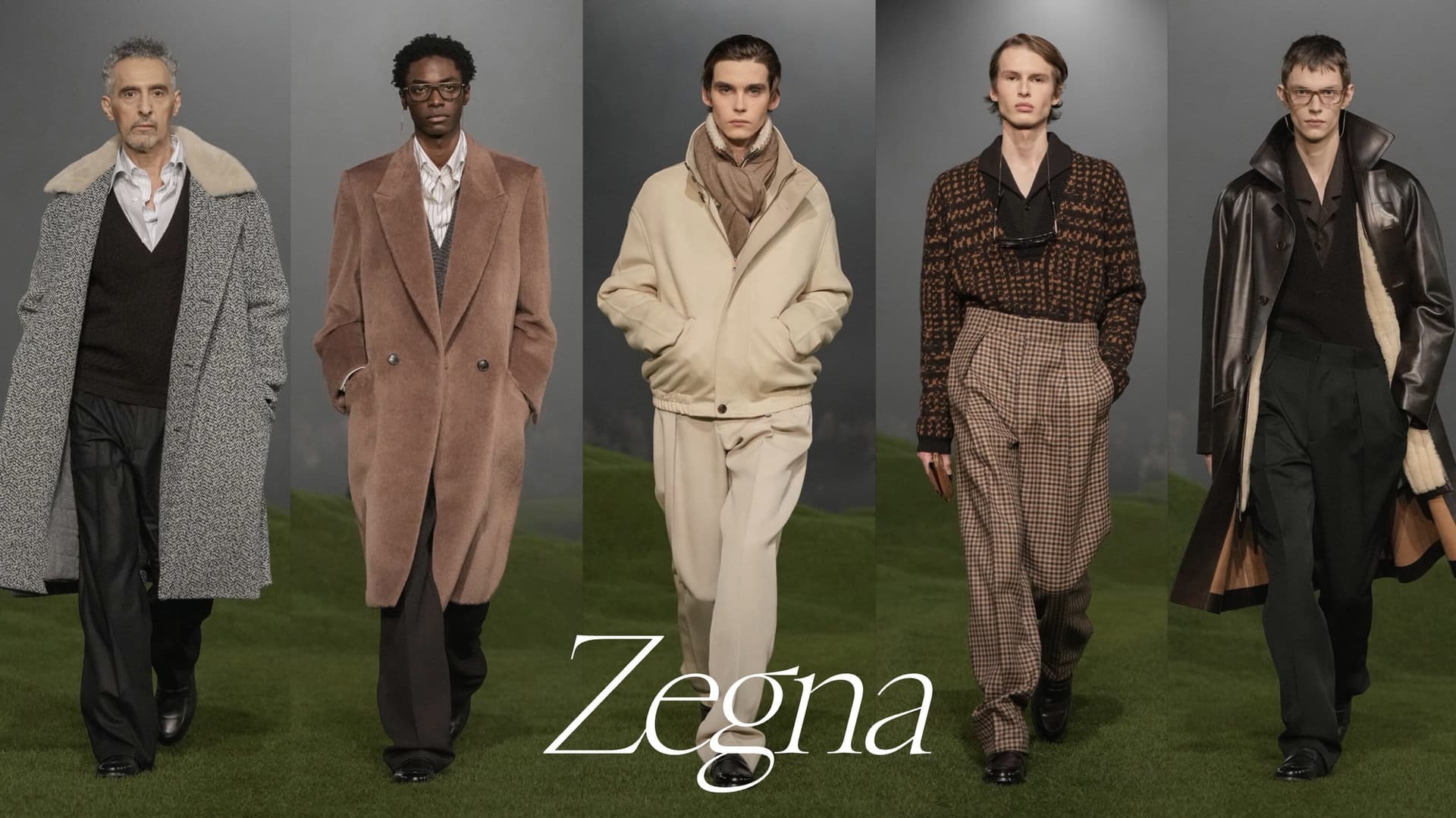
Stop scrolling your tailoring wishlists and consider placing one or two orders now. Executive Chairman Gildo Zegna said "it's hard to predict exactly what the situation will be in Middle East" as the company reported its full-year results on March 20 — confirming FY2025 revenue of EUR 1,917 million and reported profit of EUR 109 million, up from EUR 91 million the prior year. That 20% profit jump is legitimately impressive. But when a house whose vertical supply chain runs from an Australian sheep station to a Biella wool mill to a via Montenapoleone boutique signals visibility problems, buyers who plan ahead are the ones who avoid paying a premium for the privilege later.
Israeli and U.S. attacks on Iran and Tehran's response forced the closure of airspace across parts of the Middle East and shut key airports such as Dubai and Doha, disrupting business and travel. The war is reducing visibility on demand in the Middle East, which accounts for 7 percent of Zegna's sales, though all stores are currently open in the region. Seven percent is a number that sounds contained — until you consider where that revenue is geographically concentrated. The Middle East accounts for roughly 5 to 6 percent of global luxury sales, according to estimates from Morgan Stanley and Bank of America, with most purchases driven by tourists from Russia, Saudi Arabia, China, and India; the UAE represents about half of the sector's regional revenues, with most transactions concentrated in Dubai. When those tourists stop flying, the signal runs backward through every part of the supply chain.
What that chain looks like, concretely: the Zegna Lanificio in Trivero is one of the most technologically advanced textile facilities in the world, with every step of fabric production occurring under one roof, giving Zegna complete control over quality at every stage. The mill sources the finest wools from Australia, New Zealand, and South Africa, and Zegna's buyers personally inspect and select only premium lots, choosing wools that meet their exacting standards for fineness, length, and consistency. Those sourcing partnerships focus on superfine Merino fibers under 19.5 microns — the threshold that separates truly fine suiting cloth from the merely good. None of those origins are in a conflict zone. The pressure points are downstream: air freight routing, mill capacity utilization when a major regional market softens suddenly, and the currency and pricing adjustments that follow.
On pricing, the math is already settled. Management confirmed mid-single-digit price increases in Spring and Fall 2026 to offset currency fluctuations. That increase is not conditional on the conflict extending or resolving — it is structural, driven by exchange rate hedging. A tropical-weight two-piece you commission or purchase in April costs less than the same piece in October, before any conflict-related disruption is even factored in.
For a tropical wool suit, the canonical warm-weather Zegna staple in a 130s or 160s Super construction at around 260-280g, the decision framework is straightforward: buy through direct channels rather than waiting on department store restocks that may be delayed. Q4 direct-to-consumer revenues rose 10% and represented 88% of 2025 Zegna brand revenues, which tells you the house has made its bet on boutiques and its own e-commerce over wholesale. Direct-to-consumer sales in the first quarter are tracking above fourth-quarter 2025 levels, confirming that stock depth at full-price boutiques is the most reliable place to source what you want. Tropical weight is also the piece most vulnerable to air freight reroutes: it arrives in a narrow seasonal window, and late delivery effectively makes it a next-year garment.
The Oasi Cashmere Overshirt, retailing at around USD 3,250, sits in a different risk profile. Cashmere fibers, primarily Mongolian in Zegna's case, are geographically insulated from the current disruption, and the overshirt's year-round versatility means the timing pressure is lower than on a purely seasonal tropical suit. The practical argument here is not urgency but price: the Fall 2026 mid-single-digit increase applies directly to this category. Buying before October locks in the current price on a piece that does not change meaningfully season to season.
The knit polo, in wool or silk-wool depending on the half-year, is the most attainable entry point in the Zegna vocabulary and the piece most likely to absorb incremental pricing adjustments quarterly rather than in one visible step. If it is on your list, current pricing is the better value.
The Saks Global situation adds a layer worth understanding. The group set aside EUR 10 million in provisions for expected losses on trade receivables related to the Saks Global Chapter 11 procedure. Management said the group has the financial strength to absorb the event, noting that Saks, Neiman Marcus, and Bergdorf Goodman together represent a low single-digit share of group revenues, with the key issue being potential bad-debt accruals rather than inventory exposure. What it means in practice: wholesale pipelines through those channels will thin. If you have historically relied on Bergdorf's or Neiman's for Zegna staples, the boutique and direct-online channels are now the safer bet for consistent availability.
The contingency plan, if replacement pieces become harder to source or pricing accelerates beyond the planned increases, is the Biella district's independent mills. Vitale Barberis Canonico and the Loro Piana textile operation, distinct from the ready-to-wear brand, both produce suiting cloth in comparable Super 130s and 150s constructions that any capable bespoke tailor can make up to order. A commission in mill-direct cloth bypasses brand-level pricing pressure entirely while delivering fiber quality that competes with any house-branded cloth on the market.
For existing pieces, storage is the practical hedge right now. Tropical-weight wool suits should be cleaned before summer storage, hung on wide cedar hangers, and kept in breathable garment bags away from direct light; heat and compression are what break down superfine wool structure over time. Cashmere overshirts fold better than they hang for long-term storage — cedar blocks rather than mothballs protect the fiber without leaving a residual scent in the cloth. In a market where the three-week-old conflict has heightened uncertainty for the global economy in 2026, the replacement cost of a well-stored piece you already own is exactly zero.
FY2025 revenue of EUR 1,917 million and a 20% rise in reported profit confirm that Zegna's vertical structure is performing. Gildo Zegna is not sounding alarms — but he is watching, and he is the person who knows exactly how long it takes a bolt of superfine Merino to travel from Trivero to a finished suit. The buyer who acts on that information now, rather than waiting to see how the map resolves, is the one whose autumn wardrobe arrives on time and on budget.
This article was produced by Prism’s automated news system from verified source data, official records, and press releases, then run through automated quality and moderation checks before publishing. The system is built and supervised by the people who set the standards it runs under. Read our full AI policy.
Did this article answer your question?