Old money style, the etiquette behind black tie and white tie
The real old-money tell is etiquette: white tie and black tie are social codes, and knowing the difference decides whether you look bred in or badly dressed.
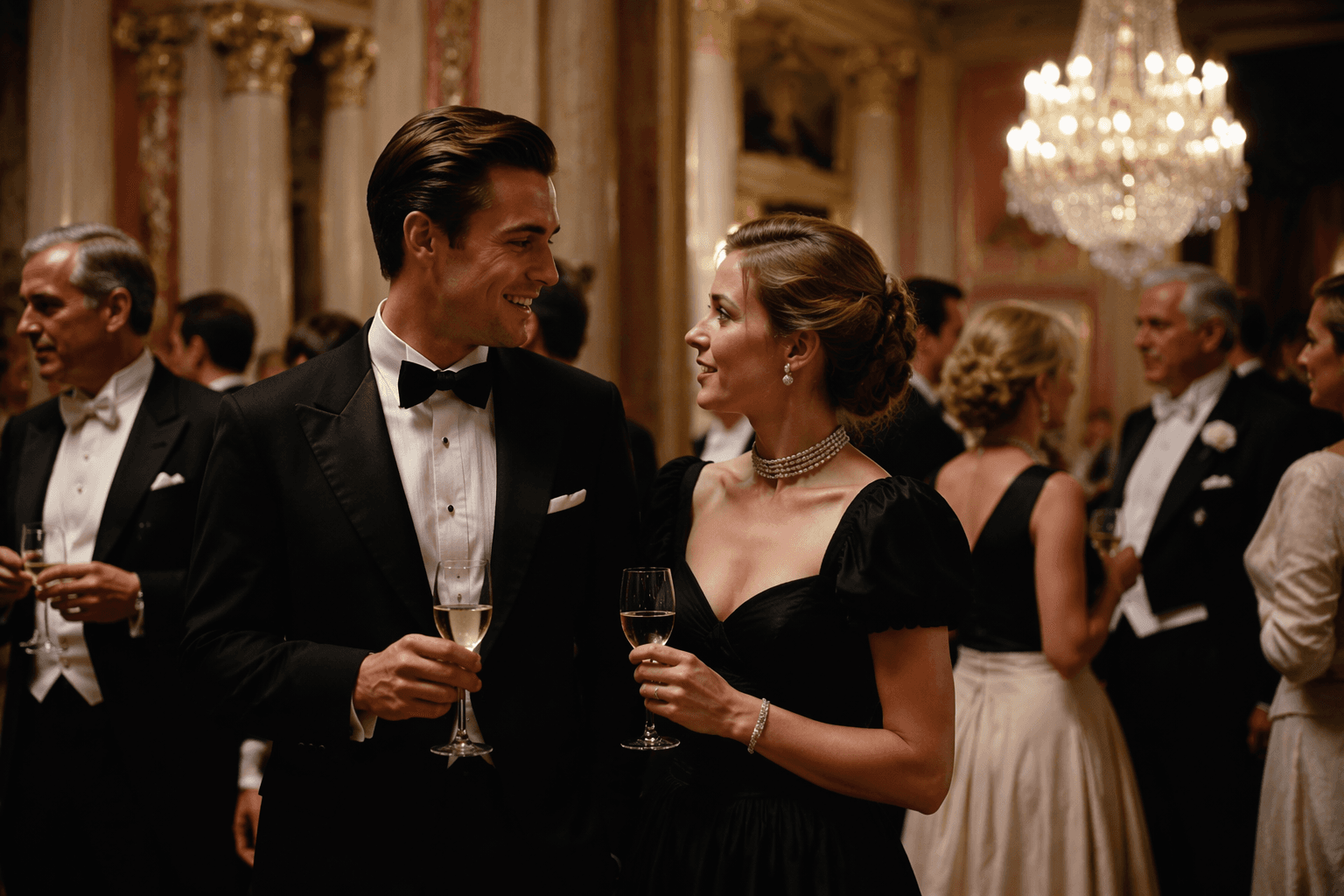
A tuxedo in a room that requires a tailcoat is the quickest way to look like new money at a gala. White tie and black tie are not interchangeable levels of polish but a hierarchy from casual to white tie, and the difference decides whether you arrive in a tailcoat or a tuxedo, a floor-length gown or something looser.
Why the code matters more than the label
Old money is not simply “anything expensive and neutral.” It is a wardrobe that understands the difference between a charity dinner, a museum benefit, a wedding reception, a formal club event, and the kind of invitation that asks for the most exacting standards in eveningwear. That is why dress-code literacy reads as breeding rather than taste. Anyone can buy a good dress; far fewer people can read the social temperature of a room and dress to it without making themselves the subject.
Emily Post’s guide organizes attire as a ladder. White tie sits at the top, black tie just below it, and the difference between the two is often where old-money style becomes legible.
White tie: the strictest evening code
White tie is the most formal dress code still recognized in modern etiquette. Its traditional uniform for men is exacting: a tailcoat, a formal white waist covering, and a white bow tie. For women, the expectation is a floor-length gown with accessories that can hold their own in a room of crystal, silver, and ceremony.
White tie has roots in 19th-century formalwear. Vogue called it society’s most formal dress code, reserved for select, elevated occasions. British GQ called it the hardest invite to explain because the rules are so specific, and Time used the Met Gala as a white-tie example.
In old-money circles, a cocktail dress in a white-tie room reads as if you have not understood the invitation; a tuxedo where a tailcoat is required does the same.
Black tie: formal, but still precise
Black tie sits one rung below white tie, but it is still a rule system, not a suggestion. For men, it is commonly associated with a tuxedo and bow tie, usually with satin details that signal evening formality rather than standard business dress. For women, it can mean a formal evening gown or, depending on the event, a sophisticated cocktail-level alternative that still respects the room.
In May 2024, Vogue called black tie daunting because the modern wardrobe is so casual by comparison. GQ made a similar point in 2024: people’s responses to black-tie invitations may have changed, but the rules themselves remain largely immovable. Black tie still functions as a gatekeeping code at charity galas, embassy dinners, private clubs, and society weddings.
What gets read as new money
The costly tells are rarely about price alone. They are about overstatement, mismatch, and the kind of self-consciousness that makes a formal room feel like a stage. A gown that is too showy for the setting, a tuxedo without the expected black-tie structure, or accessories that seem chosen to be noticed rather than to serve the ensemble all signal the same thing: the wearer is dressing at the occasion, not for it.
Old-money style prizes restraint in the service of exactitude. A perfectly cut dinner jacket, a silk bow tie, and a gown that moves cleanly through a formal room signal that restraint.
When the code got blurry
The confusion around these dress codes sharpened after the pandemic. By December 26, 2022, “parties are back,” and white tie, black tie, black tie creative/festive, and semiformal could feel like a re-entry challenge for guests who had spent too long in sweats and sneakers.
White tie remains rarer and more ceremonial than black tie, and black tie remains more common than white tie. In 2024, British GQ wrote that the rules have not moved, even if the culture around them has become more relaxed.
How to read the invitation like an insider
The easiest way to move through these codes is to treat the invitation as a social map, not a style prompt. Emily Post’s hierarchy runs from casual to white tie. White tie asks for the most exacting evening dress, black tie asks for disciplined formality, and both ask for clothing that respects the event more than it advertises the wearer.
- White tie means the highest level of evening dress, with a tailcoat, white waist covering, and white bow tie for men.
- Black tie means tuxedo territory, usually with satin details and a bow tie for men.
- For women, white tie generally means a floor-length gown, while black tie allows a formal gown or, at some events, a polished cocktail-level look.
- If the invitation signals a gala, benefit, embassy dinner, private club evening, or society wedding, the safest assumption is that the room will notice whether you know the code.
This article was produced by Prism’s automated news system from verified source data, official records, and press releases, then run through automated quality and moderation checks before publishing. The system is built and supervised by the people who set the standards it runs under. Read our full AI policy.
Did this article answer your question?