Why the Gucci Horsebit loafer defines old money style
Born in 1953, the Horsebit loafer became old-money shorthand by fusing Ivy ease, equestrian hardware, and Gucci’s house code into one disciplined slip-on.
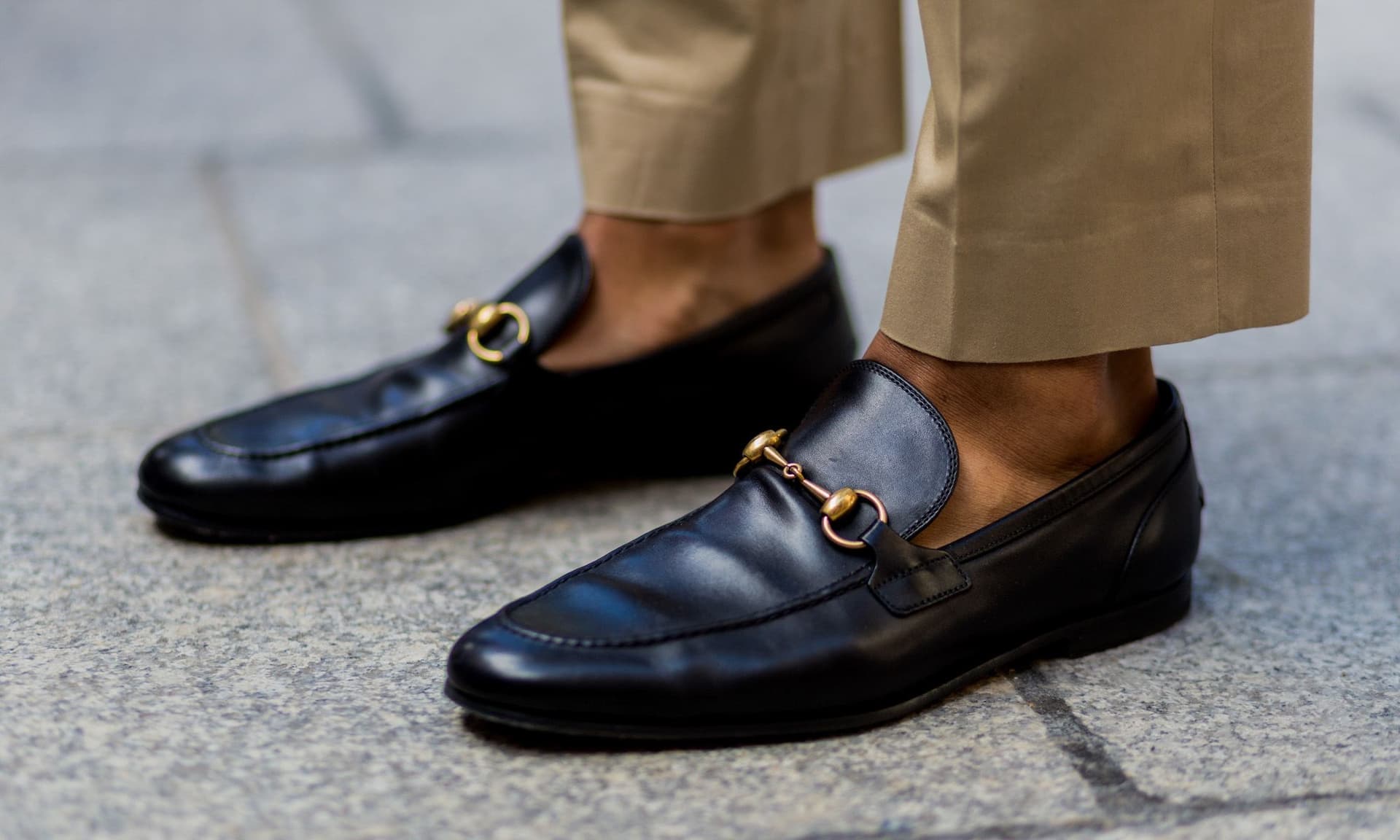
The Gucci Horsebit loafer is what happens when a shoe stops reading as a fashion choice and starts reading as a house code. Introduced in 1953, it blends Ivy ease, equestrian hardware, and Italian luxury into one polished slip-on. That combination is why it feels inherited even when it is brand new.
From slip-on to house code
Gucci’s original move was shrewdly specific. Herring Shoes Journal traces the loafer to a moment when Aldo Gucci noticed American men wearing slip-on shoes on a trip to New York, then decided to add the horsebit rather than copy the style straight. Esquire Singapore adds that Aldo Gucci, the eldest son of founder Guccio Gucci, conceived the shoe as a response to loafers popularized by preppy Americans, just as Gucci was preparing to open its first New York City boutique in 1953.
That detail matters because the shoe was never just another penny loafer in a nicer leather. The horsebit gave the silhouette a house signature, and the motif itself already belonged to Gucci’s vocabulary. Tatler Asia notes that the Horsebit was inspired by Guccio Gucci’s love of equestrianism, while Herring Shoes Journal says it was Guccio who first used the horsebit on leather goods. The loafers later made that symbol visible on the foot, where it became impossible to miss and easy to recognize.
Why old money reads it instantly
Old-money style is less about luxury as display than luxury as fluency. The Horsebit loafer understands that language because it bridges three codes at once: Ivy, equestrian, and Italian craftsmanship. The slip-on shape carries the ease of American prep; the horsebit hardware brings in riding culture, country weekends, and the clipped elegance of private clubs; the Gucci name anchors it in Florence, Italy, and in a house known for turning family motifs into signatures.
That is why the shoe has lasted far beyond the moment that produced it. Gucci itself continues to describe the Horsebit loafer as an icon of the House and an essential wardrobe piece, and a 2024 Gucci video says the Horsebit 1953 loafer has continued its legacy for more than 70 years and inspired generation after generation. Gucci marked 70 years of the style in 2023, which tells you everything about its status: this is not a seasonal accessory, but a recurring emblem of the wardrobe.
The distinction is subtle but important. The Horsebit loafer is recognizable, yet it never looks loud. The hardware is a signature, not a billboard. The silhouette is polished, but it is not precious. That balance between polish and ease is exactly what old-money dressing seeks, because the clothes should look settled on the body, not staged for attention.
Why it still works when trends move on
The shoe’s modern visibility has come less from reinvention than from reassertion. W Magazine’s October 16, 2023 piece, updated February 20, 2024, called it the original It shoe and framed the relaxed, elegant staple as turning heads again. CR Fashion Book published a history piece on January 31, 2024, treating it as a heritage item rather than a novelty. Those references do not change the shoe’s meaning; they confirm how deeply it has been absorbed into fashion’s memory.
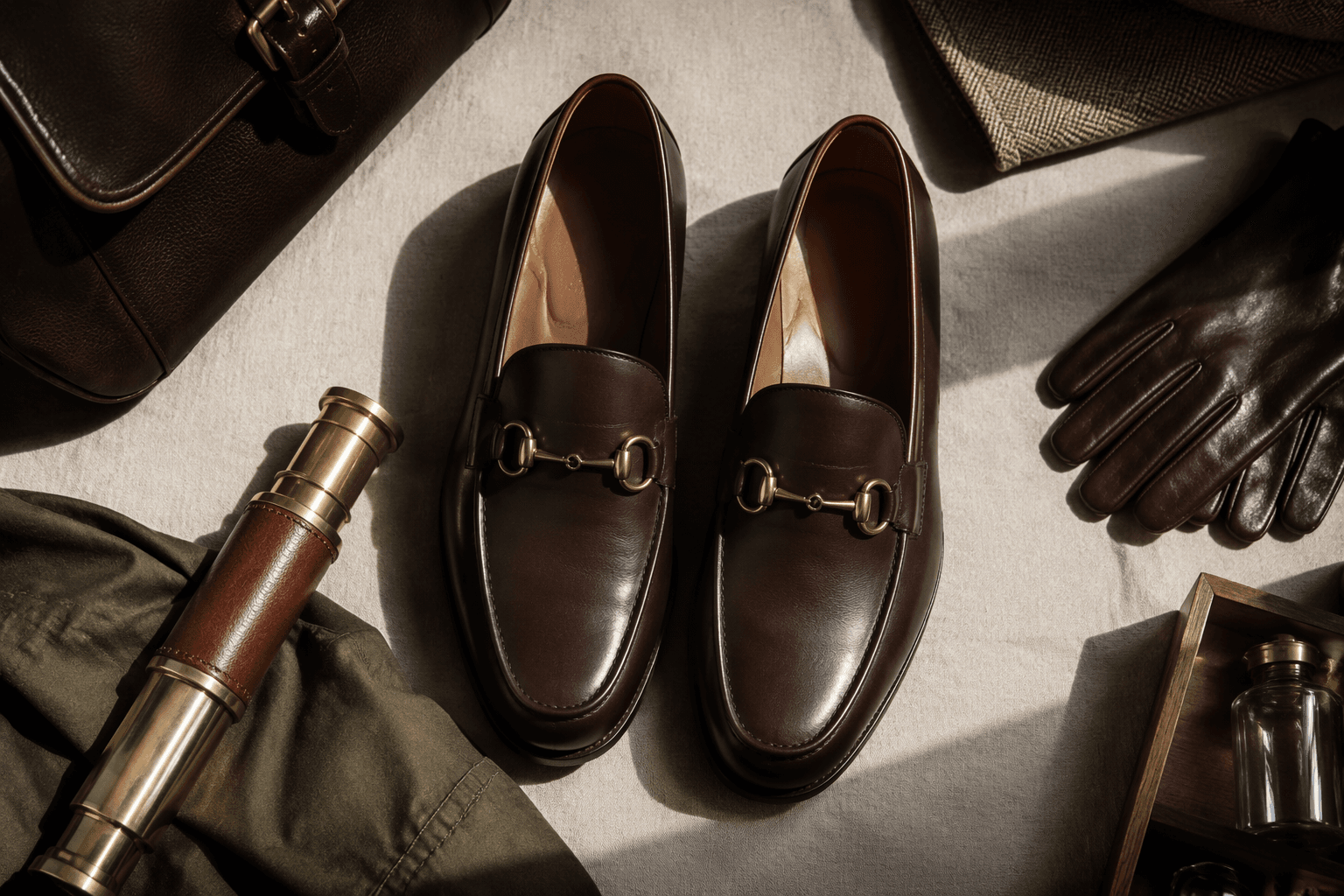
That long institutional adoption matters more than trend relevance because old-money style depends on objects that have been worn into meaning. A shoe becomes shorthand when it survives long enough to outlast the look that first made it famous. The Horsebit loafer has done that by moving from new product to familiar uniform, from launch to lineage.
How to wear the code without losing it
The beauty of the Horsebit loafer is that it does not require a full formal outfit to make sense. With a blazer and wool trousers, it looks exacting and composed. With chinos, pressed jeans, or a simple knit polo, it keeps the same discipline but softens into something more lived-in.
Color changes the register quickly:
- Black leather reads sharper and more urban.
- Brown and burgundy lean into country-house ease.
- Suede mutes the shine and makes the shoe feel older, softer, and more relaxed.
Even the sock choice changes the message. Bare ankles can make the loafer feel more modern, but a subtle sock brings it back toward the collegiate and traditional. That flexibility is useful, but it is not the real point. The real point is that the shoe keeps its authority whether you wear it with tailoring or something quieter, because the shape and hardware already do the heavy lifting.
The difference between fashion and inheritance
The Horsebit loafer defines old money style because it looks like something a wardrobe has kept, not something it has chased. It is built around a motif that began with Guccio Gucci’s equestrian interests, sharpened by Aldo Gucci’s eye for American slip-ons, and fixed in 1953 as one of Gucci’s most durable signatures. More than 70 years later, it still reads as a marker of taste that knows its own references.
That is the real appeal: the shoe does not ask to be noticed, but it is always read correctly by the people who know what they are looking at. In old-money dressing, that is the closest thing to power.
This article was produced by Prism’s automated news system from verified source data, official records, and press releases, then run through automated quality and moderation checks before publishing. The system is built and supervised by the people who set the standards it runs under. Read our full AI policy.
Did this article answer your question?