Quiet Luxury Expands Into Art, Antiques, and Collectible Investment Assets
Quiet luxury's real investment case: the global collectibles market hit $320 billion in 2025, and wealthy families are treating provenance-rich art, antiques, and vintage fashion as capital preservation tools.
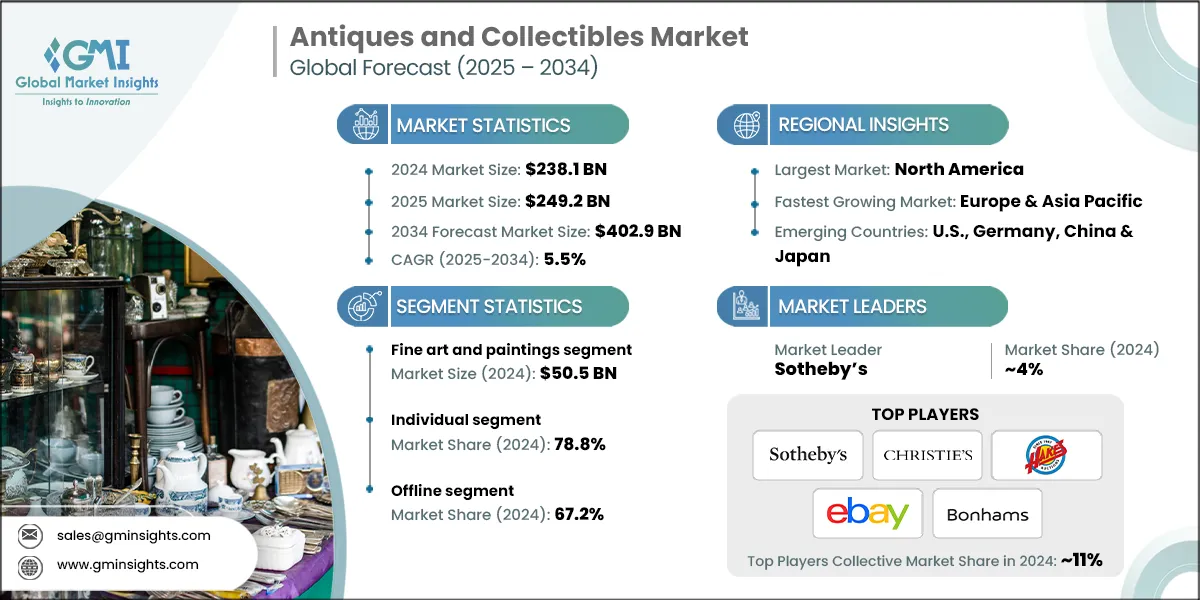
The global collectibles market was valued at $320.30 billion in 2025. That figure alone reframes the quiet luxury conversation entirely.
For the past few years, the aesthetic has been dissected mostly as a fashion story: the Loro Piana loafers, the unbranded cashmere, the studied absence of logos. But a recent Italian financial analysis out of FIRSTonline makes the case that quiet luxury was never just about how you dress. It's about how old money thinks. And increasingly, wealthy families are treating provenance-rich art, antiques, and heritage accessories not as décor or status props but as legitimate instruments of capital preservation and intergenerational transfer.
The Collectibles Market Is Bigger Than Most Investors Realize
The global collectibles market was estimated at $320.30 billion in 2025 and is projected to reach $535.50 billion by 2033, growing at a CAGR of 6.9%. Within that total, the art and antiques segment held the largest market share at 32.9% in 2025, and Europe dominated globally with 37.28% of the market. Those numbers position cultural assets not as a niche passion play but as one of the most substantial alternative asset classes in existence, comfortably outpacing most people's assumptions about where serious money actually sits.
The antiques sub-market is moving fast on its own terms. Industry executives note that despite a projected 15% annual growth rate in the antiques industry, technology innovation has lagged, a gap that platforms are now aggressively closing through digital cataloguing and authenticated online sales. The infrastructure is catching up to the demand.
How High-Net-Worth Families Are Allocating
According to the UBS Global Family Office Report 2025, alternative investments now constitute 54% of U.S. family office portfolios, with private equity leading at 27%, followed by real estate at 18% and private debt at 3%. Art and collectibles sit within that alternative allocation as a non-correlated, tangible store of value. The appeal is structural: cultural assets don't move in lockstep with public equities, they carry aesthetic and social dividends alongside financial ones, and they transfer between generations with the kind of narrative weight that a brokerage account simply can't replicate.
According to the Art Basel and UBS Survey of Global Collecting 2025, high-net-worth individuals now allocate 20% of their wealth portfolios to art, up from 15% in 2024. That five-point jump in a single year is not incremental; it signals a deliberate reorientation. The same research found that inheritance is a major factor in art ownership, with 84% of respondents having inherited art and 80% intending to pass their collections to children or partners. Art, in other words, is already functioning as a multigenerational ledger inside the world's wealthiest households.
Provenance as the New Price Tag
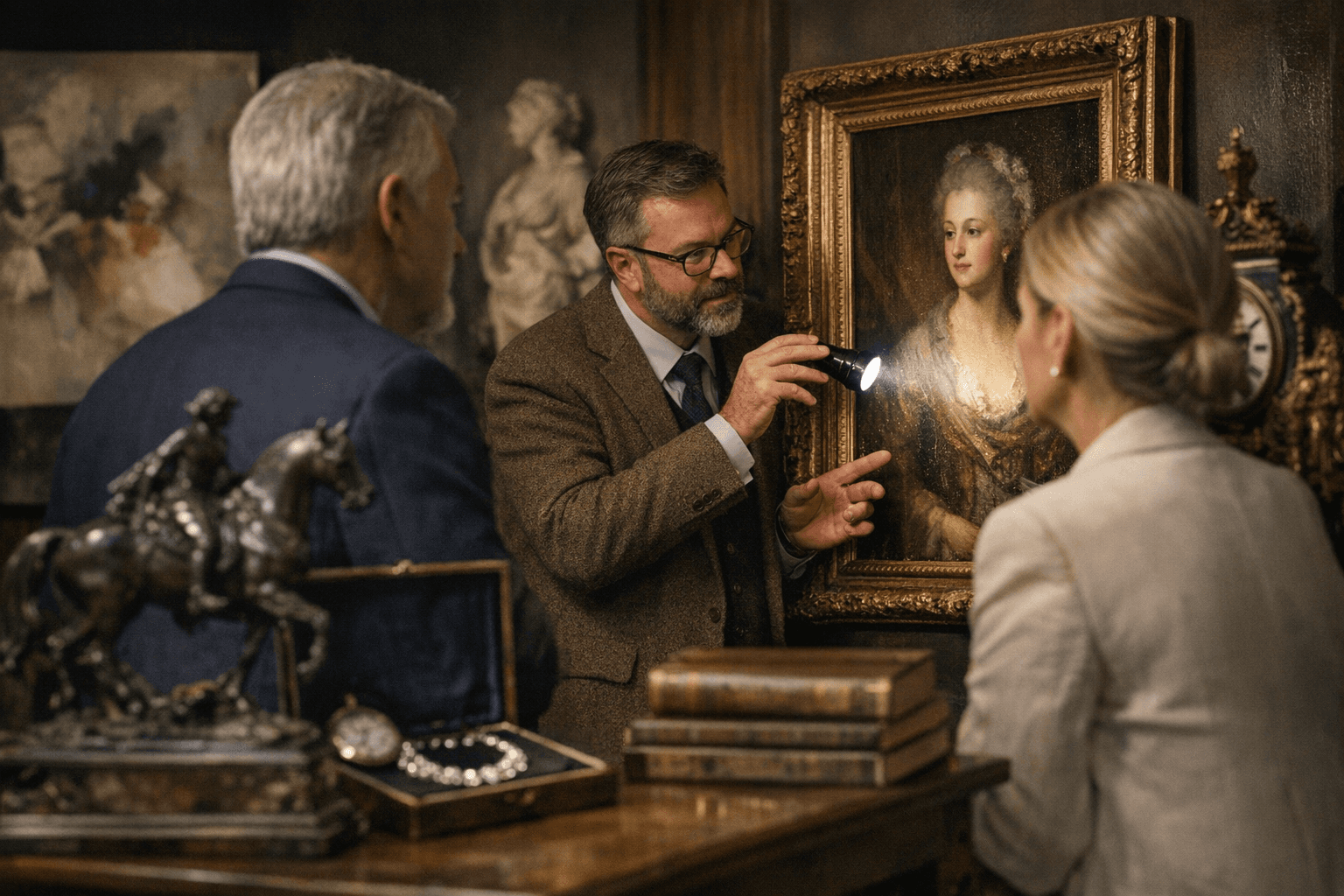
What separates a collectible from an investment-grade collectible is provenance: the documented chain of custody, authenticity, and cultural context that a piece carries. This is where the quiet luxury sensibility and the portfolio mentality converge. Just as old-money dressing prizes the knowing understated choice over the flashy logo, old-money collecting prizes the piece with an unimpeachable paper trail over the trophy acquisition.
A strategic approach to art collection requires verifying authenticity and provenance to protect asset value, and collaborating with curators, legal advisors, and wealth strategists to navigate complexity. Auction houses have formalized this logic: provenance documentation, independent valuations, and insurance reviews are now standard practice for serious collectors managing collections as part of an estate plan rather than as personal indulgence.
What's shifting is the emotional calculus behind the purchase. "Passion plus investment" remains the leading driver of collecting but has fallen from 76% in 2014 to 59% in 2025, while emotional, social, and cultural factors are at record highs. The collector of 2026 isn't buying purely for return or purely for pleasure; they're buying for legacy, for identity, and for the particular social capital that comes from stewardship of culturally significant objects.
Vintage Fashion Enters the Portfolio
The provenance logic extends directly into fashion. A Hermès Birkin or a 1990s Chanel Classic Flap is no longer just a secondhand bag; it's a documented, authenticatable asset with a demonstrable appreciation curve. A vintage medium Chanel Classic Flap bag from the 1990s, which retailed for approximately $1,200 at the time, now sells for over $7,000 at Sotheby's. Neutral leather Hermès Birkin and Kelly bags command the most significant premium relative to retail price at Sotheby's due to lower available supply.
The global second-hand luxury market is projected to reach $59 billion by 2025, according to Bain and Company industry research. Auction houses are treating this category with the same seriousness as fine art: Sotheby's now maintains a rotating selection of authenticated luxury handbags available for immediate purchase, positioned explicitly for both wear and investment. The line between fashion and finance has effectively dissolved for the right pieces.
Auction Houses Are Adapting, Not Retreating
The broader auction market had a rough first half of 2025. Global auction sales dropped 6% in the first half of 2025, with the downward trend attributed in part to a generational shift in wealth, as baby boomer heirs may prefer different aesthetics or digital artwork. But the response from major houses has been instructive: while art sales have faltered, other luxury goods including jewelry, watches, wine, and cars are picking up the slack, and online bidding now dominates with 80% of Christie's bids placed digitally. Nearly a third of Christie's buyers are now millennials or Gen Z, which means the next generation of quiet luxury collectors is already in the room, just bidding from their phones.
The category realignment is significant. Traditional fine art is under pressure from shifting taste; the harder, more provenance-specific categories including vintage fashion, rare watches, estate jewelry, and authenticated antiques are holding firm and, in some cases, accelerating.
The Aesthetic and the Asset Class, Together
The FIRSTonline analysis frames all of this as a coherent worldview rather than a series of disconnected trends. Quiet luxury, read properly, is not minimalism as a style choice. It is a philosophy of acquisition rooted in quality, rarity, and longevity; a preference for things that hold their value across decades and generations precisely because they were chosen with patience and expertise rather than urgency and spectacle.
The "understated English Country Style" is experiencing a resurgence influenced by the quiet luxury aesthetic, emphasizing modest, worn, and functional pieces with an enduring interest in authenticity. That sensibility scales directly from a wardrobe to a collection: the same instinct that reaches for broken-in heritage tweed over a fast-fashion knockoff reaches for a documented Georgian silver piece at auction over a shiny contemporary objet.
For luxury houses, auction platforms, and family offices paying attention, the commercial implication is clear. The old-money aesthetic has always been about curation over consumption. Now the financial architecture is catching up to that instinct, and the collectibles market has the numbers to prove it.
This article was produced by Prism’s automated news system from verified source data, official records, and press releases, then run through automated quality and moderation checks before publishing. The system is built and supervised by the people who set the standards it runs under. Read our full AI policy.
Did this article answer your question?