The riding habit, the original old-money dress code
The riding habit turned aristocratic function into a dress code of posture, discipline, and restraint. Its jackets, boots, and wool still read more credibly than trend-led quiet luxury.
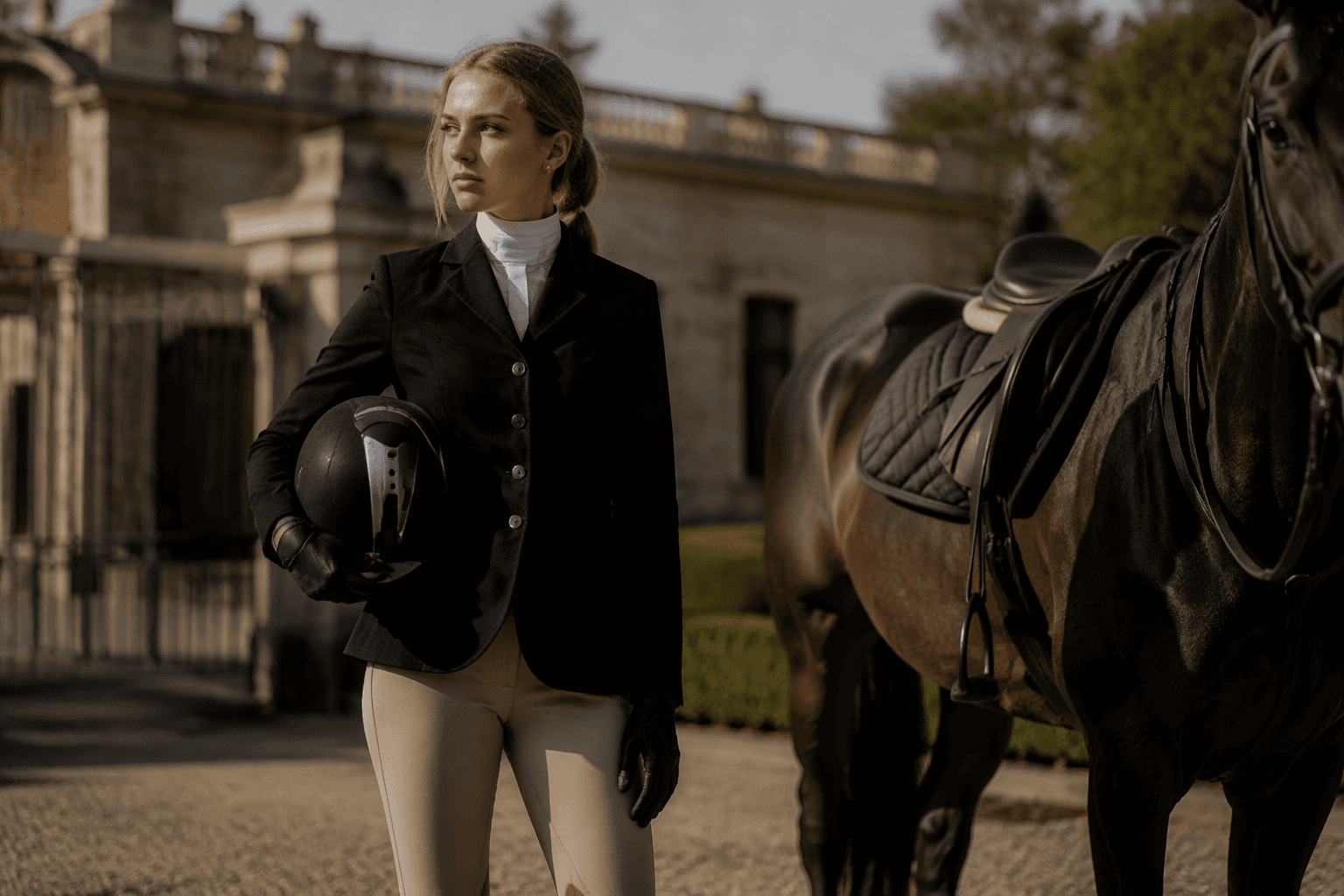
The most convincing old-money uniform was never invented for aesthetics. The riding habit came out of aristocratic leisure and sporting life, where clothing had to sit neatly in the saddle, hold a formal line in public, and quietly announce that horses, estates, and social rules were already part of the wearer’s world.
The riding habit was a code, not a costume
What makes the riding habit so persuasive is that it was built as a complete system. It was not a single garment trying to imply status, but a disciplined ensemble of fitted clothing and small, exact details that worked together: a structured coat, close tailoring, proper breeches, and the kind of hardware that made the whole look feel sanctioned rather than improvised.
That is why the riding habit reads as old money at its most believable. Horseback dress had to be functional enough for movement, formal enough for appearances, and shaped enough to preserve a smart silhouette in motion. The result was a visual language of inherited leisure, where the wearer did not need to perform outdoor life because the clothing already assumed it.
The Victoria and Albert Museum objects tell the story plainly
The Victoria and Albert Museum’s collections make that history visible through a cluster of objects with names that are almost a lesson in themselves: “Riding Habit,” “Riding Coat,” “Riding Habit Jacket” by John Redfern, “Riding Coat and Breeches” associated with Bernard Weatherill, and a “Stock Pin” by Primor. Seen together, those titles show that the riding habit was assembled from parts, each one carrying both practical and social meaning.
The stock pin matters especially. It was not simply decorative neckwear hardware, but part of a ritualized sporting uniform, a detail that signaled proper training as much as polish. In an old-money wardrobe, that kind of object is never loud; it is exact. The point is not ornament for its own sake, but the feeling that every piece has a purpose and a place.
John Redfern gives the story a tailoring lineage, which is useful because it ties the look to craft rather than to generic heritage styling. Bernard Weatherill adds another layer, showing how riding dress lived at the intersection of craft, politics, and elite life. The clothing was never isolated from the world around it; it was part of the same social structure that made a stable, a country house, and a public ride read as natural extensions of status.
What survived into modern luxury dressing
The riding habit still lives inside modern luxury because so many of its details translate so cleanly. Navy jackets, polished boots, close tailoring, high-quality wool, and accessories that look useful before they look flashy all come from the same aristocratic logic. They do not chase attention; they project control.
That is also why the riding habit feels broader and more convincing than the standard blazer-and-loafer formula. A blazer alone can be a trend. A riding-derived jacket, with its disciplined line and considered structure, carries the memory of a body in motion and a setting that expected composure. The old-money effect comes from that combination of utility and restraint, not from surface polish alone.
Structured jackets
The jacket is the riding habit’s most enduring export. Its appeal lies in the shape: fitted enough to keep the body tidy, structured enough to hold authority, and formal enough to be seen as part of a uniform rather than a fashion flourish. Modern luxury dressing still borrows this exact balance in sharply cut navy blazers and jackets with firm shoulders and a controlled waist.
Dark tailoring and wool
Dark tailoring survives because it behaves well. Deep navy and similarly sober shades carry the same authority that riding dress once needed, and high-quality wool gives those colors depth rather than shine. The fabric matters as much as the cut, since wool can look substantial, smooth, and understated at the same time.
Boots and minimal ornament
Polished boots remain one of the clearest signals of the riding habit’s afterlife. Their hard finish and practical shape make sense in a world built around movement, but they also sharpen an outfit in a way that feels deliberate, not decorative. Minimal ornament works the same way: the old-money eye favors a stock pin-like attention to detail, where the smallest finish is often the most persuasive one.
Why this lineage feels more authentic than quiet luxury
Quiet luxury has become a style slogan, but the riding habit is a real historical answer to the same desire for restraint. It does not imitate wealth by stripping away labels; it emerges from a world where dress already served a function and status was embedded in the code of the garments themselves. That difference matters, because authenticity in old-money style comes from the logic of use, not from the absence of logos.
The riding habit is the original old-money dress code because it turned aristocratic function into discipline, posture, and restraint. The jackets, boots, wool, and tiny formal details that survived from it still look convincing today because they were never designed to perform luxury. They were designed to belong to it.
This article was produced by Prism’s automated news system from verified source data, official records, and press releases, then run through automated quality and moderation checks before publishing. The system is built and supervised by the people who set the standards it runs under. Read our full AI policy.
Did this article answer your question?