Why rise matters more than size for petite pants fit
The wrong rise can make the right size fail on a petite frame. Measure rise, not just inseam, to stop waistband gaps, crotch pull, and chopped leg lines.
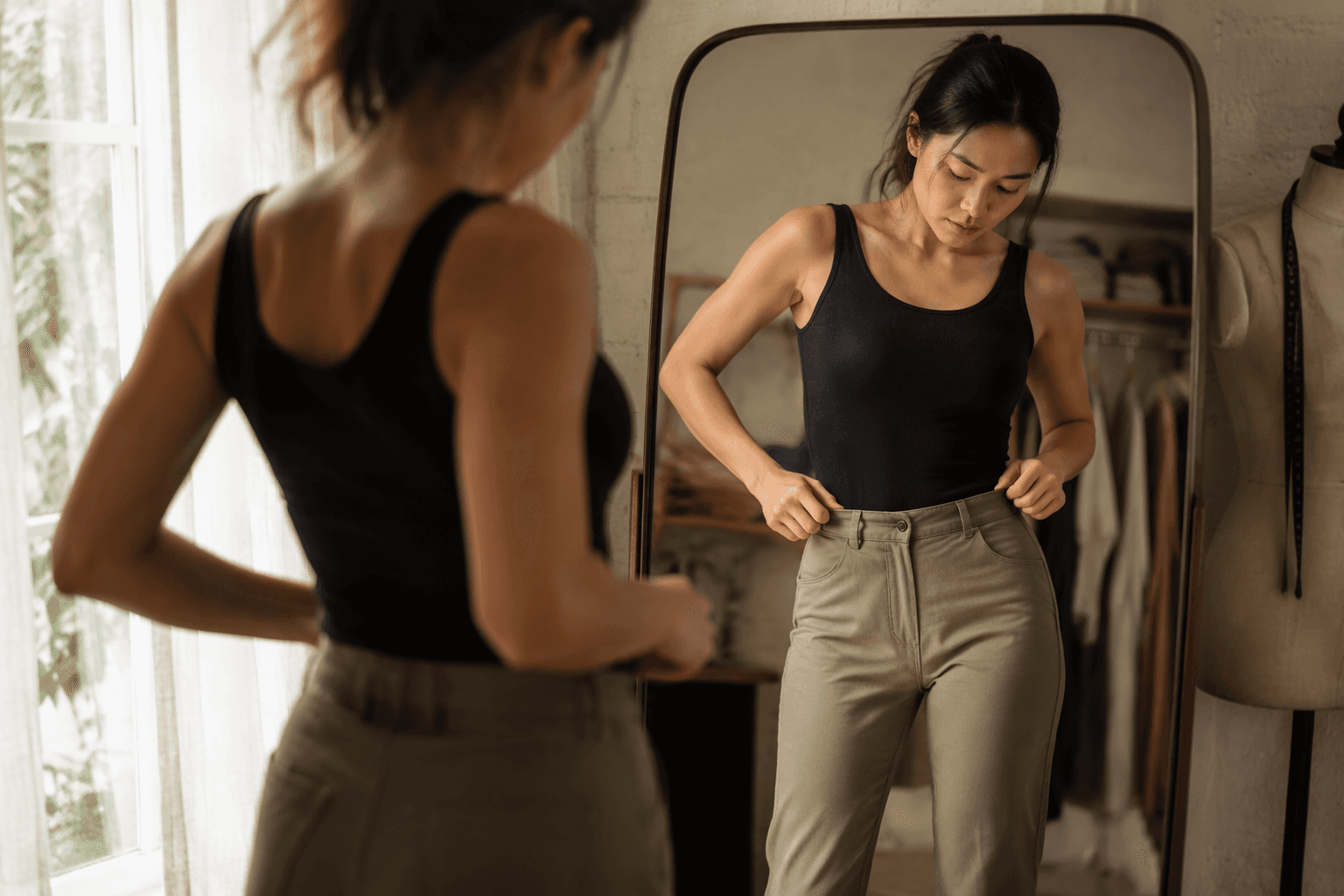
Petite pants usually fail in the same frustrating way: the tag is correct, the waist is correct, and yet the fit looks wrong the second you stand up. The waistband rides too high or too low, the crotch pulls, pockets land in awkward places, and the legs seem to shrink before the hem even hits the floor. The fix is not always sizing up or down. It is rise, the vertical measurement that decides where the pants actually sit on your body.
Why rise is the number that changes everything
Rise is the distance from the crotch seam to the waistband, and that measurement does more work than a generic petite label ever can. Rise determines how much room a pair of pants gives through the seat and hips, where the waistband lands, and whether a so-called high-rise style really behaves like one on a shorter frame. A pair can be perfect in the waist and still fail if the rise is too long for your torso.
That is why height alone is such an unreliable shortcut. A woman can be 5'2" and still need a long rise if she has a longer seat or fuller hips, while another petite shopper of the same height may need a shorter rise to keep the waistband from pressing into the ribcage. Oliver Logan has a petite denim guide for women under 5'4" that pairs rise with inseam.
The petite problem is usually proportion, not size
The most common mistake is assuming that a shorter woman automatically needs smaller pants. In reality, petite size is about proportion, not simply scale. Merriam-Webster defines petite as a clothing size for short women, while Dictionary.com defines it as a category sized for women or girls of less than average height.
When rise is wrong, the whole silhouette changes. Too much rise can make legs look shortened, especially in trousers with a crisp front crease or a stiffer fabric that holds shape away from the body. Too little rise can cause crotch pulling and waistband gaping, two fit issues that are especially obvious in tailored pants and jeans with a rigid waistband. The result is the familiar petite frustration: the pants technically fit the body, but not the eye.
How rise changes the look of the leg
On a petite frame, rise has more visual power than many shoppers realize. A well-chosen rise can create cleaner lines through the waist and hip, then stretch the leg visually without any styling trick at all. A badly chosen rise can chop the body in half, even when the inseam is hemmed to the exact right length.
That is why rise matters across categories, not just denim. Who What Wear has covered petite trousers, petite jeans, wide-leg jeans, cropped jeans, capri pants, Bermuda shorts, and short-torso dressing as a proportion problem. For a petite shopper, the balance between waistband height, pocket placement, crotch depth, and hem length changes with the rise.
How to measure rise before you buy
The smartest petite shoppers start with a pair that already fits well. Lay the pants flat and measure from the crotch seam straight up to the top of the waistband for the rise, then measure inseam from the crotch seam down to the hem. Those two numbers tell you much more than your usual size label, because they describe the architecture of the garment instead of the fantasy of the size tag.
Use that information as your shopping note in online carts and fitting rooms alike.
- If the waistband feels too high and presses into your torso, look for a shorter rise.
- If the seat pulls or the crotch feels tight, you may need more rise, not a bigger waist.
- If hems are fine but the legs still look cut off, compare rise before blaming inseam.
- If pockets seem to sit too low on the back or too far down the front, the rise is probably off, too.
This approach is especially useful online, where returns are costly and visual fit clues are limited. A petite shopper who already knows her best-rise measurement can compare it across brands before the package even arrives.
Why short torso styling keeps coming up
The reason so much petite advice circles back to the short torso is simple: torso length changes where the waistband sits, even at the same height. A 5'2" woman with a long torso and a 5'2" woman with a short torso may need completely different rises.
It also explains why certain silhouettes can look immaculate on one petite body and awkward on another. High-waisted trousers can lengthen the leg beautifully when the rise meets the natural waist at the right point, but they can also feel overly compressed when they climb too high. Cropped tops and tucked shirts sharpen that effect, because they leave the waistband exposed rather than disguising a mismatch with extra fabric.
The retail market has already admitted petite is more than one size
Macy’s, Anthropologie, NYDJ, Ruby Rd., and Petite Studio all maintain petite collections. NYDJ publishes a guide titled “How to Tell If You Need Petite, Regular, or Tall Jeans.”
Good Housekeeping published a 2024 petite-jeans guide, and Who What Wear continues to publish petite denim and trouser coverage. The writers behind that coverage often identify themselves at heights like 4'11", 5'0", 5'1", 5'2", 5'3", and 5'4".
This article was produced by Prism’s automated news system from verified source data, official records, and press releases, then run through automated quality and moderation checks before publishing. The system is built and supervised by the people who set the standards it runs under. Read our full AI policy.
Did this article answer your question?