The North Face Purple Label FW26 blends city wear with outdoor function
Purple Label’s FW26 doubles down on city-ready outdoor luxury, pairing muted tailoring cues with hardwearing layers and Japanese-only cult appeal.

The North Face Purple Label has always been the quiet blueprint for what happens when outdoor gear stops dressing like equipment and starts dressing like a city uniform. FW26 sharpens that idea with muted earth tones, washed blues, denim, and tweed, all pushed through a distinctly Japanese lens that makes the line feel less like seasonal sportswear and more like a complete urban wardrobe.
Purple Label’s real lane
Nanamica frames The North Face Purple Label as an urban outdoor collection built to support an outdoor lifestyle in city settings, and that is exactly where its authority lives. The line mixes THE NORTH FACE’s functional fabrics with traditional materials and a modern Mountain Ivy sensibility, which gives it a vocabulary that is part trail gear, part ivy style, and part Tokyo street polish. It is a Japan-exclusive collaboration line run through GOLDWIN, designed by Eiichiro Homma’s team, and that specificity is what keeps it separate from THE NORTH FACE’s global mainline.
That separation matters. Purple Label is not trying to chase the broadest possible outdoor audience, and that restraint gives it a sharper identity than the average technical capsule. Instead of loud performance signaling, it works through hand-feel, proportion, and the kind of fabric choices that make outerwear look considered even when it is built for weather.
What FW26 looks like on the rack
The MEN 2026 FW lookbook shows 14 looks, and the range moves with a control that feels almost editorial in itself. The collection covers outerwear, shirting, legwear, tops, and accessories, but the important detail is how those categories are styled together: transitional layers sit beside garments built for cold weather, rain, and wind, so the clothes read as a wardrobe rather than a product list.
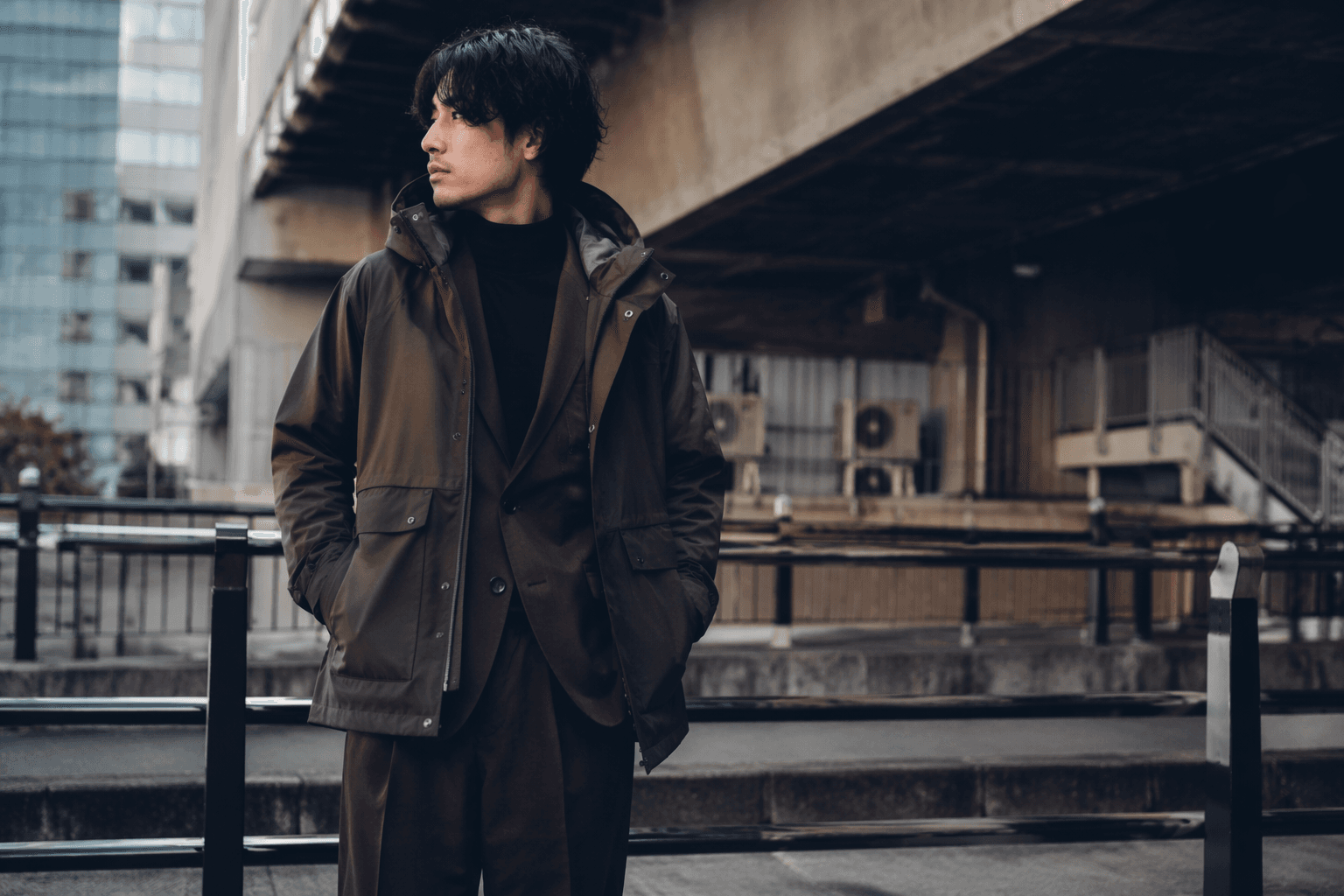
The palette does a lot of the work. Muted earth shades and washed blues soften the sharper utility signals of the line, while denim and tweed pull the collection closer to everyday tailoring than to specialist gear. That mix is what gives Purple Label its edge in the city, where a shell alone can feel too blunt and a blazer alone can feel too fragile.
The pieces that set the tone
A few pieces capture the season immediately. The 65/35 Striped Mountain Parka comes in at 52,800 yen, the Corduroy Field Insulation Shirt Jacket at 49,500 yen, the Pack Field Tee at 9,680 yen, and the Corduroy Wide Straight Field Pants at 29,700 yen. Those prices position the collection firmly in premium territory, but not in the rarefied zone of luxury fashion that forgets usefulness; the appeal is that the clothes still promise mileage.
The names themselves tell you how Purple Label thinks. “Mountain Parka,” “Field Shirt Jacket,” and “Field Pants” keep the outdoor grammar intact, while corduroy and striped fabric treatments pull those same shapes into more polished territory. Even the Pack Field Tee matters here, because a tee at 9,680 yen in this context is not just a basic, it is the clearest sign that the label treats fabric and finish as the point, not decoration.
The fabrics are the signature
Purple Label’s long-running backbone has been 65/35 Bayhead Cloth, a textile nanamica identifies as one of the line’s signature structures. That fabric history explains why the label still feels coherent even when it moves between technical shells and softer, more town-ready pieces: the cloth does not flatten the silhouette, but it also does not turn the garment into costume.
Nanamica has said the label has been made for about 20 years, and Takashi Imaki has described the original idea as taking THE NORTH FACE “masterpieces” from the past and remaking them as townwear. That original brief still shapes the line’s best pieces, especially the Sierra Parka, one of Purple Label’s most iconic forms, which reworks the 1970s debut outerwear from THE NORTH FACE into a more fashion-aware shape. That is the real Purple Label trick: the archive is always there, but it is filtered through modern fit, better hand-feel, and a softer read in the city.
Why the cult status still holds
Purple Label’s appeal has always depended on tension. It is outdoor wear with streetwear fluency, Ivy references with performance logic, and Japanese exclusivity with the kind of subtlety that makes collectors pay attention without the line ever shouting for it. The Tokyo and Daikanyama ecosystem around nanamica has helped cement that reputation, because the brand’s world is built around people who understand that function can be elegant when the cut is right.
FW26 continues that logic with unusual discipline. The collection does not try to reinvent THE NORTH FACE so much as refine its everyday possibilities, keeping the outerwear credible for cold weather and rain while making the whole range feel better suited to commuting, travel, and the low-key choreography of city life. That balance is why Purple Label keeps outpacing the labels that only imitate the formula: it treats performance as a starting point, then finishes the sentence with tailoring, texture, and restraint.
This article was produced by Prism’s automated news system from verified source data, official records, and press releases, then run through automated quality and moderation checks before publishing. The system is built and supervised by the people who set the standards it runs under. Read our full AI policy.
Did this article answer your question?