Why the perfect blank hoodie is streetwear's ultimate status symbol
The best blank hoodies now signal taste through cut, weight and fabric, not logos. In streetwear, that makes a clean hoodie the quietest flex.
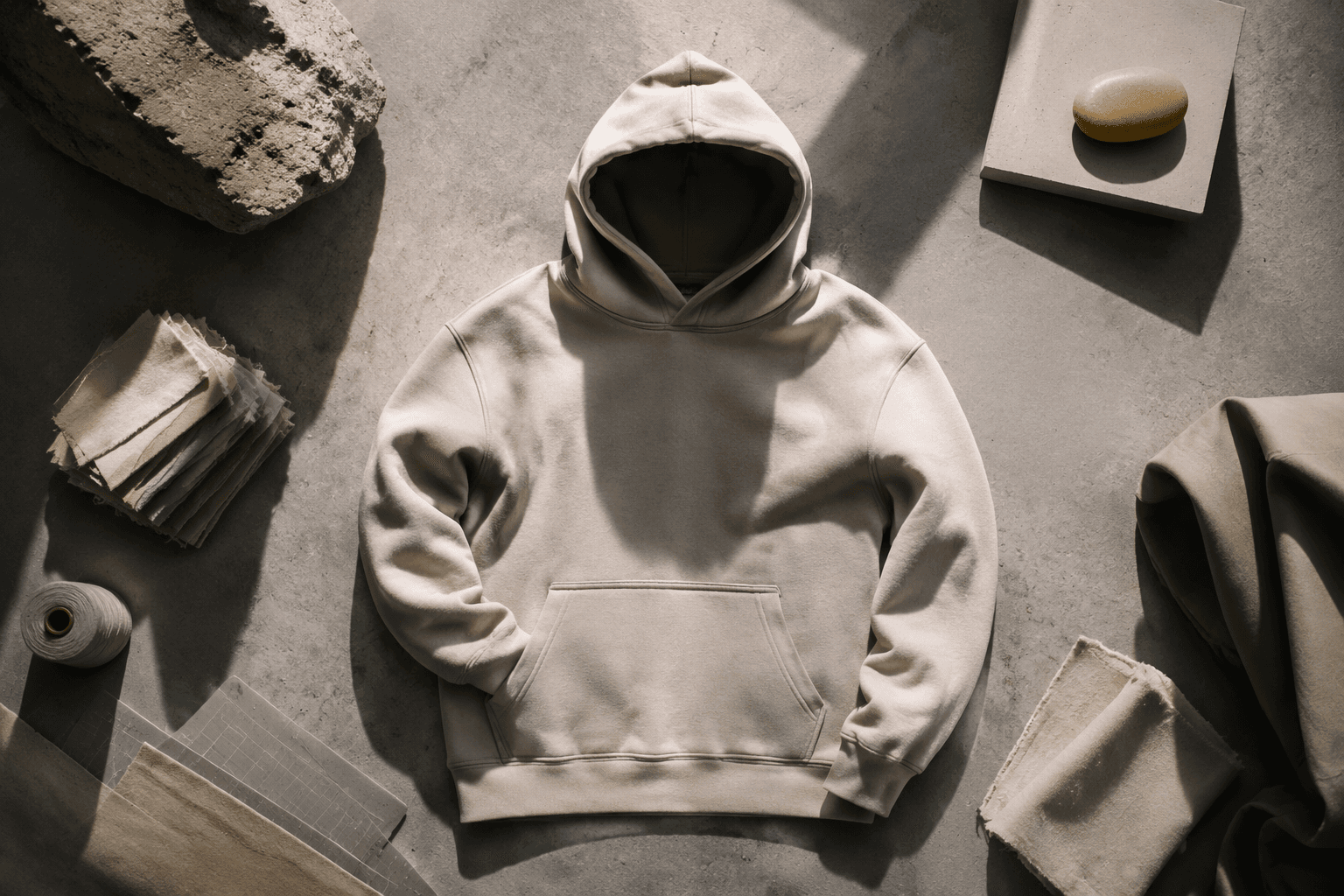
Fear of God ESSENTIALS’ Classic Hoodie uses heavy 380gsm core fleece. In streetwear, a perfect blank hoodie is often the piece that does the most work: the base layer, the canvas, and the business infrastructure behind logo-free premium basics. Blank sweats are "the bedrock of the streetwear game," and the best ones are judged by silhouette, weight, fabric, and the kind of brand credibility that makes a logo unnecessary.
Why the blank hoodie sits at the center of streetwear
The modern blank hoodie lives in a small but telling hierarchy. Luxury labels including LOEWE, Acne Studios, Helmut Lang, and C.P. Company sell the category at one end; minimalist labels such as Fear of God ESSENTIALS and Entire Studios define the other, with Norse Projects bringing a Copenhagen-rooted sense of restraint and utility into the mix. The same garment can feel stripped-back or expensive depending on how much attention goes into the cut, the hand feel, and the finish.
It is the piece brands use when they want the fit to do the talking, and the piece buyers reach for when a quiet premium basic feels sharper than visible branding. LOEWE’s men’s sweatshirt collection includes hoodies sold through its official website, which shows how firmly the luxury market has embraced the blank hoodie as a fashion object, not just sportswear.
GSM is the first number to know
Fabric weight is the fastest way to tell whether a hoodie will feel substantial or disposable. GSM is a universal apparel measure of fabric thickness and density, and it matters because two hoodies can look almost identical on a rack while wearing very differently on the body. Higher GSM usually signals more fabric, more structure, and a denser hand feel.
Fear of God ESSENTIALS makes that logic easy to read. The line was introduced in 2018 as Jerry Lorenzo’s younger label. That 380gsm build lets the hoodie sit away from the body, hold its shape, and feel intentionally weighty instead of flimsy.
Heavier cotton and fleece fabrics are chosen for warmth and structure, which is why a premium blank should drape with purpose rather than collapse into itself after one wash.
Ribbing and stitching decide how long it lasts
Once the fabric is right, construction decides whether the hoodie keeps its shape. Ribbing at the cuffs and waistbands supports shape retention and garment longevity, and that is where a lot of cheaper hoodies give themselves away. Weak ribbing sags, stretches, and turns a clean silhouette sloppy.
Shoulder width matters too. A broader shoulder can make a hoodie feel boxier and more architectural, while a narrower cut reads cleaner and more refined under outerwear. Stitch quality ties it all together: strong seams, even finishing, and a stable hem separate the hoodie that lasts from the one that starts to droop after repeated wear.
Which labels carry real weight
Brand credibility matters here because the best blank hoodie is rarely just about fabric. It is about whether the label has earned the right to make restraint look intentional. Norse Projects, headquartered in Copenhagen, Denmark, is useful in this context because it sits at the intersection of classic workwear, contemporary design, and understated streetwear.
Fear of God ESSENTIALS shows how that formula scales. Retail and resale channels such as Pacsun, Farfetch, GOAT and The Attic continue to carry heavyweight and zip-up versions, and Farfetch listings have shown logo hoodies around $143 to $152. That places the line squarely in the premium-basics bracket, where the appeal is not only the name but the promise of repeat wear and a cleaner silhouette than most mass-market sweatshirts can offer.
Luxury houses matter for the same reason. LOEWE, Acne Studios, Helmut Lang, and C.P. Company give the blank hoodie a different kind of authority, one tied to finishing and proportion rather than graphics. Entire Studios sits closer to the stripped-back end of that spectrum.
The hoodie’s status comes from its history
By 2016, hoodies were tied to racial injustice and runway exclusivity, and that tension still explains why the garment can feel ordinary and loaded at the same time. It is one of the few pieces that can read as everyday wear, luxury fashion, and a symbol of cultural tension without changing shape.
This article was produced by Prism’s automated news system from verified source data, official records, and press releases, then run through automated quality and moderation checks before publishing. The system is built and supervised by the people who set the standards it runs under. Read our full AI policy.
Did this article answer your question?