AAFA Challenges CalRecycle's PRO Selection for California Textile EPR Law
AAFA has taken California's textile recycling regulator to court over its PRO pick, putting the July 1 producer registration deadline in legal jeopardy for 1,100+ brands.
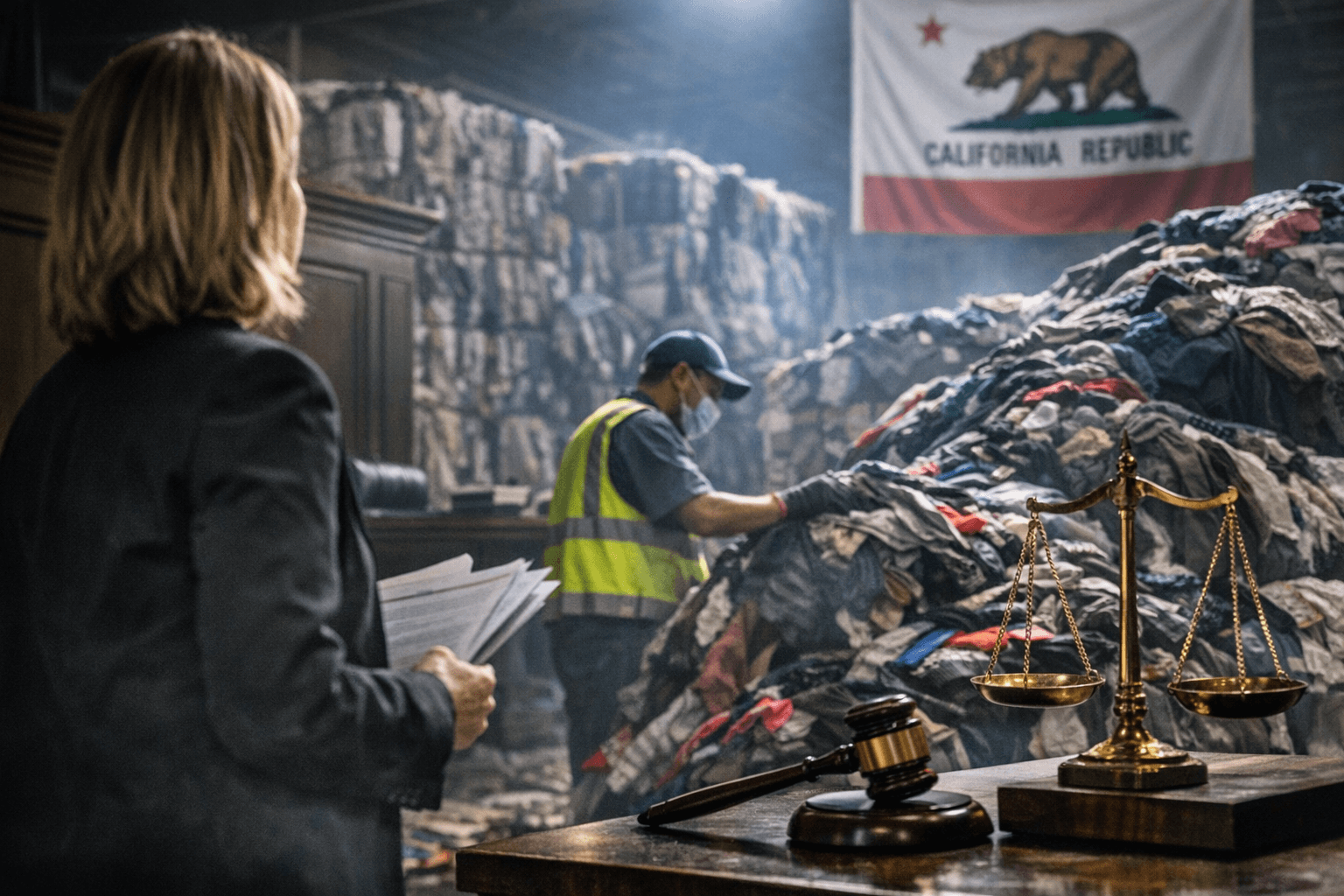
The first U.S. law compelling apparel brands to fund their own textile waste recovery is now mired in a courtroom dispute that could reshape California's landmark recycling program before a single producer has registered.
The American Apparel & Footwear Association, a Washington-based trade group representing more than 1,100 apparel and footwear brands, retailers, and manufacturers, filed a petition in Sacramento County Superior Court challenging CalRecycle's February 27 selection of Landbell USA as the sole Producer Responsibility Organization under SB 707, formally known as the Responsible Textile Recovery Act of 2024. CalRecycle chose Landbell USA over two competing applicants; AAFA wants that decision vacated and reconsidered.
At the heart of the case is whether Landbell USA meets SB 707's structural requirements: that a PRO be formed by producers, operate as a registered nonprofit under producer governance, maintain a diverse governing board, and demonstrate adequate financial controls. AAFA argues it does not on any count, and that CalRecycle "stepped outside" the law in making the appointment. Landbell USA, part of the international Landbell Group, counters that it is a mission-driven 501(c)(3). Its executive director Patrick Gibbs addressed the challenge directly: "Having been selected as the PRO by CalRecycle, Landbell USA is focused on meeting the demands of the Responsible Textile Recovery Act. We will continue to be guided by CalRecycle on our statutory obligations, focusing on excellence in delivery."
The legal fight arrives at a particularly compressed moment. July 1, 2026 is the statutory deadline by which all producers of covered textile articles and apparel must register with the approved PRO. A court order vacating CalRecycle's selection would throw that deadline, fee structures, and infrastructure planning into disarray during the exact window when brands and retailers need regulatory certainty to build compliance programs.
That uncertainty is not a reason to pause preparation; it is a reason to accelerate it. Any brand selling textile products in California should be compiling accurate volume data on covered products now, since producer registration fees scale with market participation regardless of which organization ultimately holds PRO status. Procurement and legal teams should audit supplier and logistics contracts for EPR cost-allocation clauses, because fee obligations will eventually move through supply chains whether or not the court intervenes. Brands that enter the registration window with clean data, a mapped fee estimate, and contract language already in place will be better positioned to adapt quickly if a new PRO selection process begins.
The stakes reach well past California. SB 707 is the first state-level textile EPR law in the country, and how its early governance dispute resolves will set practical and political precedents for legislators drafting similar programs elsewhere. If CalRecycle's selection process is found to have short-circuited statutory requirements, it will sharpen the accountability standards against which every future EPR appointment gets measured. The apparel industry, for once, may be the entity forcing that accountability rather than resisting it.
This article was produced by Prism’s automated news system from verified source data, official records, and press releases, then run through automated quality and moderation checks before publishing. The system is built and supervised by the people who set the standards it runs under. Read our full AI policy.
Did this article answer your question?