ArteFino Resort spotlights Filipino craft, slow living, conscious consumption
ArteFino's resort pop-up makes Filipino craft feel urgent and polished, with mended textiles, heritage weaves, and conscious buying at the center.

A mall pop-up with a slower pulse
Resort by ArteFino turns Power Plant Mall into something rarer than a retail stop: a persuasive argument for buying less, but better. Staged across the North and South Courts in Makati and open with free entrance, the four-day showcase brought together around 30 Filipino brands for a crowd that included Sarah Sia, Dina Tantoco, Kumiko Moriguchi, Rita Dy, Phoemela Baranda, and Bunny and Marivic Rufino.
This was not just another seasonal market dressed up for social media. It was the first installment in ArteFino’s milestone 10th-year celebration, a prologue that framed Filipino craft as both culturally grounded and commercially ready. The result felt polished but unhurried, like resort wear with a conscience and a sharper point of view.
The new Filipino resort code
ArteFino’s founders have been clear about the mood they are building. “Our tropical climate naturally influences the way Filipinos design and dress,” they said, and the phrase explains the whole proposition. In the Philippines, resort dressing does not need to be forced into relevance by a calendar. It already belongs to the climate, the light, the humidity, and the lived rhythm of the country.
That makes the curation feel more contemporary than nostalgic. The most interesting pieces lean into airiness without becoming flimsy, into ease without sacrificing structure. Think softened silhouettes, tactile surfaces, and fabrics that look better when they move, crease, and catch the sun. The visual language is less about escape than adaptation, with clothing and accessories made to feel at home in heat, travel, and everyday city life.
What the curation foregrounded
The strongest thread running through the pop-up was craft with visible hands behind it. Mended vintage textiles, heritage weaves, and artisanal accessories were not treated as a sidebar. They were the point, and they gave the event its texture and integrity. That matters in a market where “sustainable” can still be used as a mood word instead of a material reality.
Kael Street stood out for exactly that reason. Its pieces transform vintage and household textiles into one-of-a-kind garments, then revive them through mending and hand embroidery. The work has the kind of depth fast fashion cannot imitate: stitches you can actually see, fabrics with a second life, and silhouettes that feel more collected than manufactured.
Zarah Juan and Maison Métisse brought eco-print and nature-based techniques into the conversation, giving the collection an organic, slightly painterly finish. Golden Monstera, born in Siargao and inspired by island living, added sculptural brass jewelry with a sun-warmed, handmade edge. Arnel Papa pushed the accessory story further with statement pieces that read as decorative and architectural at once, while Follow Your Heart Bags offered travel pouches and bags made with women artisan communities, a reminder that utility can still be meaningful craft.
The brands shaping the room
The lineup itself tells you how broad this ecosystem has become. Resort by ArteFino 2026 featured Adante Leyesa, Aishe, Arao, Arnel Papa, Barba, Bicol Sweetgrass, Capricho, Casa Mercedes, Coco & Tres, Cult Loom, Edited Limited, Farah Abu, Follow Your Heart Bags, Golden Monstera, Goodluck Humans, Isa the Label, Jor-el Espina, Jorvien, Judy Jewels & Fedesto, Kael Street, Lakat, Maison Métisse, MyGems, Odel, Oli Home, Pamela Alicia, Peewee Benitez, R.Filart, R2R, Sari Lazaro, Style Ana, Techie Hagedorn, Tina Campos Jewelry, Trude Lizares, Two Chic, and Zarah Juan for HeArteFino.
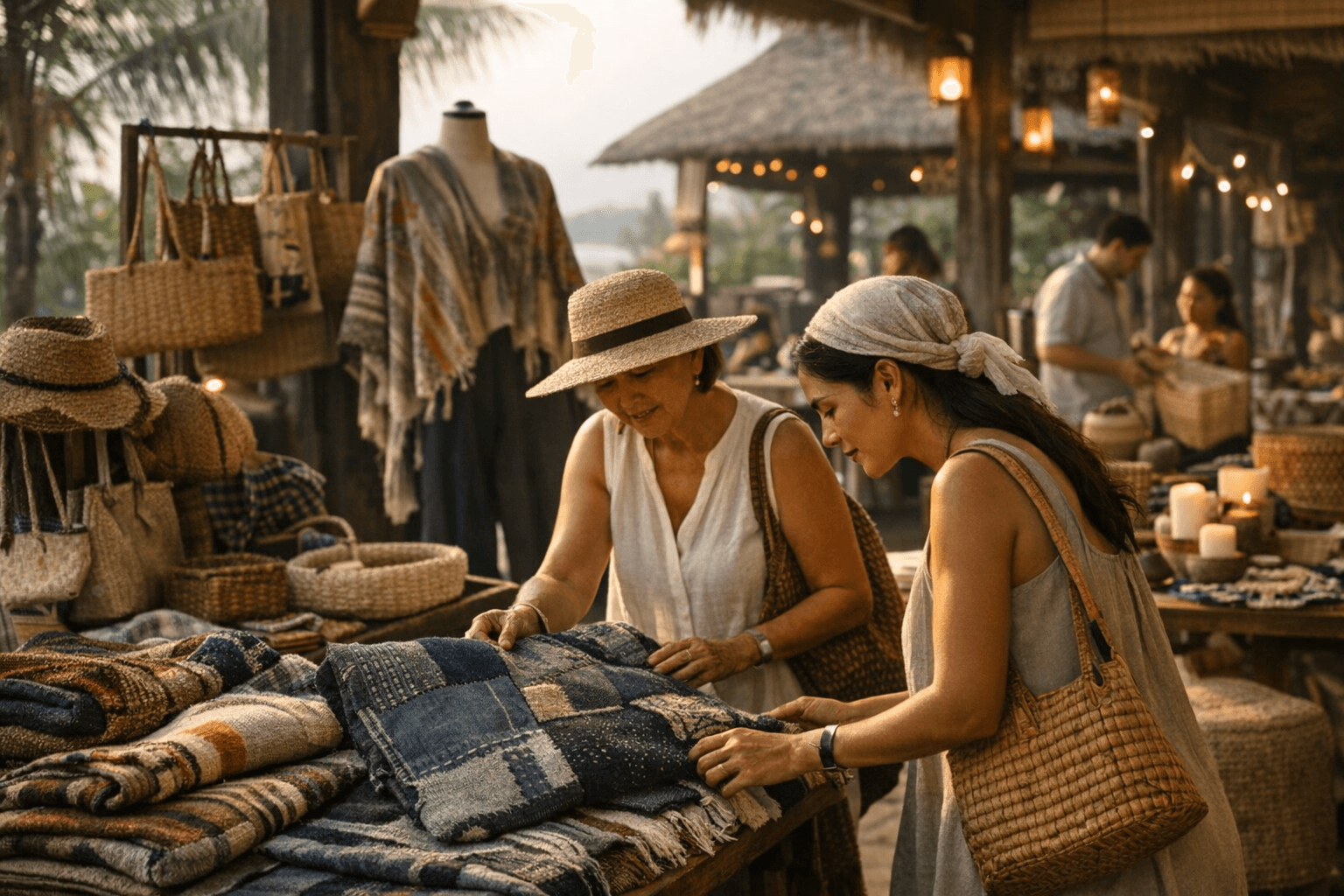
That range matters because it shows sustainable fashion in the Filipino context is not limited to one aesthetic. There are accessories, home objects, jewelry, woven goods, and clothing that move from refined minimalism to exuberant detail. The common thread is authorship, and the sense that each piece has been made to last beyond one holiday weekend.
Why the free-entry format matters
The free entrance changed the energy of the room. It made the pop-up feel public rather than private, and that is important for a movement that depends on visibility as much as taste. High craft can easily disappear behind exclusivity, but ArteFino’s mall setting widened the audience and gave the event a more democratic charge.
That accessibility also sharpened the commercial logic. When shoppers can browse without a barrier, the pieces have to do the work of convincing them through touch, finish, and story. In that sense, the venue became part of the edit: a familiar retail environment recast as a stage for slower, more thoughtful buying.
Conscious consumption with a purpose
The sustainability message here goes beyond material reuse. A portion of proceeds supports HeArteFino, the advocacy arm dedicated to uplifting artisan communities and sustaining traditional craft across the Philippines. The line between shopping and patronage gets thinner in the best possible way, because purchases help fund the ecosystem that produces the work in the first place.
The Diarist notes that Zarah Juan was ArteFino’s first HeArteFino grantee, a detail that gives the platform a useful sense of continuity. This is not just a one-off showcase of well-made goods. It is part of a longer architecture that links design, livelihood, and cultural stewardship.
What this signals for Filipino fashion
ArteFino launched Resort by ArteFino in 2023, and by its third iteration the idea has already settled into something larger than a pop-up. It reads as a year-round mindset: climate-aware, craft-led, and comfortable with the idea that elegance can come from longevity rather than novelty. The 10th-year milestone only reinforces that this is a platform with stamina, not a seasonal stunt.
For readers watching sustainable fashion closely, that is the real takeaway. Filipino resort style is being defined not by imported fantasy but by local conditions, local hands, and local intelligence. The clothes and accessories on view at Power Plant Mall suggest a future where conscious consumption looks less like compromise and more like discernment, with craft doing what it has always done best: making beauty feel earned.
This article was produced by Prism’s automated news system from verified source data, official records, and press releases, then run through automated quality and moderation checks before publishing. The system is built and supervised by the people who set the standards it runs under. Read our full AI policy.
Did this article answer your question?