Berlin summit tackles practical hurdles to circular fashion economy
Berlin’s Circular Society Summit put sorting capacity, design standards and traceability data at the center of circular fashion. The hard part is no longer the idea; it is the infrastructure.

Sorting capacity, design standards, traceability data and recycled-fiber economics were the real agenda at Bikini Berlin, where VORN - The Berlin Fashion Hub used its second Circular Society Summit to drag circular fashion out of theory and into the work of making clothes actually circulate. The summit took place on 3 July 2026 during Berlin Fashion Week, with a full day built around panels, pitches and the awkward, necessary mechanics of change.
The program made that shift plain. Michael Pfeifer of MOOT opened with a keynote on scaling upcycling to an industrial level, while a regulation panel laid out what brands now have to navigate as Europe tightens the screws. VORN also put lab-to-production innovation on stage, alongside pitches from the Aladin EU project and a presentation from SHIFT - The Microfactory on circular product innovation sprints. The exhibition matched the talk with substance: upcycled pieces from MOOT, prototypes from SHIFT and material work from Mitwill Textiles Europe, Centexbel and BioFibreLoop.
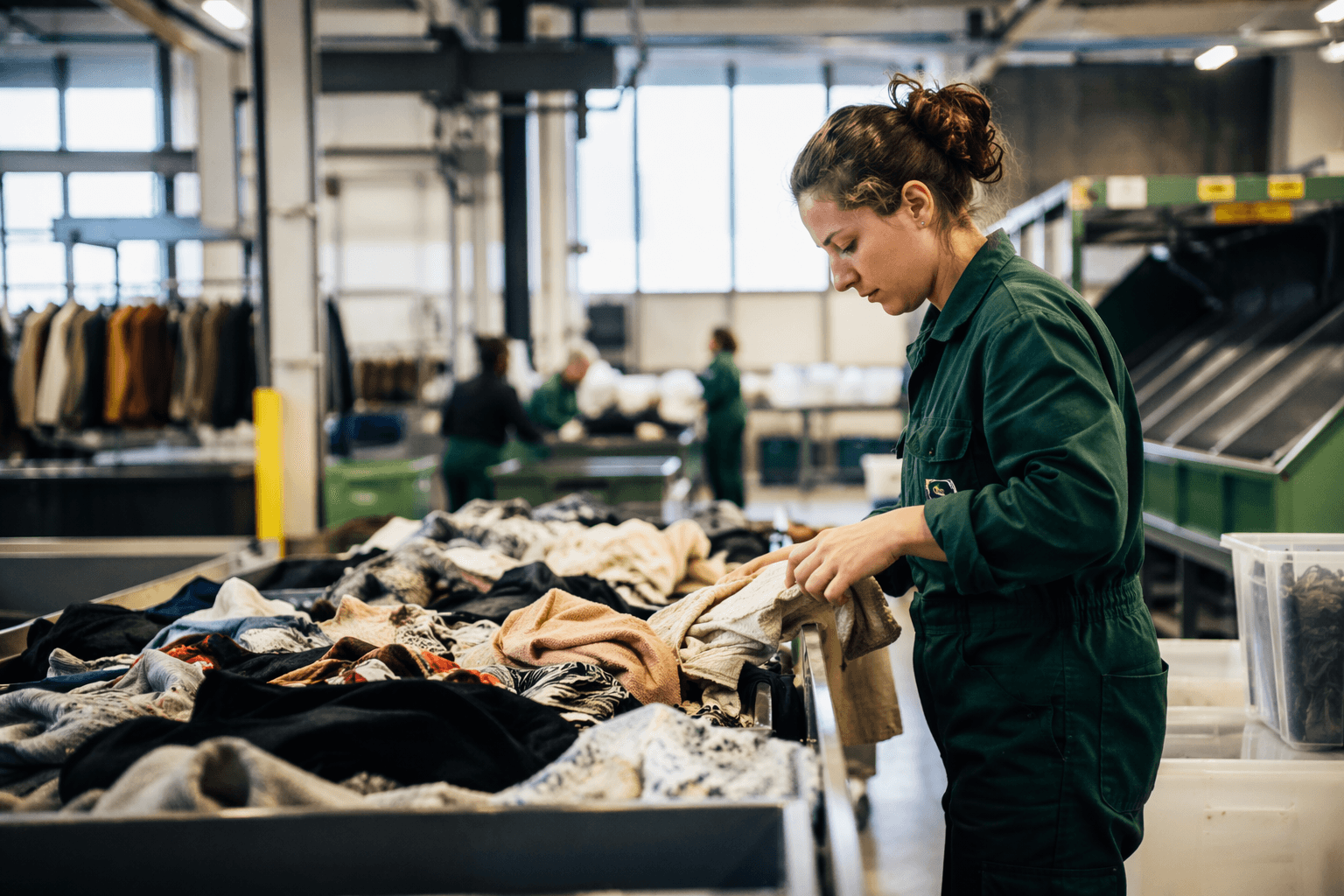
The fastest gains over the next 12 months are the ones fashion can control inside its own walls. Design teams can make garments easier to disassemble by standardizing trims, components and material choices. Brands can clean up traceability data so the next wearer, repair shop or recycler is not starting from a guess. Berlin’s support ecosystem matters here because it gives labels a place to test ideas, connect to funding and move from prototype to production without waiting for a new plant to be built on every corner.
The heavier lift still depends on policy and infrastructure. Under current EU waste rules, member states were required to set up separate textile collection systems by 1 January 2025, and the revised Waste Framework Directive entered into force on 16 October 2025 to push circularity and harmonize rules across the bloc. The European Commission says the revision is meant to support innovation and a more sustainable, less waste-producing textile sector. That urgency is easy to see in the numbers: the European Environment Agency says EU textile consumption rose from 17 kilograms per person in 2019 to 19 kilograms in 2022, textiles caused the fourth highest negative life-cycle impact on Europe’s environment and climate after food, housing and mobility, most textile waste still ends up in mixed waste, only about a quarter is collected separately for reuse and recycling, and exports of used textiles have tripled over the last two decades.
This article was produced by Prism’s automated news system from verified source data, official records, and press releases, then run through automated quality and moderation checks before publishing. The system is built and supervised by the people who set the standards it runs under. Read our full AI policy.
Did this article answer your question?