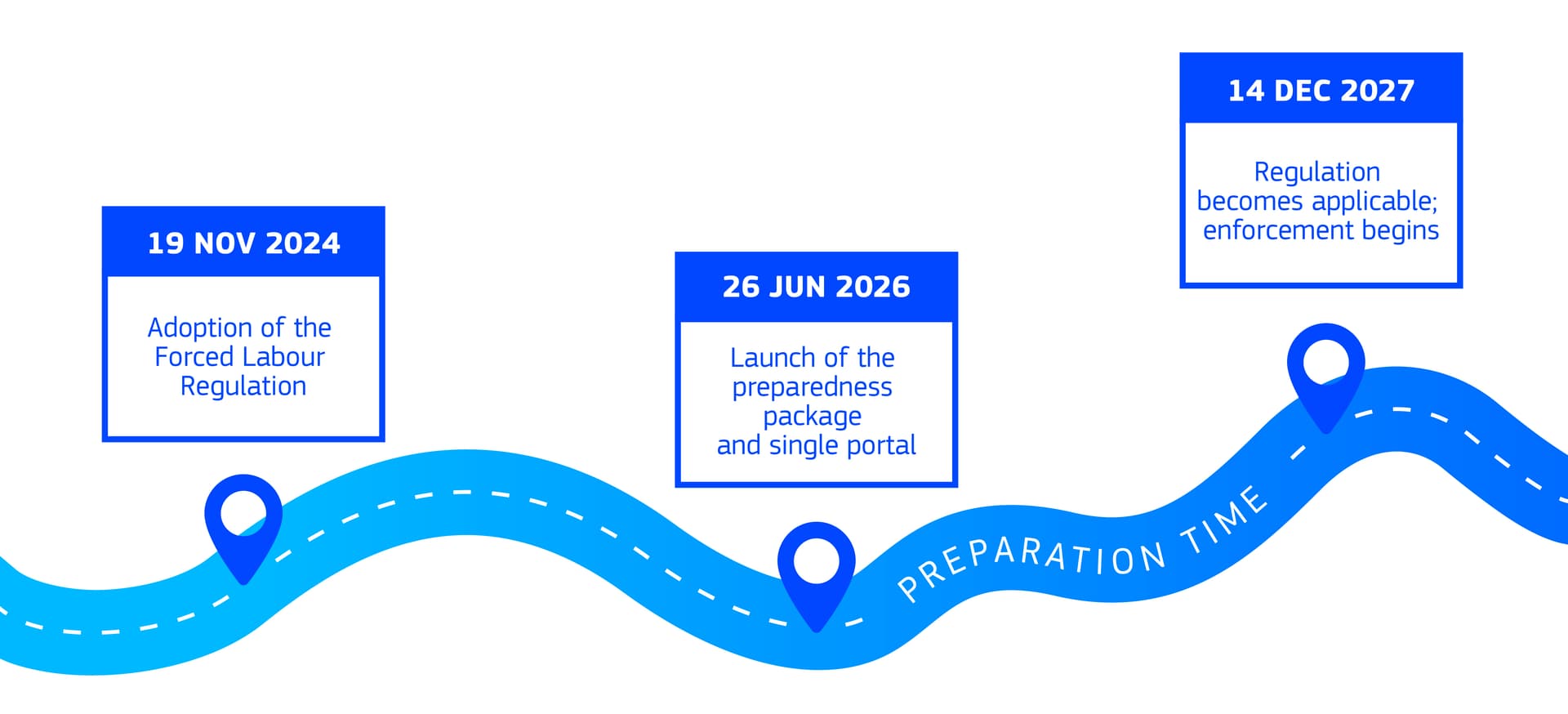
California textile law turns sustainability into a compliance race
California's textile law turns sustainability into a compliance grind. Brands now have to track, collect, repair, reuse, recycle, and pay for the parts they used to outsource.
.png&w=1920&q=75)
Sustainability just got a hard edge. California’s SB 707, the EU’s digital product passport regime, and a fresh wave of state EPR bills are pushing fashion out of the mood-board phase and into the spreadsheet phase, where every fiber, supplier, and take-back route has to be documented. The brands that can’t prove traceability or plug into recovery systems are about to feel that gap in their margins, not just their messaging.
California just put the industry on a clock
California’s Responsible Textile Recovery Act of 2024, SB 707, is the first statewide textile extended producer responsibility program in the United States, and CalRecycle’s own language is blunt: the apparel and textile industry is being made responsible for making sure its products are collected, repaired, reused, and recycled. CalRecycle approved Landbell USA as the producer responsibility organization on February 27, 2026, and obligated producers must join that approved PRO by July 1, 2026. The agency also has a Textile Stewardship Informal Regulatory Concepts Workshop on the calendar for August 13, 2026, from 10:00 a.m. to 3:00 p.m. PDT at the CalEPA Building in Sacramento, with webcast and Zoom access listed on the notice.
That timeline matters because it shows how fast this went from law to operating system. CalRecycle says it had to review and approve a PRO by March 1, 2026, and then move straight into the next layer: the needs assessment due in March 2027, regulation adoption no earlier than July 1, 2028, and an approved PRO plan by July 2030. This is not sustainability as a nice-to-have brand story. It is sustainability as a filing deadline, a fee structure, and a logistics problem.
The real work is upstream, where the labels get messy
What SB 707 does, in practice, is shove the burden into design, sourcing, data collection, and end-of-life planning. If a brand cannot say what went into a garment, who handled it, and where it is supposed to go after the closet, the law is telling it to build that system fast. The pressure lands hardest on smaller suppliers and mid-market labels, because they are usually the ones with the thinnest compliance staff, the least tidy records, and the most fragmented vendor networks. That is the part brands cannot fake with a recycled-content caption.
The scale of the problem explains why regulators are squeezing harder. The U.S. Environmental Protection Agency estimated that textiles generated 17 million tons of municipal solid waste in 2018, or 5.8 percent of total MSW that year, and only 14.7 percent of textiles were recycled. California’s law is basically a response to that math: if the pile is this big, the industry does not get to outsource the cleanup and call it responsibility.
Europe is building the same trapdoor, just with a cleaner interface
In Europe, Regulation (EU) 2024/1781, the Ecodesign for Sustainable Products Regulation, was adopted on June 13, 2024 and published on June 28, 2024. It establishes a digital product passport framework and a mechanism to prevent unsold consumer products from being destroyed. The European Commission’s textiles strategy goes further, saying the EU will introduce design requirements so textiles last longer and are easier to repair and recycle, introduce a Digital Product Passport, and bring in mandatory, harmonised extended producer responsibility rules for textiles in all member states.
That is where the fashion story gets more interesting than a simple recycling mandate. A European Parliament study says a textile DPP could improve traceability, circularity, and transparency, and it explicitly says the benefits run across producers, supply-chain tiers, regulatory authorities, sorters, recyclers, and consumers. In other words, the passport is not just for the hangtag or the shopper scan. It is an audit trail that has to survive every handoff from fiber to finished product to recovery stream.
New York is signaling that California is not a one-off
New York has its own textile EPR pressure building. Senate Bill S3217 would establish extended producer responsibility for textiles and require producers to submit collection plans for approval by the Department of Environmental Conservation, while S8502 says textile production and consumption in New York State generate over 200 million pounds of waste annually. That is the clearest sign yet that California is setting the pace and other states are learning the choreography.
For brands, the implication is simple and expensive: sustainability now has to be proven, not declared. The companies that will handle this best are the ones treating product data, supplier mapping, and recovery planning as core operations, not something the sustainability team files after the fact. The rest are about to discover that in fashion, compliance is the new material reality.
This article was produced by Prism’s automated news system from verified source data, official records, and press releases, then run through automated quality and moderation checks before publishing. The system is built and supervised by the people who set the standards it runs under. Read our full AI policy.
Did this article answer your question?