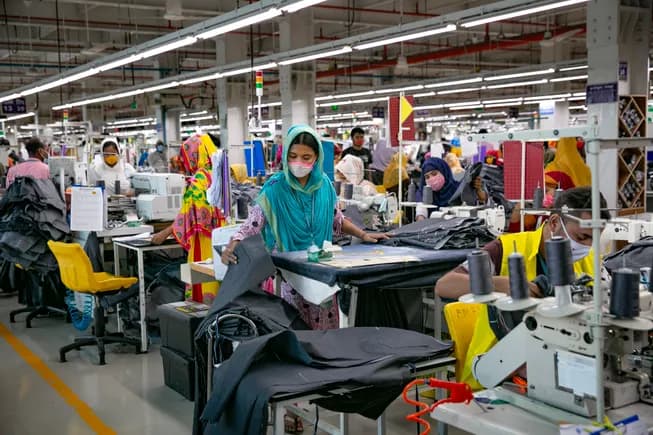
Can you stop buying clothes? Students in sustainable fashion course encouraged to find out
A U of T art history lecturer is telling her students they can't buy new clothes for an entire term, and she's doing it with them.

The assignment nobody expected
Most fourth-year university courses open with a syllabus and a reading list. Alexandra Palmer's opens with a provocation: don't buy any new clothing for the entire term. Not a swap, not a splurge, not even a sock. And before anyone calls that hypocritical, Palmer makes clear she's in it too. "I also won't buy any new clothes," says Palmer, a curator, author, and lecturer in the Department of Art History at the University of Toronto's Faculty of Arts & Science. "We're in it together."
That opening challenge is the launching pad for her fourth-year course, Considering Sustainable Textiles and Fashions in the Age of Climate Crisis. Palmer's students examine alarming global trends in fashion, such as escalating clothing production and consumption, and the ever-increasing environmental impacts of the industry. The course code is FAH488H1, and its placement in an art history department is intentional. Fashion doesn't exist outside of culture, history, and power, and this course refuses to let students forget that.
The system behind the seams
Palmer's point is clear: to change the discussion and shift cultural thinking about sustainability so that people operate within planetary boundaries. But to change anything, you first have to understand the scale of what's broken.
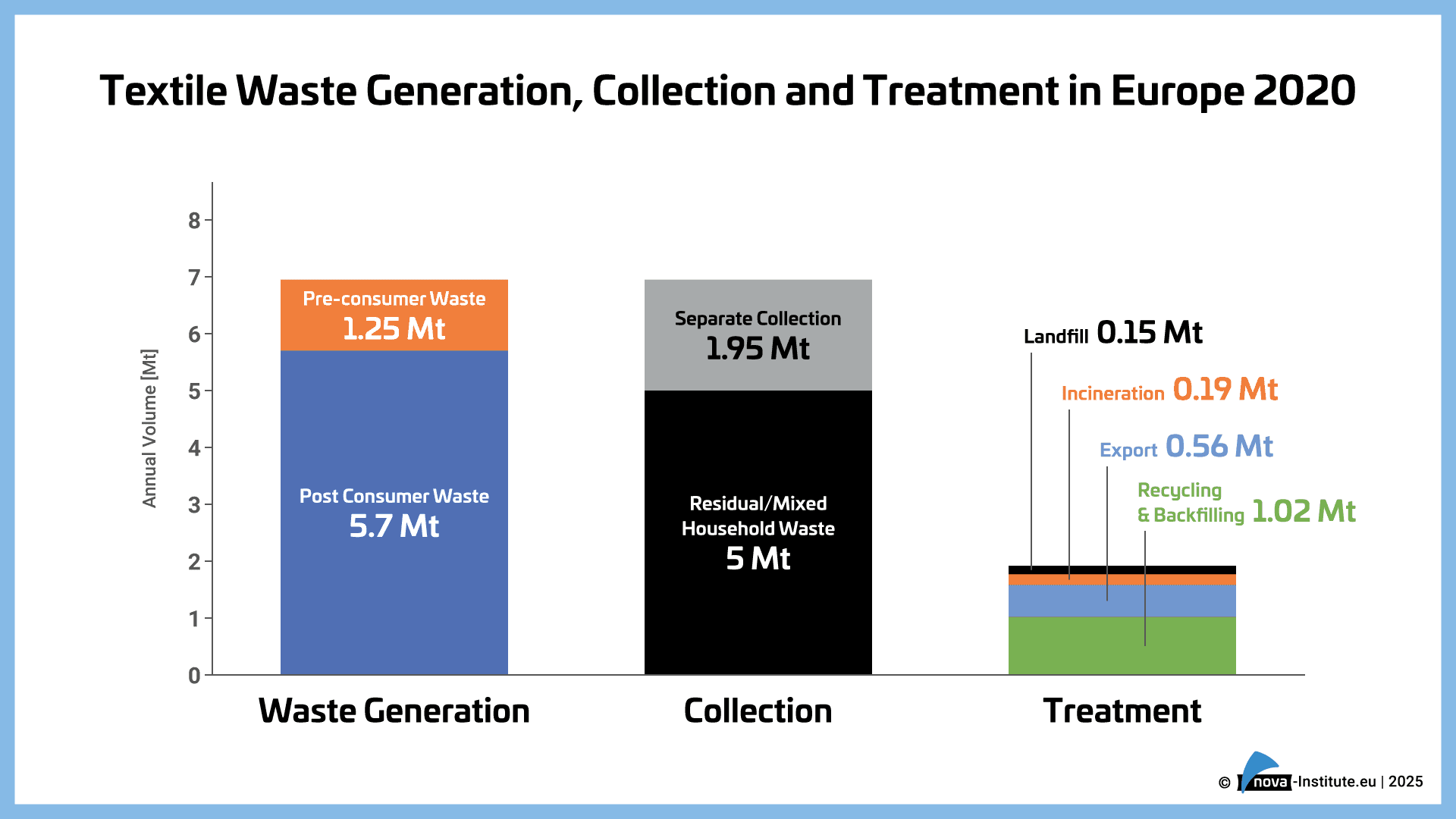
The numbers are staggering. Tens of millions of tonnes of clothing are discarded every year. A 2025 U.S. Government Accountability Office report on textile waste found that 85% of discarded clothing ends up in landfill or incineration, a figure Palmer uses in class to anchor what abstract talk about "sustainability" actually means in physical, thermal, chemical terms. These aren't vintage denim jackets being composted into something beautiful. This is synthetic fiber releasing microplastics, chemical dyes leaching into groundwater, and CO₂ pumping into the atmosphere at industrial scale.
Meanwhile, mountains of discarded clothing continue to grow in places like Chile and Ghana, which have become dumping grounds for the Global North. The Atacama Desert in Chile has become one of the most visually devastating symbols of fashion overconsumption, its vast plains blanketed in unsellable fast fashion. In Ghana's Kantamanto Market, the second-hand clothing trade, once a thriving local economy, is buckling under the weight of sheer volume. These are not abstract policy failures. They are specific places, with specific people, bearing a disproportionate cost for consumption that happened thousands of miles away.
Decoding greenwashing in real time
Students in the course also learn to identify "greenwashing" and critically assess marketing claims related to climate change and sustainability. This is arguably the most immediately useful skill the course delivers. The fashion industry has become extraordinarily fluent in the language of environmental virtue: recycled polyester, carbon-neutral shipping, regenerative cotton. Some of those claims hold up under scrutiny. Many don't. Learning to tell the difference requires understanding lifecycle analysis, material sourcing, certification systems, and the gap between a brand's press release and its actual supply chain.
The seminar looks at historic and contemporary global thinking about the production and consumption of textiles and fashions within the current climate change crisis, and questions the notion of "in" and "out" of Western seasonal style, examining historic models to understand new economies of scale and value, and issues of labour and natural resources. The seasonal trend cycle, it turns out, is not an ancient cultural ritual. It's a relatively recent industrial invention designed to accelerate purchasing. Understanding that history gives students a framework for pushing back.
Repair, reuse, and the politics of keeping clothes alive
The course doesn't stop at critique. Practical skills form a core part of the pedagogy: repair, mending, and reuse are taught not as nostalgic hobbies but as genuine interventions in a system that profits from garments becoming waste. A mended seam is a political act when the alternative is a landfill in Accra.
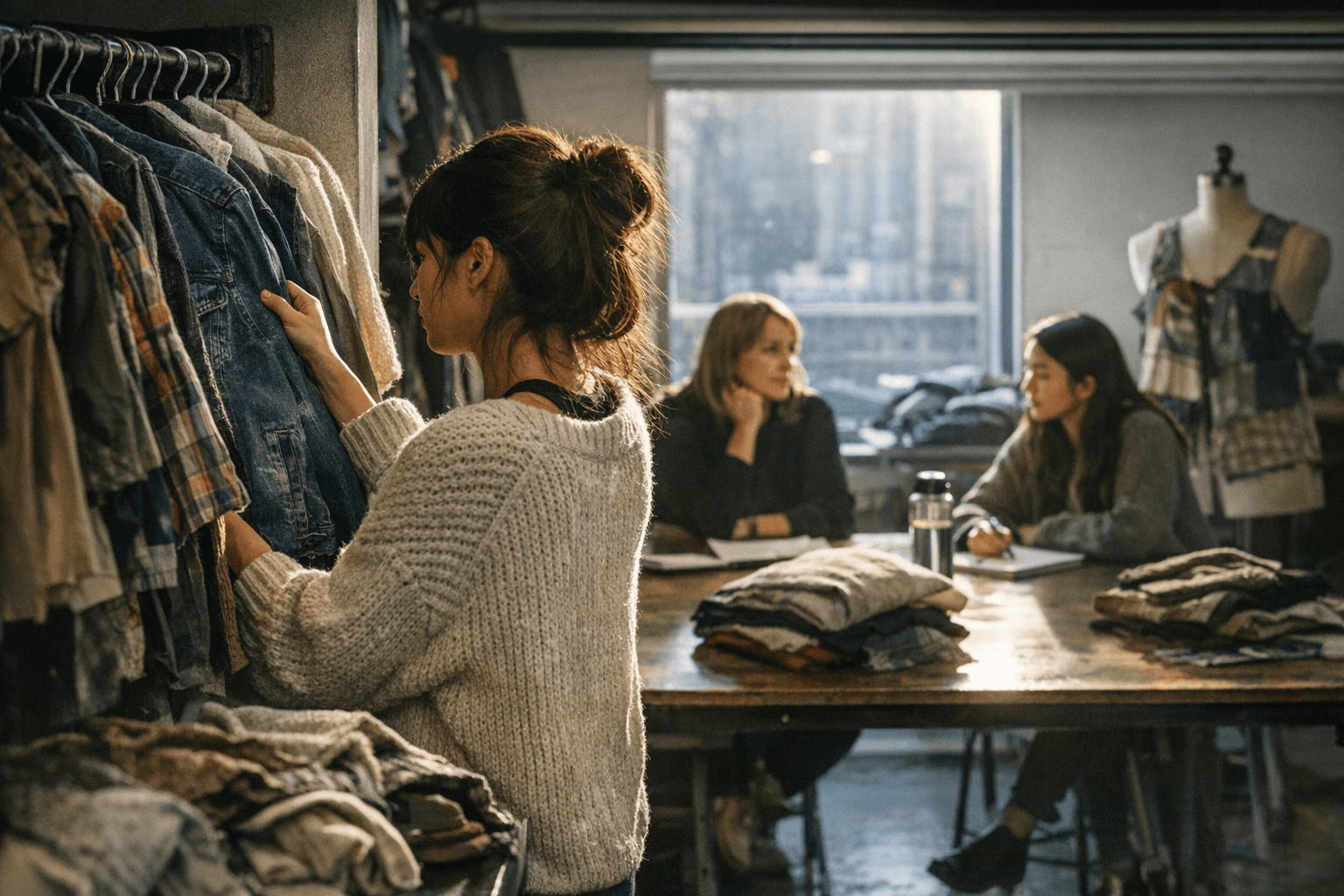
This hands-on dimension matters because behavioral change is hard, and it's harder still when the infrastructure around you is designed to make buying new easier than maintaining what you already own. The no-new-clothes challenge that Palmer sets at the start of term is as much a behavioral experiment as it is an ethical one. It forces students to notice the friction points: the impulse buy, the event-outfit panic, the sense that worn clothing signals something unflattering about you. Bringing those impulses into conscious awareness is the first step toward changing them.
Policy literacy: EPR and demand-side levers
Palmer's course also builds what might be called policy literacy, and Extended Producer Responsibility (EPR) is a key framework in that toolkit. EPR schemes shift the financial and operational burden of end-of-life textile management from consumers and municipalities onto the brands and manufacturers who profit from production. The logic is simple: if you made it, you're responsible for what happens when someone's done with it. That financial pressure incentivizes brands to design more durable, recyclable, and repairable garments rather than engineering products to fall apart or go out of style on a schedule.
Understanding EPR turns students from passive consumers into engaged citizens who can pressure legislators, evaluate corporate sustainability commitments with real criteria, and recognize when a brand's green marketing is structurally unsupported by its business model.
What agency actually looks like
"The purpose of this course is to show students what's going on and make them feel that they have agency so that they can respond in whatever way they choose," Palmer says. That word, agency, is doing a lot of work. It signals a refusal to moralize or prescribe. Students aren't being told to wear the same five garments forever or reject all synthetic fiber. They're being given the analytical tools to make informed decisions, which is a different and more durable intervention.
One student, reflecting on the experience, captured the cognitive dissonance most consumers live with: "It's not that I wasn't aware of the environmental issues around fashion and textiles. But it's the kind of thing that's easy to push out of your mind." That's the mechanism the fashion industry depends on. Diffuse awareness is manageable. Specific knowledge, held alongside practical skills and policy understanding, is harder to suppress.
Why an art history course is doing this
Palmer is a design historian who has spent decades at the intersection of materiality, culture, and fashion. She specializes in textiles and fashion history, with an emphasis on materiality and sustainability, and has taught at U of T since 2003. Her approach brings something that purely technical sustainability courses often miss: a rigorous account of how cultural meaning gets attached to clothing, how those meanings are manufactured and manipulated, and how they can be changed.
The fashion industry will not fix itself through better recycling technology alone. The demand side matters. Courses like FAH488H1 are one of the clearest models available for how to address it: combine behavioral challenge with systemic analysis, pair policy literacy with hands-on repair skills, and trust students to draw their own conclusions. If 85% of discarded clothing ends up burned or buried, the most urgent question isn't what to do with it after the fact. It's how to stop producing so much of it in the first place.
This article was produced by Prism’s automated news system from verified source data, official records, and press releases, then run through automated quality and moderation checks before publishing. The system is built and supervised by the people who set the standards it runs under. Read our full AI policy.
Did this article answer your question?