Canadian fur auction prices surge, but revival remains uncertain
Bobcat pelts jumped triple digits in North Bay, but the rebound looks fragile. Scarcity, not certainty, may be driving the spike.

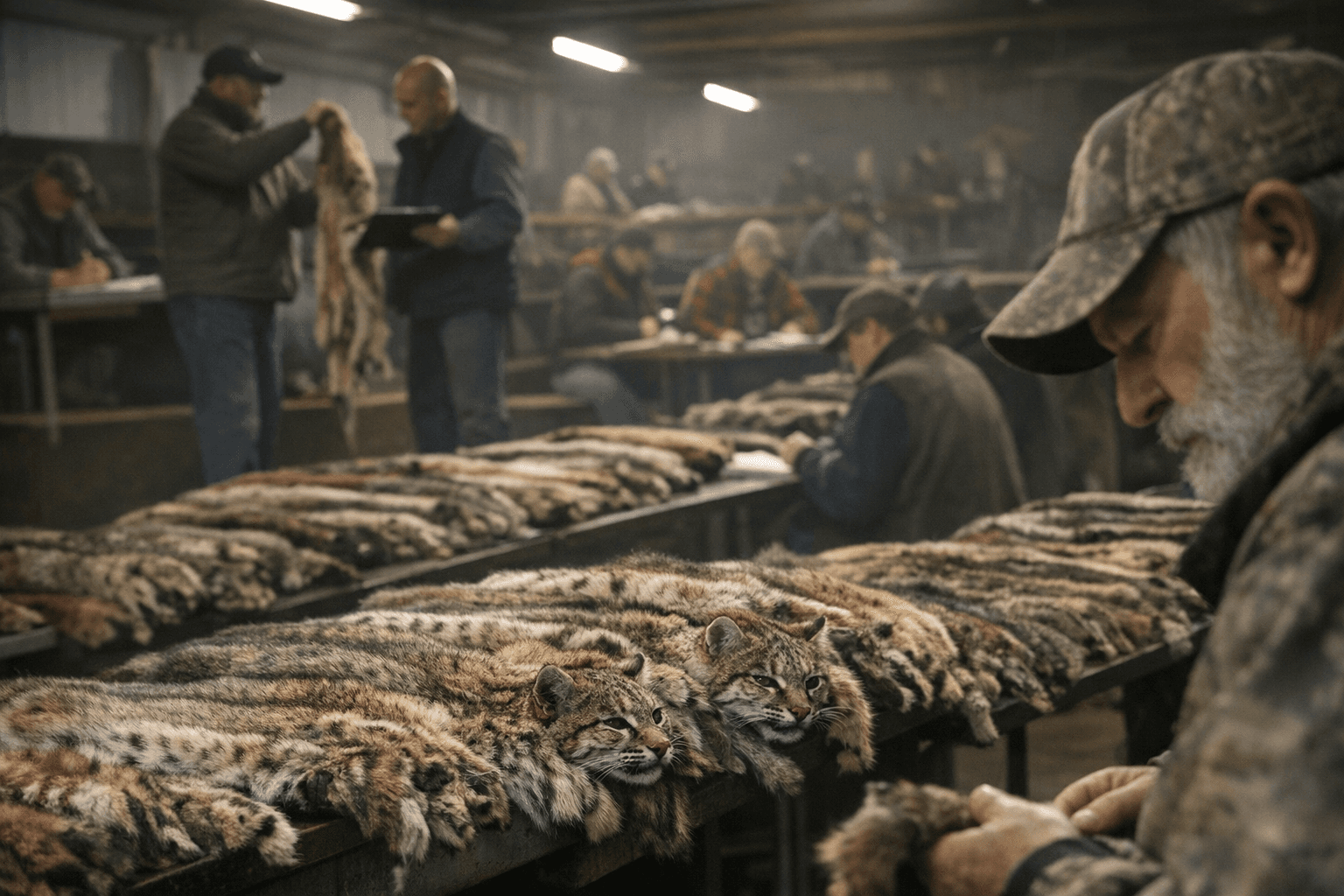
Bobcat pelts snapped higher at Fur Harvesters Auction in North Bay, Ontario, where the March 19 to 21 sale posted triple-digit year-over-year gains in the category, yet the bigger question is whether the surge signals a real revival or just a tightly constrained market in motion. Eastern Canadian bobcats averaged USD 609.26 and reached a high of USD 1,125, while U.S. bobcats averaged USD 1,557.82 and climbed to USD 4,100. Sable also pushed into rarefied territory, topping USD 310, and select lynx cat lots hit historic highs.
The auction’s breadth mattered as much as its headline prices. Buyers traveled in from China, South Korea, Italy, Greece, Spain, Portugal, the United Kingdom, Finland, Denmark, Canada and the United States, and many categories cleared more than 95 percent of inventory. Beaver, otter, wild mink, sable, lynx, wild foxes, raccoon, skunk, ermine, opossum, wolverine and squirrel all moved strongly, a reminder that when this market wakes up, it still does so in a surprisingly global register. But North America now has only one auction house handling wild fur. American Legend Cooperative wound down in 2018, North American Fur Auctions closed in 2019, and Fur Harvesters Auction is left carrying the category’s entire weight.
That concentration comes with a fragile backdrop. The Northwest Territories government said fur sales in 2025 topped $580,000, with marten accounting for 60 percent of revenue, or $348,638.38. Martens averaged $108, lynx nearly $200, wolverines around $570 and wolves over $400, while mink prices rose 56 percent in 2024. The same forecast said buyer interest from China has increased sharply, especially for luxury species, which helps explain why northern pelts are drawing more attention than they have in years. Still, the pattern is uneven, with strength clustered in certain species rather than spread across the board.
That unevenness is what keeps the revival story in check. British Columbia banned mink farming in 2021, a federal e-petition to end fur farming was reintroduced in 2025 after Parliament dissolved in March 2025, and a 2024 poll found 78 percent of Canadians oppose farming animals for fur. Against that pressure, Fur Institute of Canada executive director Doug Chiasson’s argument that demand is rising for “quality, long-lasting” fur and seal products reads less like a triumphant comeback than a defense of a narrower, more specialized trade. Some prices have matched or surpassed the industry’s 2013 to 2014 mini-boom, but the market still looks more volatile than reborn.
Know something we missed? Have a correction or additional information?
Submit a Tip