Ecoalf launches fully circular denim line, saving water and boosting recyclability
Ecoalf says its denim saves 5,434 liters of water per pair and is built to be fully recyclable. The bigger question is whether the system can scale beyond a premium capsule.

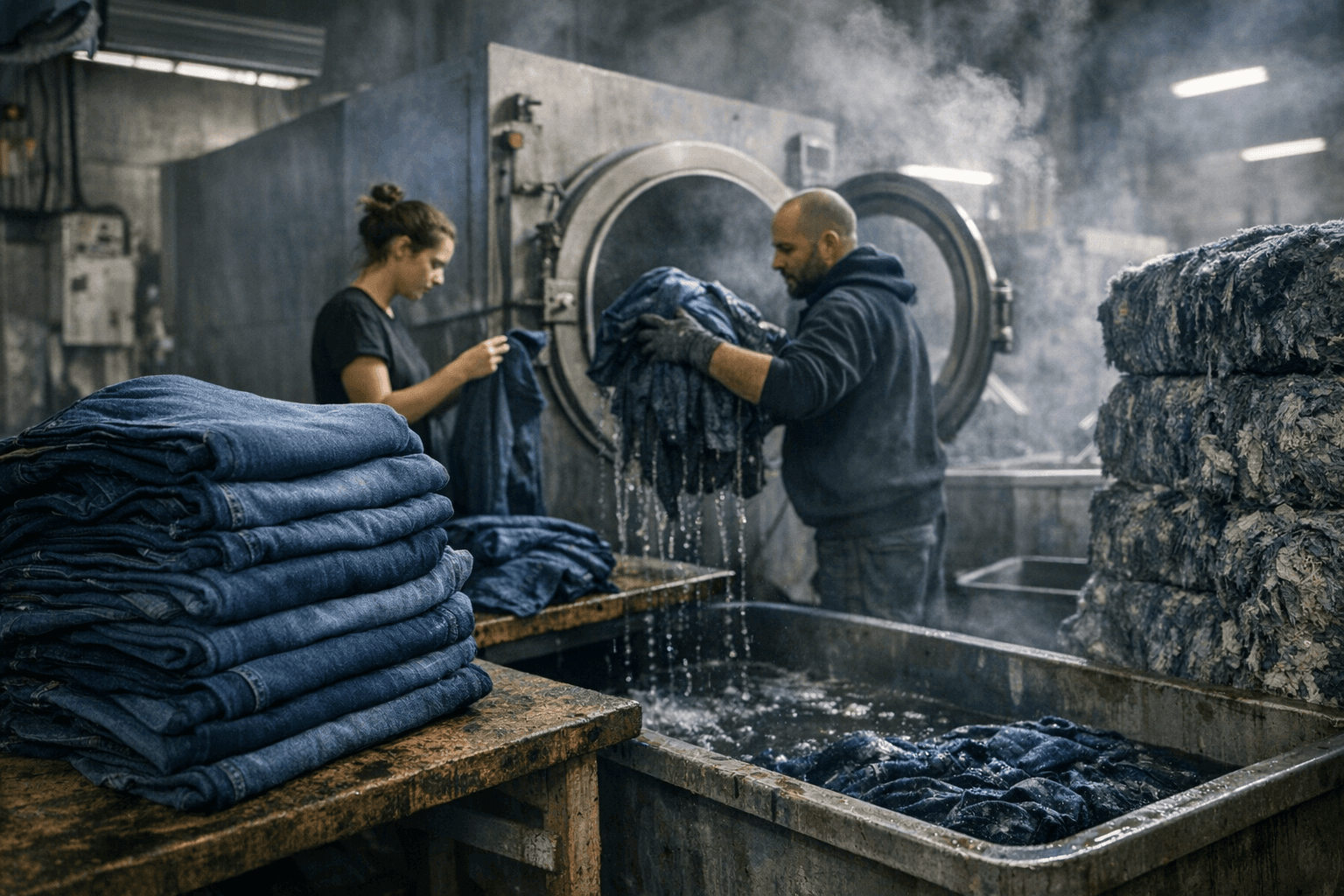
Denim has always been one of fashion’s hardest categories to clean up, so Ecoalf’s new line matters less as a launch than as a test: can fully circular denim actually work in the real market? The Spanish sustainable brand built the collection with regenerative cotton, recycled cotton, Smart-Indigo dyeing, and Jeanologia laser and ozone finishing, then designed the jeans to be 100% recyclable and monomaterial at the end of their life.
Ecoalf says the project took more than two years of research and development. The brand also says the line saves 80% of water compared with conventional denim, with each pair saving 5,434 liters, roughly the equivalent of seven years of drinking water. That is a striking number, but the more important detail is the process behind it: the women’s denim uses 65% regenerative cotton and 35% recycled cotton, while product pages for styles such as Nevada and Arizona say the jeans are dyed in Italy using Smart-Indigo and finished with Jeanologia’s laser and ozone technologies to eliminate toxic chemicals and reduce impact.
The smartest part of the collection is not the headline water savings, but the design discipline. Ecoalf says some buttons can be removed at the end of a garment’s useful life, a small but crucial move if the goal is to make recycling practical rather than theoretical. That kind of construction choice is exactly where circular fashion either becomes operational or stalls as a nice idea with better marketing.
Still, not every element is equally scalable. Laser finishing and ozone treatments already fit the industrial logic of denim, which makes them easier to imagine moving beyond a niche brand story. Regenerative and recycled cotton are also straightforward enough to understand and buy into, especially when the final product looks like ordinary jeans rather than a lab experiment. By contrast, true monomaterial design and end-of-life disassembly depend on a recycling system that can collect, sort, and process garments efficiently, not just label them as circular.
Ecoalf has priced the women’s denim at about $155.90 to $167.90, which places it firmly in premium territory, not mass-market basics. That positioning makes sense for now. The company, which says it is in B Corp’s global top 5% as Best for the World, has spent years building with recycled materials and monomaterial design in sweatshirts and T-shirts. Denim is the tougher exam. If this line can hold up in wear, washing, and recovery, it could point the wider sector toward “better denim” that is less about symbolism and more about system change.
This article was produced by Prism’s automated news system from verified source data, official records, and press releases, then run through automated quality and moderation checks before publishing. The system is built and supervised by the people who set the standards it runs under. Read our full AI policy.
Did this article answer your question?