Walmart joins U.S. Cotton Trust Protocol, boosting traceable sourcing
Walmart’s cotton buy-in and LifeLabs’ WarmLife scale-up point to the same shift: buyers now want verifiable fiber data and fabric performance, not just sustainability claims.
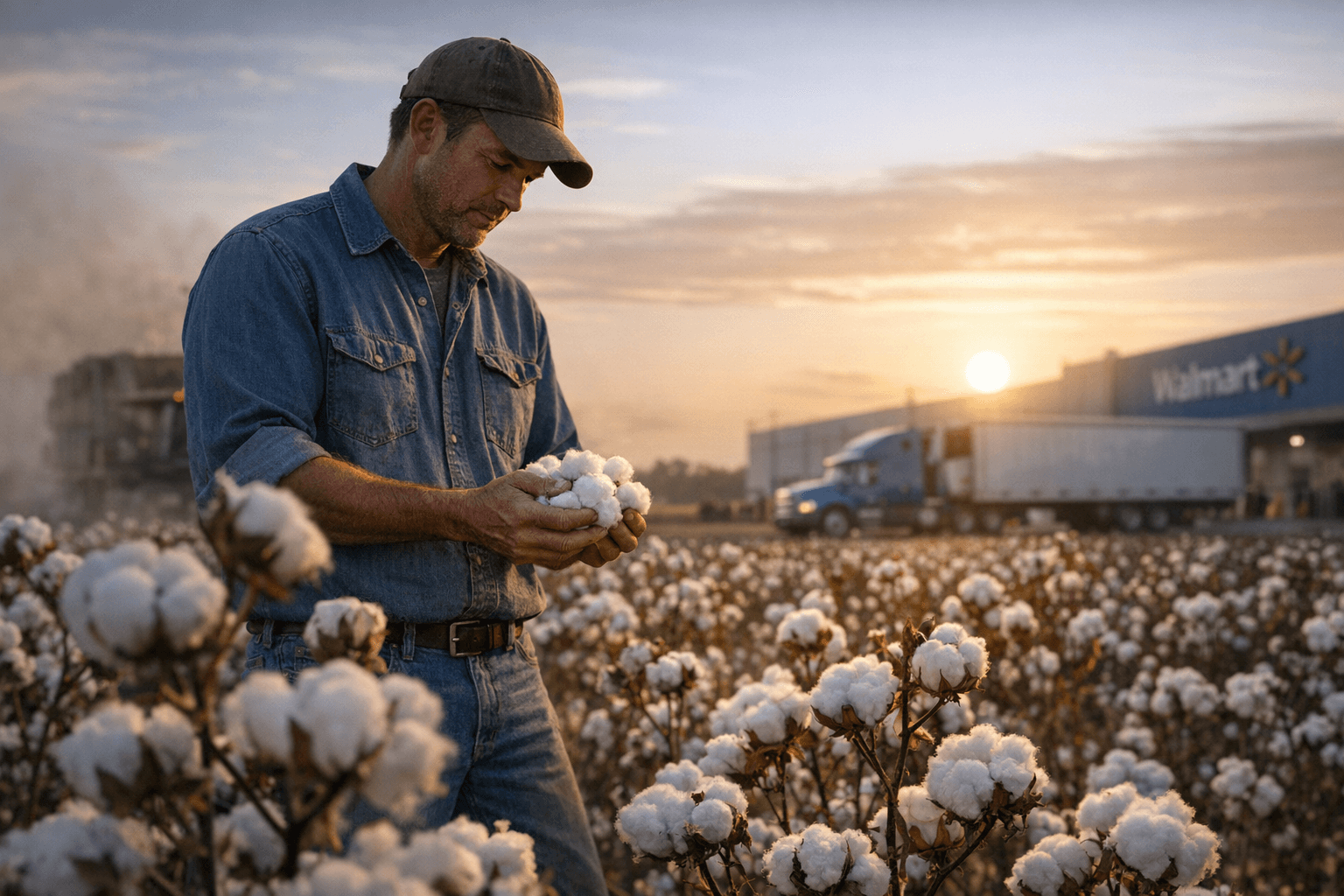
The next competitive edge in fashion materials is proof. Walmart’s move into the U.S. Cotton Trust Protocol puts traceable cotton inside one of retail’s biggest buying engines, while LifeLabs is pushing its WarmLife technology from lab-born innovation toward broader factory production through Shinhan Textile.
Walmart joined the U.S. Cotton Trust Protocol on April 14, giving the retailer access to aggregated, verifiable sustainability data from U.S. cotton growers and the ability to track U.S. Cotton and Protocol Cotton through its supply chain. The Trust Protocol called the membership an important scaling moment for sustainable cotton sourcing, and it lands in a market where retailers are being pressed for more than broad sustainability language. Walmart has said it aims to source more sustainable cotton, and it has tied its wider goals to helping manage, protect and restore at least 50 million acres of land and 1 million square miles of ocean by 2030. Amazon, Macy’s, Levi’s and URBN are already among the program’s named members.
The appeal is straightforward: traceability now functions like a purchasing standard, not a nice-to-have. The U.S. Cotton Trust Protocol describes itself as a voluntary, field-level sustainability program and traceability platform for U.S. cotton, built to help brands meet stakeholder expectations, mitigate supply-chain risk and support continuous improvement. Its 2025 Field Partner Program pilot was designed to test and scale regenerative practices, and its 2023/24 annual report highlighted record grower participation and stronger traceability systems. For a retailer of Walmart’s scale, that kind of documentation matters as much as fiber quality, because future sourcing decisions will be judged on what can be verified, not just what can be promised.
At the other end of the materials conversation, LifeLabs said Shinhan Textile will serve as a strategic production partner for WarmLife, a step that could widen the technology’s commercial reach with apparel brands. LifeLabs, which says it spun off from Stanford University and now operates across North America, Europe and China, positions WarmLife as a patented dynamic warming system for thermal comfort management that is 30 percent more heat-retaining than competing products, while also being thinner, lighter and more packable than comparable virgin- or recycled-insulation products. In a category where bulk has long been the tax paid for warmth, that combination is the point.
LifeLabs has been building credibility around the platform. WarmLife won an ISPO Best Product award in September 2025 in the Membranes and Coatings category, and LifeLabs said seven AI-CLO system products won ISPO awards across three categories. In January 2026, the company also released Harris Poll research showing 84 percent of golfers want cooling technology in apparel, a reminder that temperature control is no longer a niche technical promise. Together, Walmart and LifeLabs show where the market is moving: big retailers want clean, traceable inputs, and mills and materials innovators need performance that can be measured, scaled and bought into.
This article was produced by Prism’s automated news system from verified source data, official records, and press releases, then run through automated quality and moderation checks before publishing. The system is built and supervised by the people who set the standards it runs under. Read our full AI policy.
Did this article answer your question?


