Chile’s Used-Clothing Boom Fuels Atacama Desert Textile Waste
Used clothes are not a waste fix by default. In Chile, 123,000 tonnes a year flow through Iquique, and a brutal share ends up in the Atacama Desert.
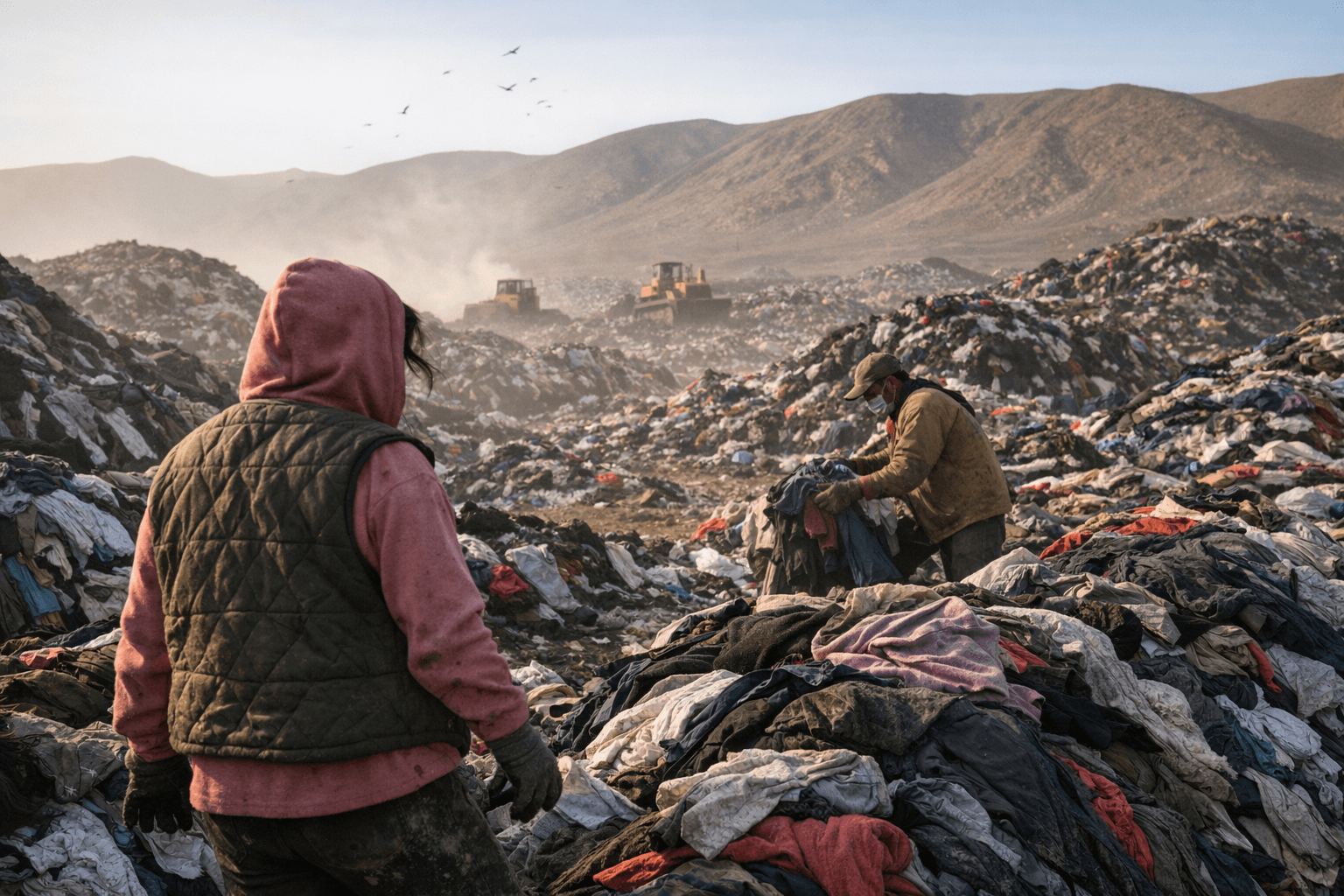
Second-hand fashion has a clean halo until you look at the pile-up in northern Chile. About 123,000 tonnes of used clothes enter the country every year, and a huge share of the castoffs never make it onto a rack again. They end up dumped in the Atacama Desert, where some estimates put the annual textile waste at 39,000 tonnes.
The machinery behind that mess runs through Iquique, in the Tarapacá Region, where the free-trade zone known as Zofri has been a magnet for used clothing for decades. Created in 1975 to drive economic and social development in northern Chile, the port system lets businesses import, store and sell goods without paying customs duties or VAT. That tax break is the engine of the trade. Containers arrive from the United States, Canada, Europe and Asia, then get sorted into the winners and the losers. The winners are resold locally or shipped onward. The losers, often the lowest-value garments, are the ones that have long been left behind in the desert.
That is the part the resale story usually skips. Donation and thrift feel virtuous at the consumer level, but the global export model still depends on volume, margins and brutal sorting economics. The people who profit first are the importers, wholesalers and operators moving product through Iquique. Once a bale is too cheap, too damaged or too hard to move, the garment loses its value fast. In the Atacama, that failure becomes visible from the road: mountains of unwanted clothes stretched across a landscape so dry they hardly break down at all.
Chile moved to confront the damage in 2025. On June 26, the government expanded its Extended Producer Responsibility law to include textiles, and on July 4 the Ministry of the Environment formally declared textiles a priority product under the REP system, making them the seventh category in the framework. The new rules require importers to report how much clothing they bring into the country, a basic but important shift that starts to expose the scale of the problem instead of pretending it disappears after checkout.
The pressure is already forcing a response. Turkish businessman Bekir Conkur is investing $7 million in a recycling plant near Alto Hospicio, designed to turn discarded garments into industrial fibers and other materials. It is a modest counterweight to a trade that has spent years turning excess wardrobe turnover into desert waste. For brands that sell circularity as a slogan, Chile is the warning label: used clothing is only sustainable if someone is actually paid to handle the pieces nobody wants.
This article was produced by Prism’s automated news system from verified source data, official records, and press releases, then run through automated quality and moderation checks before publishing. The system is built and supervised by the people who set the standards it runs under. Read our full AI policy.
Did this article answer your question?


