FTC Sues Oak Street Bootmakers Over False Made in USA Claims
The FTC says Oak Street sold thousands of shoes with foreign-made parts while calling them Made in USA, turning a heritage-brand boast into a test case for the whole industry.

Oak Street Bootmakers built its identity on American craft, then the FTC says it crossed the line between domestic assembly and domestic manufacturing. In a complaint filed April 14, 2026, the agency accused Oak Street Manufacturing Company, LLC, of falsely marketing boots, loafers and other footwear as fully made in the United States even though key parts came from the Dominican Republic and Brazil.
The details cut straight through the brand story. Oak Street used the slogan “More than Made in USA” from about 2020 through August 2025, and the FTC says it sold thousands of shoes, including boots, loafers, bluchers, oxfords and moccasins, that were not actually Made in USA. Starting around May 2023, the company allegedly sourced uppers from a factory in the Dominican Republic and outsoles from Brazil, then shipped those parts to a U.S. facility for assembly or “bottoming.” For a brand that built its reputation on the romance of American shoemaking, that distinction is not minor. It is the whole point.
George Vlagos founded Oak Street Bootmakers in 2010, growing out of his family’s shoe repair business in suburban Chicago. The brand’s website says its shoes and boots use Goodyear Welt, Genuine Handsewn or Stitchdown construction, the kind of language that signals durability, repairability and a certain old-world seriousness. That is exactly why this case matters beyond one company. In sustainable fashion, consumers increasingly want more than a clean label and a handsome patina. They want to know where the leather was cut, where the sole was molded and where the final stitch was made.
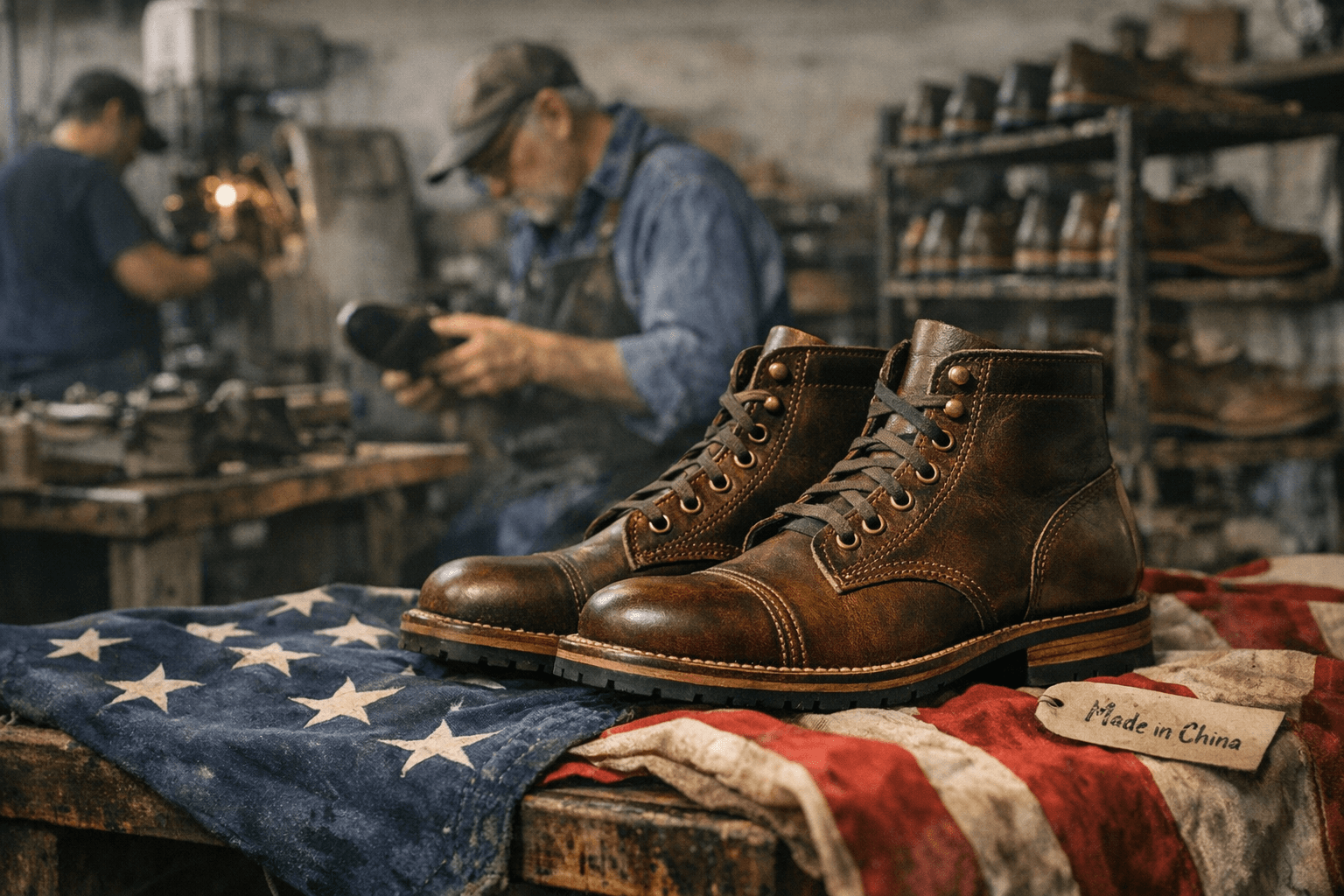
The FTC had already warned Oak Street on July 8, 2025, that any U.S.-origin claim had to be truthful, non-misleading and substantiated, and that an unqualified Made in USA claim requires a product to be “all or virtually all” made in the United States. The agency’s action now reads as a sharper warning to the wider industry, where brands often blur the difference between American design, American assembly and American manufacturing. Christopher Mufarrige, who leads the FTC’s Bureau of Consumer Protection, said the agency would “robustly enforce” the standard so consumers can trust their purchases support American workers and manufacturing.
The Oak Street case landed as part of a broader FTC Made in USA sweep that included three law-enforcement actions and followed President Trump’s March executive order on truthful advertising of products claiming to be made in America. It also arrives after a year of costly reminders: Williams-Sonoma paid a record $3.175 million civil penalty in April 2024, and Kubota North America agreed to a $2 million penalty in January 2024 for false Made in USA claims. The message to fashion and footwear brands is getting harder to ignore. In an era when origin, ethics and sustainability are tightly linked, a patriotic label is only as strong as the supply chain behind it.
This article was produced by Prism’s automated news system from verified source data, official records, and press releases, then run through automated quality and moderation checks before publishing. The system is built and supervised by the people who set the standards it runs under. Read our full AI policy.
Did this article answer your question?


